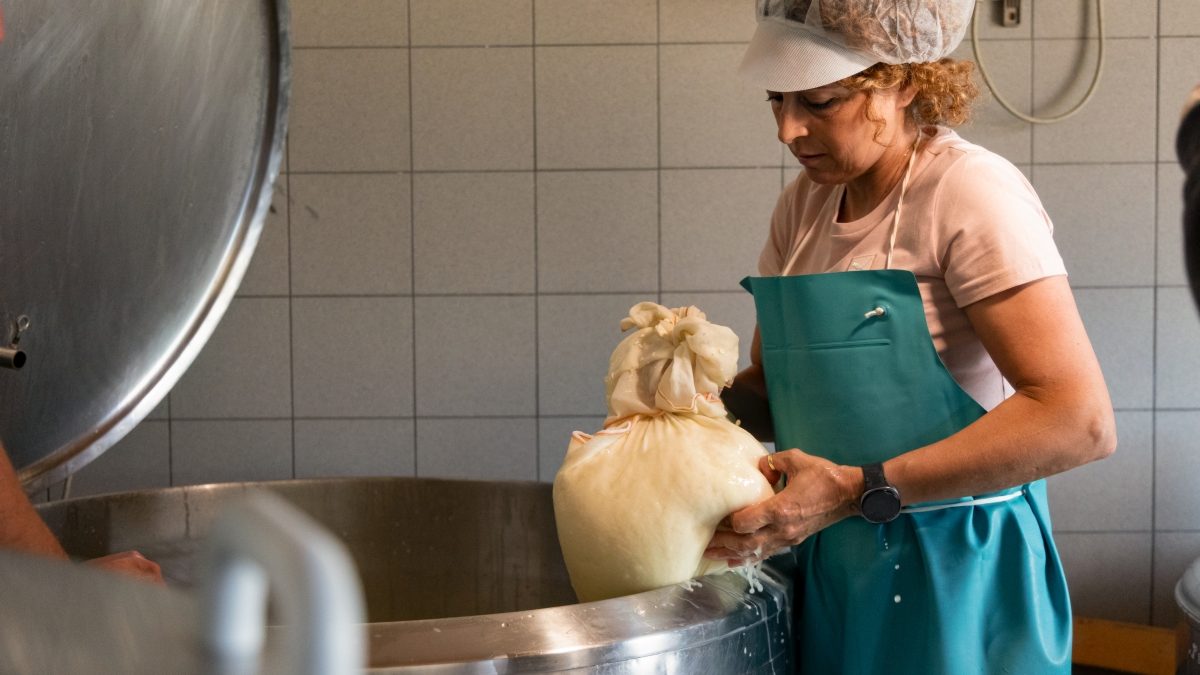
The charm of Ilaria doesn’t fade into the background, despite the breathtaking panorama that’s already partly taken away by the cycling effort we’ve just made to reach her mountain hut. We’re on the Carnic Alps, above Sauris, at a point overlooking the Pesarina valley, at over 1700 meters altitude, pedaling on our electrically-assisted bicycles. We reached Malga Vinadia after about two hours of pedaling and don’t yet know, when we meet Ilaria Piazza, the malga keeper, that the steepest climb is still ahead. For a while we delude ourselves that the worst is over and dedicate ourselves to discovering, by tasting them, delicious alpine cheeses. Our fingers reach toward goat caciotta – Ilaria’s preferred animal, while her partner tends the more demanding grazing cattle – listening to the story of this young woman who, until last year, worked in a clothing store in the valley below. Her move to high altitude was a life choice not driven by romantic notions of returning to primitive nature, which she was anyway well acquainted with. Ilaria is the daughter of a malga keeper and if she decided to revolutionize her existence, moving for three months to such an extreme location, it was precisely to help her father, temporarily unable to carry on his work. «I used to help my father a few days a week, now I’m here permanently. I’ve also learned to produce goat cheese, which previously only he made».
A resident of Villa Santina and mother of a nearly six-year-old daughter, Ilaria has had to adapt to the demanding rhythms of alpine life. «Life has changed especially physically, because the days are much more intense. Mentally, though, you feel better». Having overcome initial fears, satisfaction now prevails: «At first I was scared, now I’m happy with what I do. I like it».
AUTHENTIC MOUNTAIN HUTS, NOT TOURIST TRAPS
Climbing into Carnia, one of Italy’s most authentic alpine regions where tourism hasn’t yet disrupted the territories and the sometimes gruff character of the residents – Sauris sits in a valley closed off in winter. Here there’s an economy based on livestock grazing, cured meat processing, and ancient traditions like artisanal weaving or woodworking – you discover that the world of mountain huts is predominantly composed of women, proud and willing to make personal sacrifices to carry on a tradition that’s always at risk of disappearing. Yet they persist. There are about fifty mountain huts still active in these mountains and every year, from late June to mid-September, the herders bring their herds up to altitude to graze, following the traditional rituals of summer pasturing. They’re not tourist traps. The herders welcome you, and if you want they’ll sell you cheese, but then you have to carry it down in your backpack on foot, because you can’t get up here by car. Consequently, direct sales are a small portion of their income and the survival of the trade is tied to sales to valley dairies or, worse, to purchases from wholesalers who never pay a fair price for all the sacrifice that underpins the herder’s work. Which we confirmed by visiting another all-female mountain hut: that of sisters Tomat, Alessandra and Stefania.
A SUMMER WITHOUT WATER
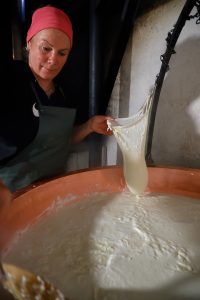
A visit not without moments of tension, because we arrived at their hut in the midst of a dispute over the failure to collect part of the production. An incident that came at the end of an extremely complex summer season, tormented by drought. In the summer of 2026, at these such high altitudes, drinking water repeatedly ran out. It’s not easy to live without water, not for people and not for animals. At night, temperatures never dropped as they typically do just below two thousand meters, so the aging of the cheeses suffered as well. In this climate of tension we arrived at Malga Gerona, a small outpost of human resistance that Alessandra and Stefania maintain at 1600 meters altitude to carry on their family tradition. They learned from their father, Benedetto, who passed away several years ago. From autumn to spring, the two sisters work together with their nephews at the family farm in Arta Terme. Here they raise about forty cattle, fed with hay and milked daily to deliver milk to the Sutrio consortium. With the arrival of summer, they bring the animals to the pastures of Casera Gerona, where they remain until October. At the hut, milk processing still follows traditional procedures, using firewood to feed the fire, thanks to exemptions provided for alpine structures. Each day about eight wheels of cheese are produced, the result of artisanal activity that preserves gestures and knowledge passed down from generation to generation. There’s a third sister, Patrizia, and she’s also in the sector: she’s a cheesemaker at caseificio Alto But, in Sutrio, one of the most active in promoting and protecting alpine cheeses. And there’s a niece, Arianna, who chose to follow her aunts’ example, taking over management of another high-altitude facility, Malga Mediana, and producing cheeses.
THE RAW MILK CHEESE CASE
The environment is everything. At high altitude the cattle do well, even climatically, despite the heat now being felt even in the evening. The pastures are rich in herbs and flowers that give the milk the aromas and flavors that will distinguish the product transformed without pasteurization that acts as a “flavor dampener”, and this methodological choice – cheesemaking from raw milk – was another element of tension during the last summer. The death of a child, after years in a vegetative state triggered by raw milk cheese poisoning, unleashed a media storm that weighs on the sector and puts further risk on the survival of a tradition founded on the quality of the final product, which however isn’t good for everyone. Raw milk cheese isn’t suitable for children and isn’t suitable for more vulnerable people. But this doesn’t mean the product is a dangerous killer lurking. The result of such alarm was, once again, a drop in prices, because demand for these types of products decreased.
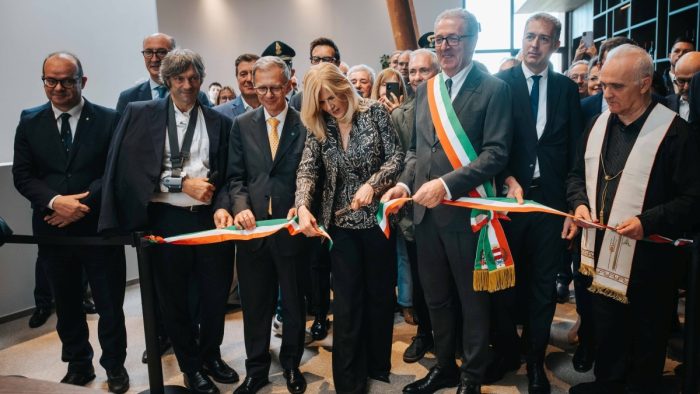
Yet the survival of mountain huts is fundamental and not only for a “romantic” reason, but because these structures represent a way to protect high mountains that would otherwise end up abandoned. Mountain huts are “high-altitude sentinels”, outposts that unite ecosystem protection, social welfare and territorial economy. “In an era marked by climate change and the depopulation of internal areas, rediscovering and enhancing the network of mountain huts means protecting our future and that of the environment”, say the organizers of an event taking place October 17-18 in Sutrio, the Carnic locality where the Alto But dairy operates.
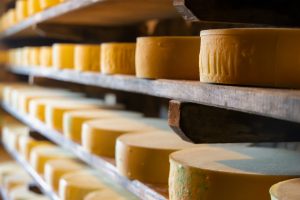
FORMANDI LAUNCHES
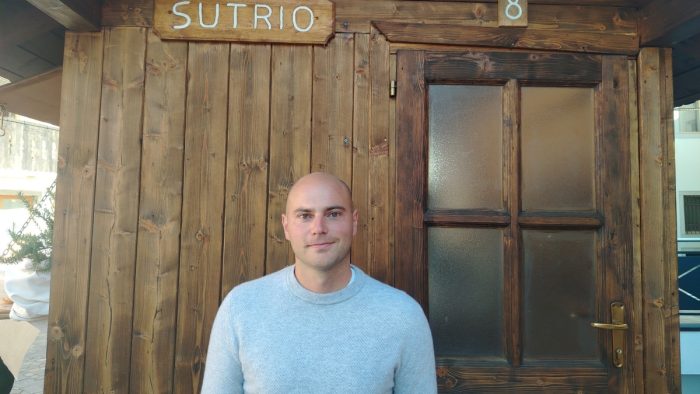
The event in question is called ForMandi, and will feature as its highlight an auction of mountain hut cheeses to purchase wheels aged during the last summer and those inherited from previous years. Enzo Marsilio, former mayor of Sutrio for 13 years and then assessor for five years of agriculture in the Friuli Venezia Giulia Region, is one of the most convinced supporters of this initiative and is personally committed to the project to revitalize the Carnic mountain hut system. «The price of mountain hut cheese is absolutely not remunerative compared to everything it represents, both in terms of product quality, labor, and environmental value». There are no shortage of encouraging signs. «Over the last ten years many young people have returned, with very generational turnover on the female side», Marsilio emphasizes.
Certainly, it’s not easy. Ilaria had never imagined it would be simple, this total transformation. After selling clothing items, today she must contend with the eight or nine wheels of cow’s milk cheese produced every day at Malga Vinadia and with the caciotta that come from the milk of her beloved goats. «We have people who come up on purpose two or three times during the season to buy our wheels. Those who arrive on foot or by bike prefer small pieces of cheese or ricotta», she recounts. And she says goodbye telling us that: «It’s a sector that risks disappearing. There are fewer and fewer breeders and fewer and fewer young people with the passion necessary to take on this work. But I want to continue, I have no doubts. I like what I do too much».