“There’s no gate here. The farm is always open”. Stefano Valentini presents his reality this way, Podere Lesignano, 35 hectares of land between owned and rented property, ten hectares of vineyards, 400 olive trees (excellent oil!) and the rest cultivated as arable land. There’s no winery, because Valentini is a grape supplier, the largest in the entire nation, which is not Italy. We are in fact in the Republic of San Marino, where only two cooperatives produce wine and where production is quite limited. The vineyard surface within the national borders is about one hundred hectares and, of these, twenty belong to the Valentini family, in two different farms. Podere Lesignano however doesn’t limit itself to cultivation, quite the opposite! The farm has become a reference point for those who want to visit, taste, and live the outdoor experience. Starting with children.
EDUCATIONAL FARM WITH ANIMALS
The educational farm of Lesignano experiences its peak activity during the summer. “Overall – the owner tells us – we reach a thousand children during the summer camps we host. They do agricultural activities, the kids take care of the animals and then every day there are different activities: from the vegetable garden, to the grain cycle, to preparing cookies and tagliatelle, to walks in agricultural and wooded areas, up to wool weaving and carpentry workshop”. But we don’t stay still in winter either, because with the cold season the workshops dedicated to schools begin. Valentini speaks of Podere Lesignano as a multifunctional business. “We are not just a place for food production. This is a place of encounter, culture and landscape enhancement. Elsewhere, in the world, agricultural businesses have already reached this connotation, while in San Marino we are still a bit behind but we are making up for lost time”. After all, the direct management of the Podere is quite recent for the Valentini family, who had entrusted the property to the care of sharecroppers until 1982, the year they decided to take care of it personally. “It was my father who took over the management, because he wanted to move the family home here. I was then working for the Agriculture Office of the Republic of San Marino and I took care of the Podere in my free time. Since 1997, this has become my primary activity”. Viticulture represents the main business of the Podere, which supplies its grapes to the Cantina Sociale di San Marino. The wineries, in the territory of the small sovereign state, are two, both private cooperatives, which in turn are part of the Consorzio dei vini tipici di San Marino where the third partner comes into play, namely the State, which has the right to appoint the president of the board of auditors of the Consortium itself. In fact, the Republic leaves management to private parties and keeps the control function for itself. The “made in San Marino” wines are mainly destined for restaurants and wine shops in the territory, but there’s also the possibility of buying them in Romagna, in the rest of Italian territory and even abroad. And naturally they can be bought at the Podere’s agritourism, which also offers its own line with commemorative label of the Japanese temple (see next paragraph) and two garage wines, a Sangiovese and a Chardonnay metodo classico. After all, the agritourism activity itself is the other reference business of the Valentini family.
THE SHINTO TEMPLE IN THE PODERE
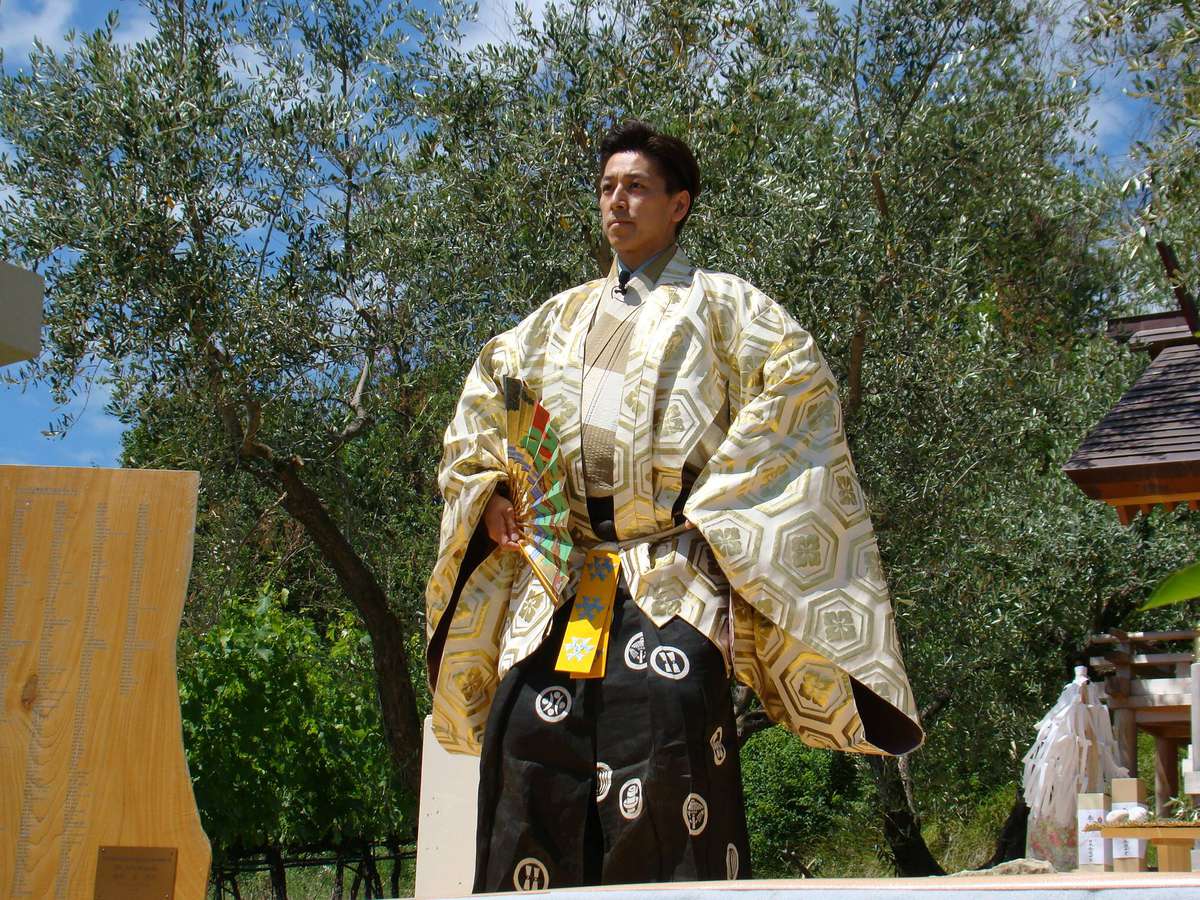
In the farm where there’s no gate, you can go for different reasons, even without having to accompany your children to school camps. The first is purchasing San Marino wines. The second is participating in cooking lessons held at the Podere, to learn how to make tagliatelle or piadine (and then eat them, accompanied by a glass of Sangiovese naturally!). The third is truly particular. “We are the only farm in Europe with a Shinto temple inside”, Valentini reveals. The reason for this curious presence is linked to the existence of a friendship association between San Marino and Japan; through a series of events, the temple donated by the Japanese to the San Marinese ended up inside the Podere and was placed near a small lake. “This brings us occasional visitors during the year. And it’s the basis of the event held annually on the last Sunday of May and takes the name of San Marino Matsuri”, Valentini adds. At the inauguration of the temple, in 2014, the mother of the then Japanese premier, the late Shinzō Abe, participated. Relations with Japan are consolidated, also from the export point of view. “Every year we make commemorative wine bottles of the temple, changing the label. And then there’s the adoption of olive trees”, Valentini specifies. The Japanese adopt the plant, watch online the pruning, flowering and harvesting. And then, after pressing, they receive a can with three liters of extra virgin olive oil, those corresponding to the production of the adopted plant.
AGRI-CAMPING IS COMING
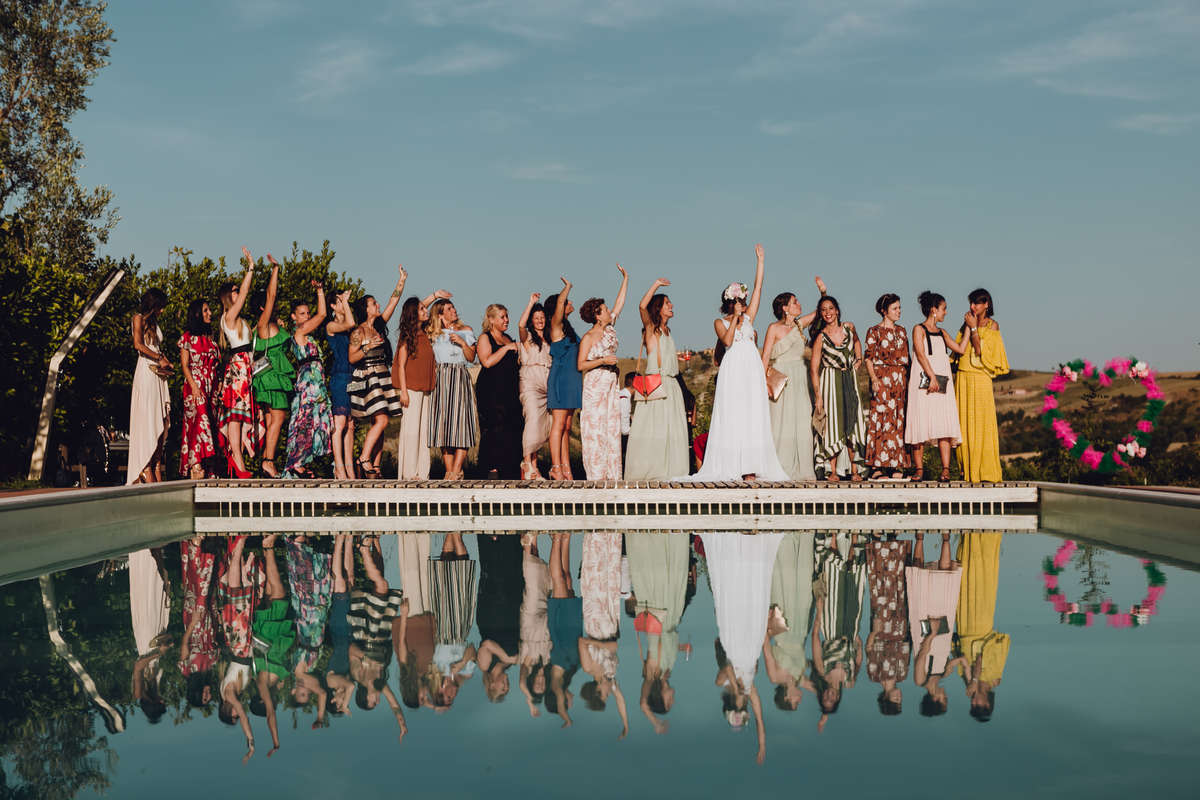
Meanwhile, new initiatives related to farm hospitality are flourishing. Since January first, ownership has been transferred from Stefano Valentini to his sons Francesco and Mario, with the first taking care of the agritourism part and the second of the agricultural activity. “In a few weeks we should start work to open, from 2026, the agri-camping site. This activity will replace the b&b we had before covid”, says Stefano. The cooking classes and local product markets held every second Sunday of the month will continue. Coming up, there’s also a shop for selling Podere products like flours and cascioni made with the farm’s wheat, wine and oil. The possibility of creating a restaurant is instead precluded by San Marino law, which provides for it only in the case where people stay overnight in the structure. “Even in the future, more than an agritourism, we will be a place where events are held”, the agricultural entrepreneur concludes. For booking it’s sufficient to call the farm specifying which experiences you intend to choose among those indicated on the website. For overnight stays and dinner, just three kilometers away is Agriturismo Le Bosche, with its splendid infinity pool ideal for summer and with its specialties like fresh pasta, naturally piadina and grilled meat.