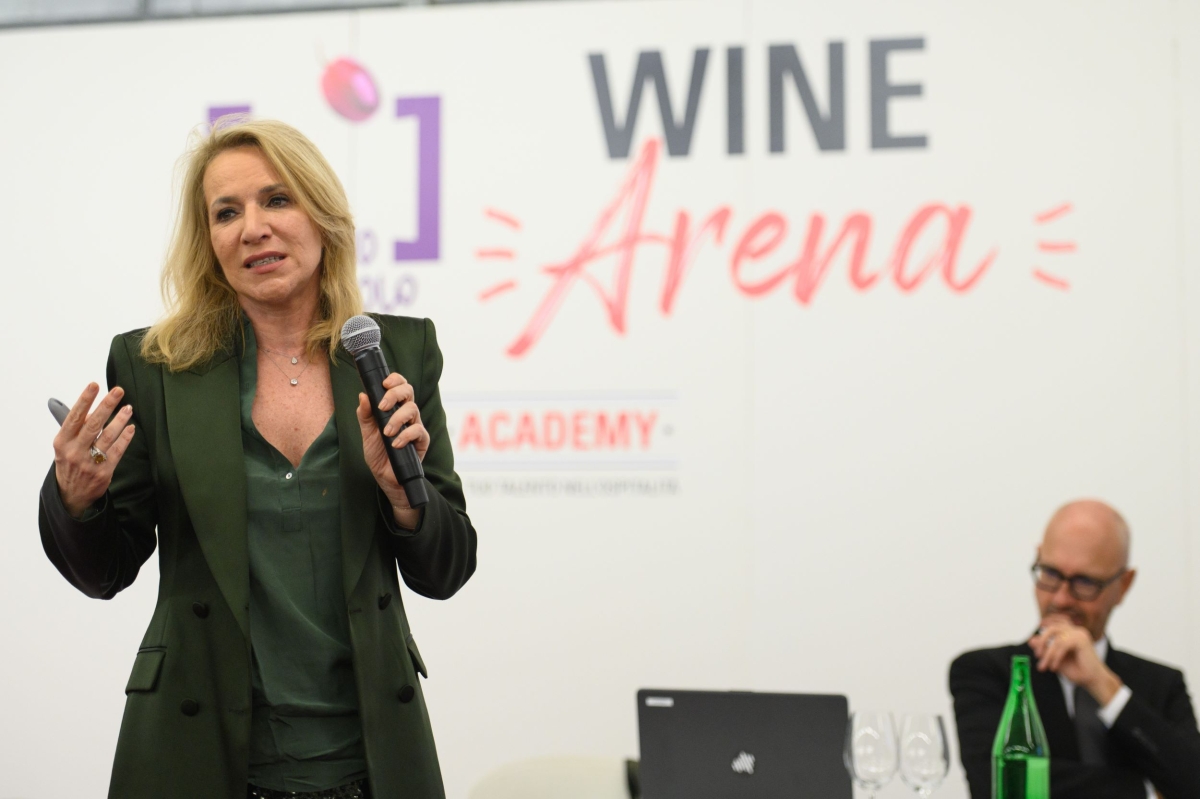
At a historic moment characterized by a collapse in wine consumption, at its lowest level since 1961, wine tourism is soaring at a rate of +12.9% annually. And the business isn’t yet mature, as growth prospects are broad and particularly concern international visitors in Italy and deseasonalization. This is stated in the report “When wine meets tourism – Numbers and models of Italian wineries”, presented today at Hospitality-Il Salone dell’Accoglienza (Riva del Garda) by Roberta Garibaldi (president Aite-Associazione italiana turismo enogastronomico) and Srm Centro Studi e Ricerche (Intesa Sanpaolo).
The report analyzes data on winery visits, and the prospects for further development of the wine tourism-based economy in Italy appear clear. The audience is largely composed of domestic tourists, who represent 55% of visitors and rise to 62% when including residents and proximity visitors, a smaller but strategic component for loyalty and direct sales. International visitors remain at 32%, a lower share compared to other European and international contexts. And the audience composition is surprisingly similar between small and large companies, indicating that limited internationalization is a structural characteristic of the entire sector.
Furthermore, there’s great development potential for the “cold” seasons and particularly for autumn, which is less valued in Italy compared to countries like France, where it represents the peak period for visitor numbers. Today, spring and summer combined represent 68% of visits.
Finally, opening to the public still tends to exclude the “busiest” days in terms of visitor numbers. Italian wineries during national holidays tend not to provide service. This often depends on company size, as larger operations ensure greater opening regularity thanks to a more solid organizational structure.
Combined, these three factors can provide additional momentum to a tourism sector in full growth. Globally, wine tourism is worth $46.5 billion and estimates indicate an average annual increase of 12.9%. Another aspect highlighted by Roberta Garibaldi is added: the governance of the wine tourism phenomenon. “Companies are asking for predictable, accessible policies that are consistent with wine tourism’s specificities, avoiding discontinuities that risk dampening the propensity to invest. Accessibility in all its forms is also important. Alongside regulatory and economic aspects, there emerges a request for more coordinated and strategic governance, capable of creating synergy between tourism, agriculture, culture and territorial development. Integrated promotion, territorial marketing and coordination between institutional levels are perceived as decisive levers to fully valorize wine tourism’s potential“, commented the research author.
Meanwhile, Riva del Garda Fierecongressi confirms the investments made with the Hospitality event and consolidated with the entry onto the Italian scene of Fine Italy, in partnership with Feria de Valladolid, whose second edition will be held on October 27-28 again within the trade fair district of the Trentino location, after the good results obtained in 2025.
“Wine tourism – stated the General Manager of Riva del Garda Fierecongressi, Alessandra Albarelli – today represents one of the most powerful levers for the development of our territories, capable of generating economic impact that goes well beyond the wine glass. However, the analysis highlights fragmentation that risks slowing the sector’s full potential, especially regarding internationalization and deseasonalization. Our role as Riva del Garda Fierecongressi, through events like Hospitality – Il Salone dell’Accoglienza and Fine Italy, is precisely to foster dialogue between public and private sectors, creating that integrated ecosystem that companies are loudly demanding. Only by working as a system can we transform the excellence of our product into a mature and globally competitive tourist destination”.