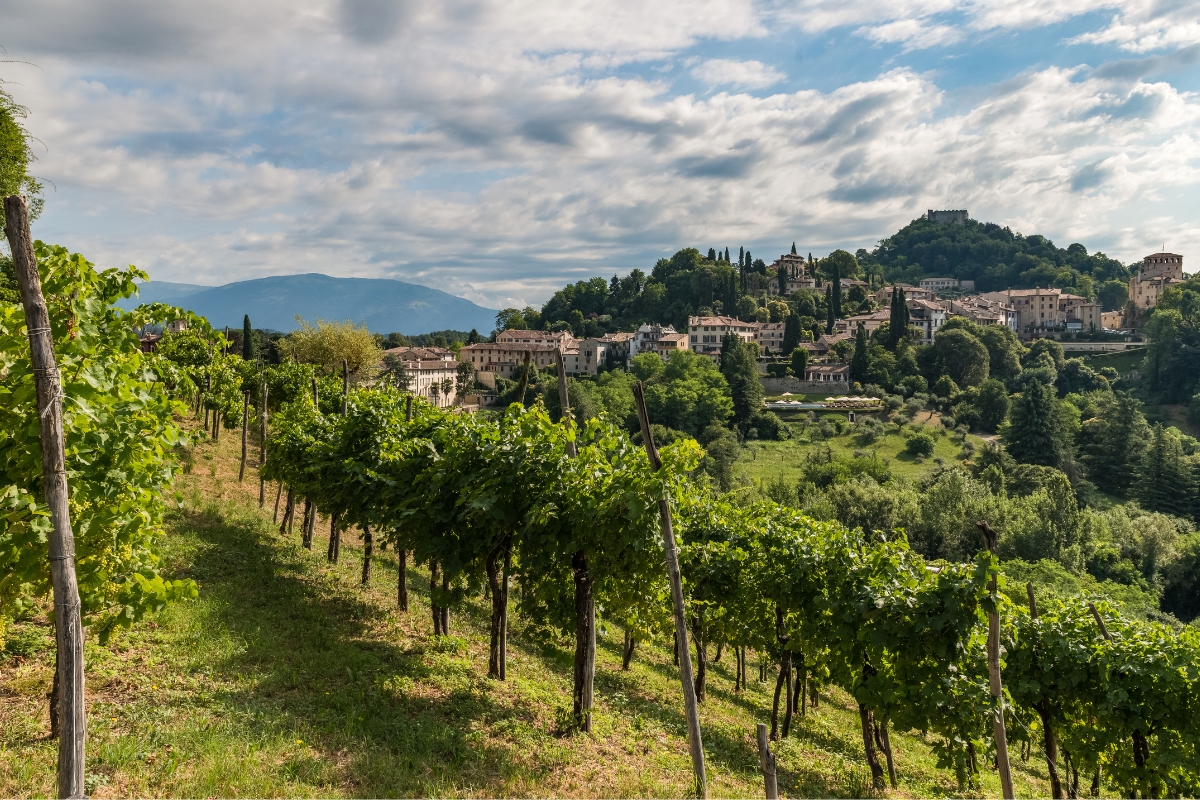
Asolo, “city of a hundred horizons,” one of Italy’s most beautiful villages, a wine territory on the rise thanks to the Prosecco phenomenon that here, on the hills so beloved by the English and not only by them, is present as Superiore and takes the name Asolo Prosecco Dogc. Among the flagship wineries of this denomination stands Dal Bello, for quality and history. It is one of the most established producers, being a company founded in 1906, managed today by the third generation of the Dal Bello family, represented by Mario e Antonio Dal Bello and with the fourth already involved in significant roles, in the figures of Chiara e Jacopo Dal Bello. Wine tourism is an equally established reality and for three years has been able to count on a truly unique plus: the Primo Percorso della Viticoltura Asolana.
THE HOUSE WHERE TIME HAS STOPPED
Il Primo Percorso is an itinerary that winds along the Colle di Sant’Anna and encompasses over a century of history. The project testifies to the deep intertwining between the Dal Bello family and their territory and represents the realization of a dream cultivated over time: sharing the uniqueness and exceptionality of the cultural and natural heritage of the Colli Asolani. Along the path we find illustrative panels that tell the story of the territory’s biodiversity and the history of viticulture in the Asolo area, accompanying visitors on a walk among vineyards, olive trees and cherry trees owned by the family. The destination is Casa Dal Bello, the ancient family home transformed into a museum with a collection of antique work tools, offering a living testimony to the local agricultural and wine culture.
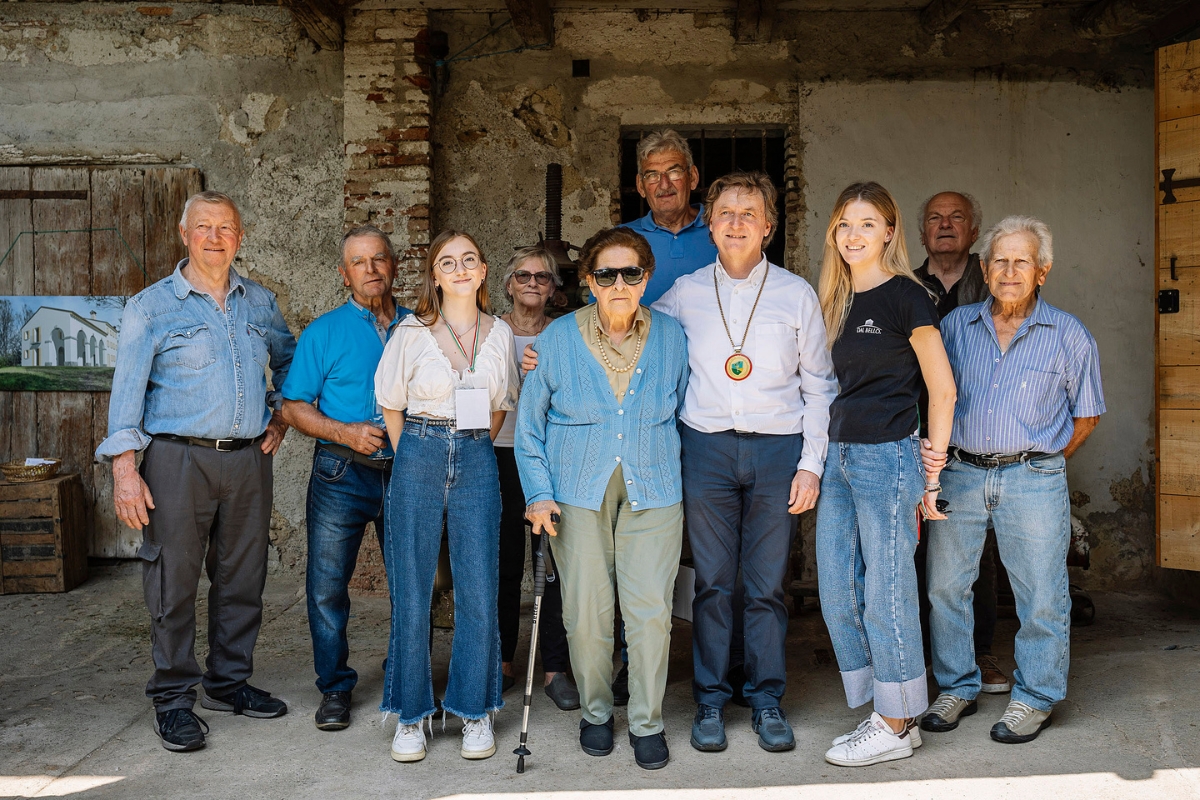
“In our ancient house, it’s as if time has stopped,” Chiara Dal Bello tells us. “The working wood stove, the old calendar with days marked for hay cutting, the old cellar, the stable that housed the livestock. It’s a journey through time, inside a house where incredibly up to 10-15 people lived in just three rooms.” From there, the path moves to the present day, in the current winery. And it concludes with a tasting of wines that, in addition to Asolo Prosecco, includes what is the winery’s flagship: the Rosso Asolo, first vintage 1997, a wine that expresses the identity and wine history of the Dal Bello family.
THE CASTELCIES VINEYARDS
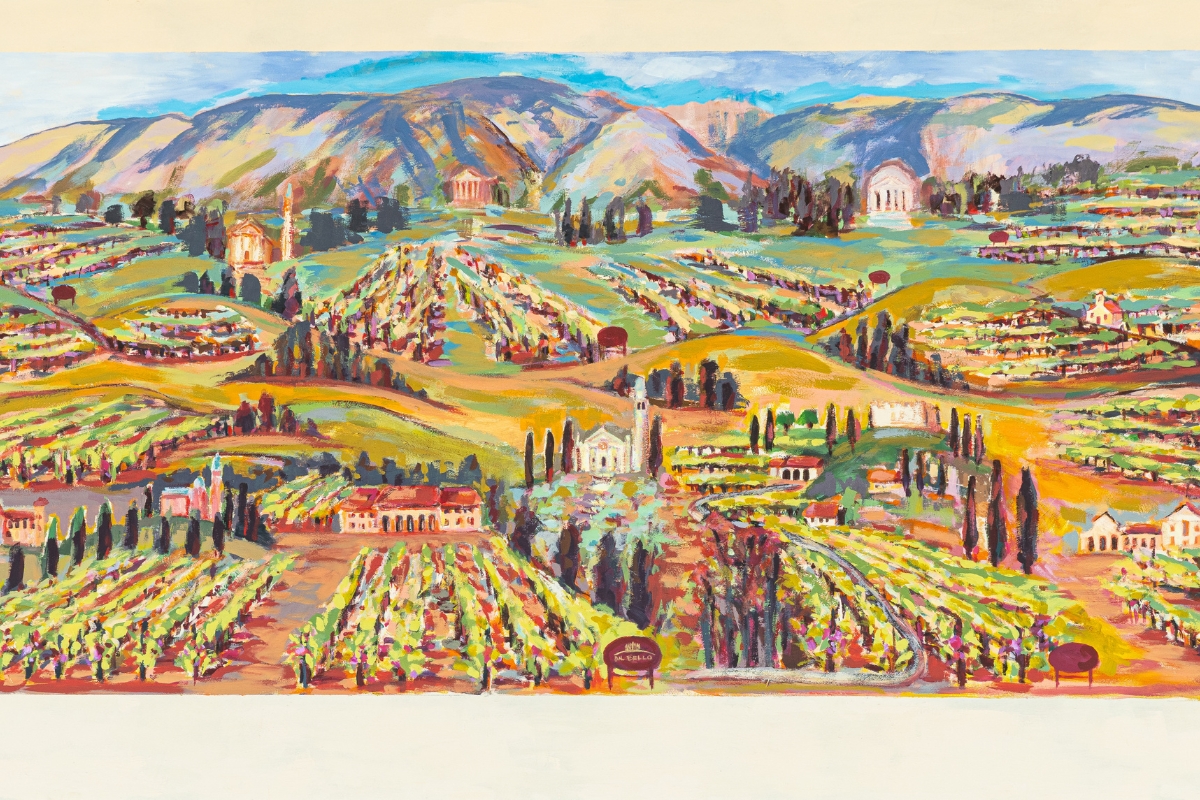
Dal Bello has also distinguished itself for a recovery and enhancement project concerning the Vigneti di Castelcies. Inaugurated last September, they are the result of a recovery project that required years of work, involving five hectares of surface area among the hills of Asolo, in the locality of Cavaso del Tomba, in an area of great naturalistic and monumental value, known for the ancient Romanesque church of San Martino and for the art trail, among wood and stone sculptures, as well as frescoes on houses. The project has brought new light to the village by enhancing a historic vineyard.
AUNT FRANCA’S TRATTORIA
Many projects are in the works, one of which involves the possibility of transforming part of the ancient house into rooms for wine lovers’ overnight stays. Meanwhile, during the warmer season, hospitality is provided in the garden to accompany the wines with local cheeses, bread baked in the wood-fired oven and local cured meats. If that weren’t enough, a short distance from the winery there’s “Aunt Franca’s” trattoria, Chiara’s aunt. It’s called Osteria Fara di Fonte and is famous for its meatballs. Among other typical dishes of the territory, worth mentioning are bigoli in saor, risotto with red radicchio from Treviso, musetto in winter, scioss (land snails) and tripe. Everything is accompanied by Prosecco “Spago” Rocca d’Asolo, which is the traditional prosecco and also the best-selling one (among clients Esselunga stands out), by Asolo Prosecco Docg labels and naturally by Rosso d’Asolo.