Mistake to avoid in life: taking the car, driving all the way to Pisa, taking the usual silly photo in Piazza dei Miracoli holding up the Tower with your hand (right or left, depending on taste) and going back home, thinking that what needed to be seen has been seen. With all due respect for those visiting one of the most photographed places in the world, there’s much more to see. Beyond the city, which is entirely worth discovering outside the famous square with the Leaning Tower, Pisa has a hinterland rich in treasures, both cultural and gastronomic.
SUCH AS?
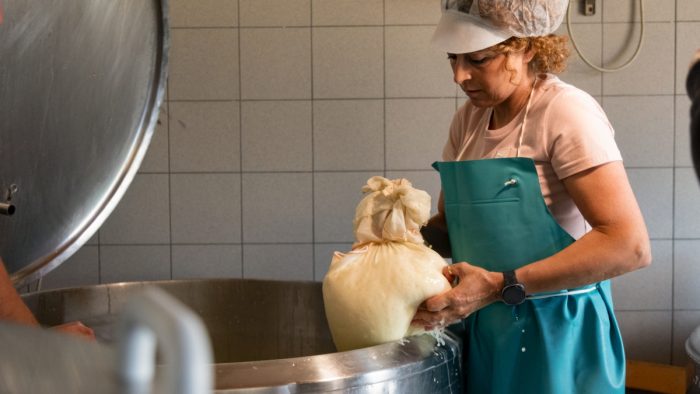
It’s up to us to tell you about the treasures of taste, and that’s what we’ll do. One above all: the white truffle of San Miniato. On the hills south of the Arno, where one of the world’s reference areas for hunting the precious tuber is located, record harvests often occur. In 2018, the truffle hunter from Livorno Mauro Del Greco, with his faithful Lagotto Romagnolo Enea, found one weighing 2.2 kg. Another truffle detective did even better in 1954, Arturo Gallerini known as Bego, who with his dog Parigi reached the weight of 2,520 grams. Beyond extreme cases, in San Miniato and surrounding towns, white truffles are almost never missing, even in the most difficult seasons like 2021. To buy them, we recommend going up to Forcoli to visit Cristiano Savini of Savini Tartufi, whom we’ve already told you about for the truffle experience offered to visitors. If you’re out of season, you can always choose processed products like delicious peschiole, creams and sauces, and even truffle-flavored potato chips. But then there’s much more: from San Rossore honey to Colline pisane oil, from Lari cherries to many vegetables (“mora” zucchini, San Miniato artichoke, “pisanello” tomato, local cauliflower and many others). Don’t miss the Balze Volterrane pecorino cheeses in Volterra and the Pisana breed beef (the so-called “mucco pisano”). Without forgetting two other excellences: pine nuts from the San Rossore and Migliarino pine forests, considered the best in Italy, and the chocolate valley that now thrives between Pontedera and Montopoli with producers like Amedei, Noalya and many other small artisans worth visiting. But what interests us most is the wine chapter.
THE TERRE DI PISA DOC
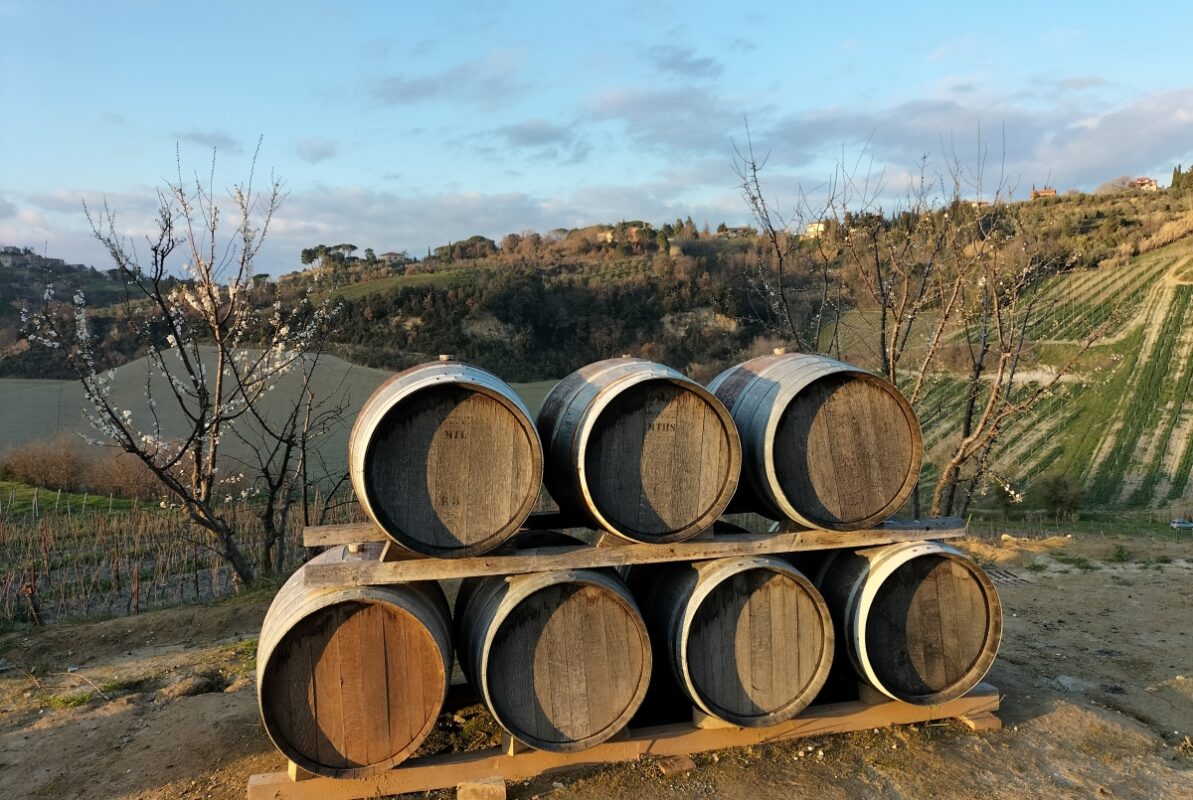
In the province of Pisa there’s a denomination, with its related protection Consortium, among the youngest in the entire region. It’s the Terre di Pisa DOC, recognized in 2011, while the Consortium was established in 2018. The DOC wine types are two: Terre di Pisa Sangiovese (at least 95% Sangiovese grapes) and Terre di Pisa Rosso (at least 70% Sangiovese, Cabernet Sauvignon, Merlot and Syrah, alone or together), with an increasingly marked tendency by producers to enhance and strengthen the territory’s native grape and that of all Tuscany, namely Sangiovese, which in the Pisan hills presents very different characteristics compared to Chianti Classico, Montalcino, Montepulciano. Because here the climate is different, because here the sea is truly within reach (of the Arno mouth), because it’s a territory subject to fairly constant ventilation and because the altitude of the vineyards, never too high, guarantees grape ripening. Besides Sangiovese and international varieties, producers are strengthening Vermentino cultivation, which ensures rapid cash flow (it goes into bottles in February/March and is sold out by summer) and comes out really well for freshness and sapidity. The third trend is rosé, mainly Sangiovese-based. Finally, almost all companies have a few hectares or fractions dedicated to Trebbiano and Malvasia, because there’s Vin Santo to produce for themselves, for friends and for all those who love it, preferably without dipping cantucci in it (another thing to avoid, like the silly photo mentioned above, if you don’t want to be hated by Pisans…)

FIVE UNMISSABLE WINERIES
At this point, having established that there’s so much to see without even venturing to Volterra (no small feat…!), let’s choose the wineries. The Terre di Pisa Consortium includes fifteen of them and we visited five, which have a lot to tell both in terms of history and hospitality and experiences.
VARRAMISTA
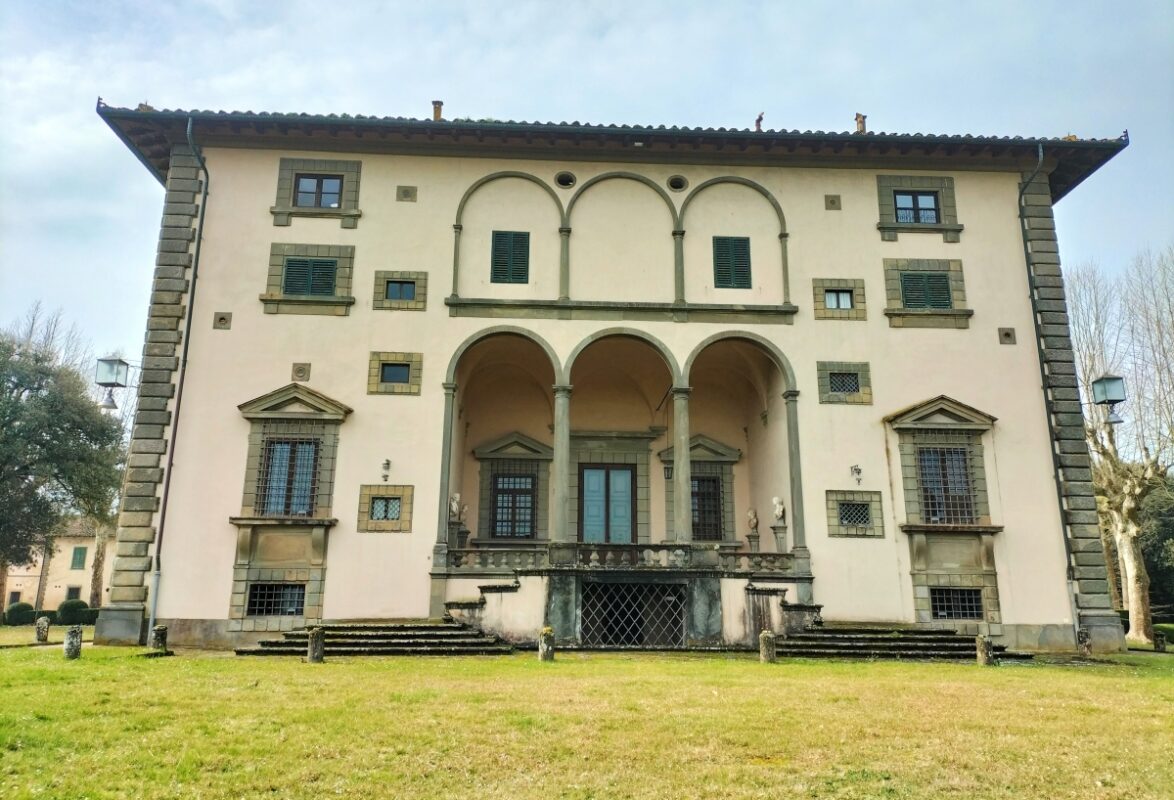
Here you breathe history. Villa in French Chateau style, Italian garden, four hundred hectares of park, woods and vineyards (very few, only eight hectares), it hosted Alessandro Manzoni, was chosen to celebrate the wedding of Umberto Agnelli with Antonella Bechi Piaggio who, incidentally, was its owner. But Varramista’s history inevitably intertwines with that of Giovannino Agnelli, who made it his residence and launched into the seemingly most difficult challenge: producing a great Syrah at Varramista, his favorite wine. Giovannino left us too soon, at only 33 years old, but his Syrah is still here, surprising us with its longevity, proving that Giovannino had seen it right and that wine, if you make it with mastery and if there’s terroir, can truly tend toward immortality. In the villa’s central hall there’s an old Vespa, perhaps Varramista’s most photographed object, to underline the connection between the estate and Piaggio’s history, which is also the history of nearby Pontedera and Pisan industry. What to do at Varramista? For example, you can stay in one of the three farmhouses, each with its own pool, and dedicate yourself to wine tasting paired with Tuscan prosciutto and pecorino. The top accommodation is Villa Frasca, 20 beds with private pool, costing between 570 and 900 euros per night depending on season.

FATTORIA FIBBIANO
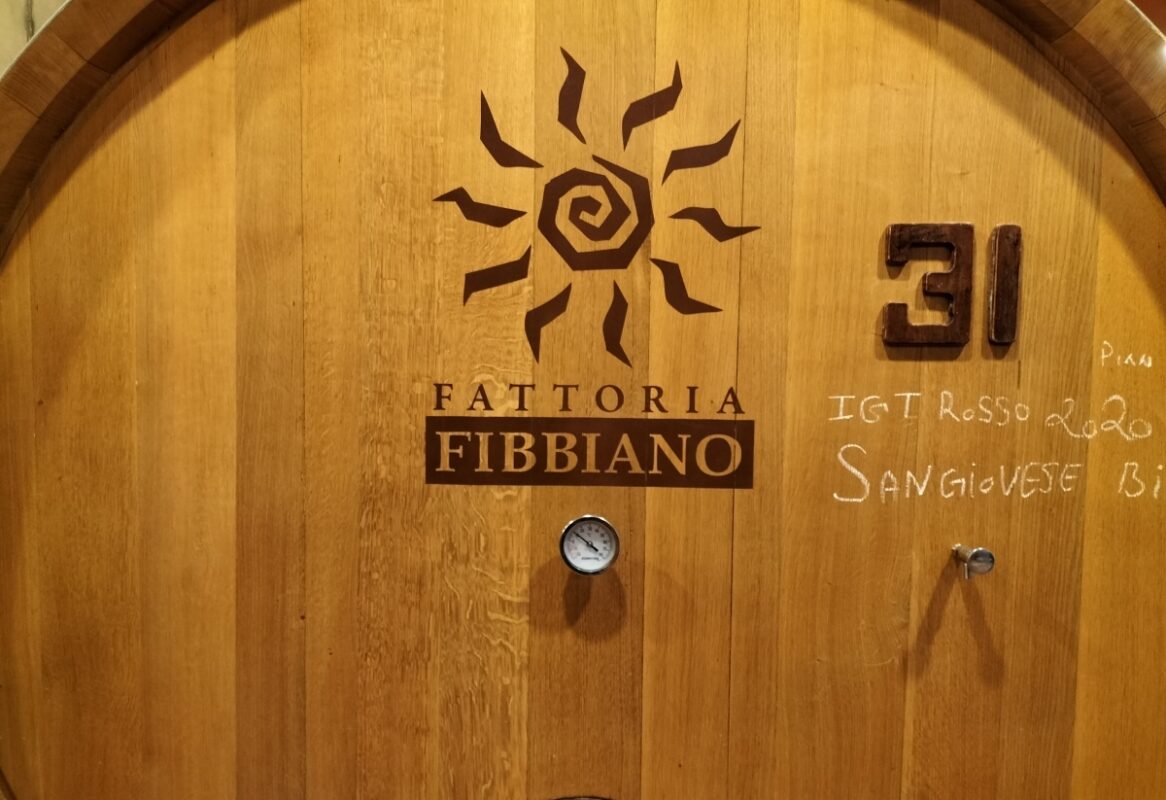
You don’t need Sherlock Holmes to understand that Nicola Cantoni, president of the Terre di Pisa Consortium, isn’t exactly from Pisa… His accent reveals his Lombard origins, precisely from Lodi: in 1997 his father Giuseppe decided to invest in Terricciola taking over a company active since 1700. The starting point was renovating the existing farmhouse on the property: tourism brought the resources that the Cantonis would then invest in vineyard and cellar. “Everything we have is the result of our wine tourism commitment” says Nicola. From the initial eight hectares, the company has grown and now counts 25 hectares of vineyard and 100 total hectares. Fibbiano’s creed is Sangiovese, the native grape. Total production is 150,000 bottles, with the goal of reaching 230-240,000 within three years. And if today wine has become the main business, the agritourism offer remains in the family’s heart. The Farm offers 35 beds divided between eight apartments and four rooms with private bathroom. Besides well-deserved rest by the pool, Fibbiano offers many experiences with particular attention to the gastronomic part. Every week collective pizza starts: the company prepares the bases (dough and tomato), then each guest chooses toppings and wine pairing. And cooking happens outdoors in a three-hundred-year-old oven. Then naturally they hold cooking classes and make fresh pasta with guests. Projects in the pipeline? A spa, with an outdoor section among the olive trees, and a food product line under the Fattoria Fibbiano brand.
BADIA DI MORRONA
Owned by the Genoese Gaslini family, the estate is located in Terricciola and extends over 700 hectares, 110 of which are planted with vines and over half with Sangiovese. It has three villas and eight apartments scattered among the hills, for a total of about 120 beds, and each structure has its own pool. The central building is an old monastery used for ceremonies, events and private parties. Ideas abound: they organize cooking classes, e-bike excursions on reservation, guided tours with wine tasting (we recommend the Terre di Pisa Sangiovese VignaAlta) and pairing with local typical products and possible light lunch/dinner. There’s also the oil mill, and at the end of October you can try the olive harvesting experience (as well as grape harvesting between September and October). In good weather, outdoor tasting is a must, while when it rains or the climate is harsher you can opt for the tasting room that accommodates up to a maximum of 15 people (it would be more, but Covid requires limiting seating). And then there’s the light dinner formula in the barrel room.
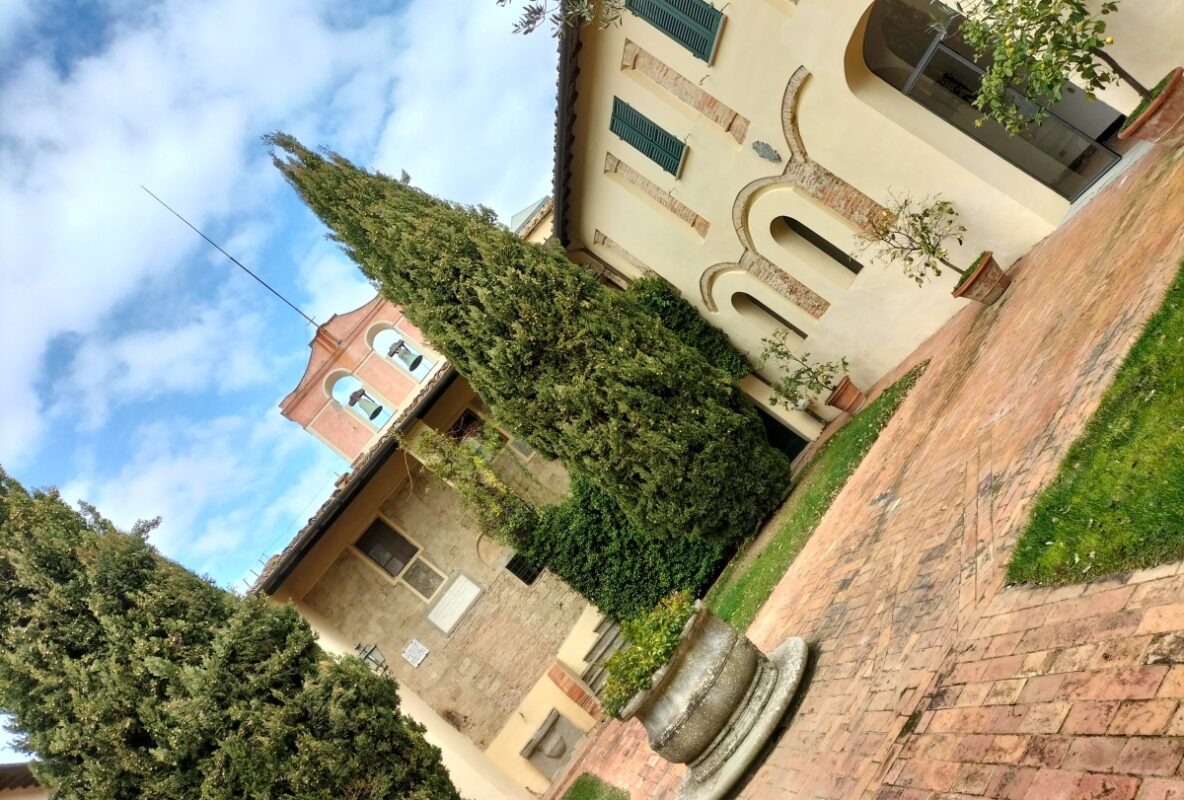
PODERE LA CHIESA
A wow-winery, designed by architect Andrea Mannocci and entrusted for the structural part to the La Spezia-based Exa Engineering studio. The result is a series of “openings” that create the idea of a Sangiovese grape cluster, the icon-grape of Podere La Chiesa. The property belongs to Maurizio Iannantuono, former IT specialist with a visceral passion for wine, and his wife Palma Tonacci, who is also an excellent cook (personally tested at the stove). In the cellar, wine coexists with exhibitions by individual artists and collectives on display for 4-5 months before turnover: currently, and wine at the beginning of summer, there are Andrea De Ranieri’s paintings. The planted hectares are 13, for a production of about 50,000 bottles distributed over seven labels, with the eighth coming (stay tuned!). In 2019, the last reference year before Covid, the winery had totaled over 5,000 wine tastings and a much higher number of visitors. Its Terre di Pisa DOC wines are Sabiniano di Casanova (Terre di Pisa Rosso DOC) and Opera in Rosso (Terre di Pisa Sangiovese DOC). The unmissable moment? When Maurizio organizes jazz concerts with internationally renowned musicians. Why music, why art in a winery? “Simply because I like it” replies the winemaker-patron.
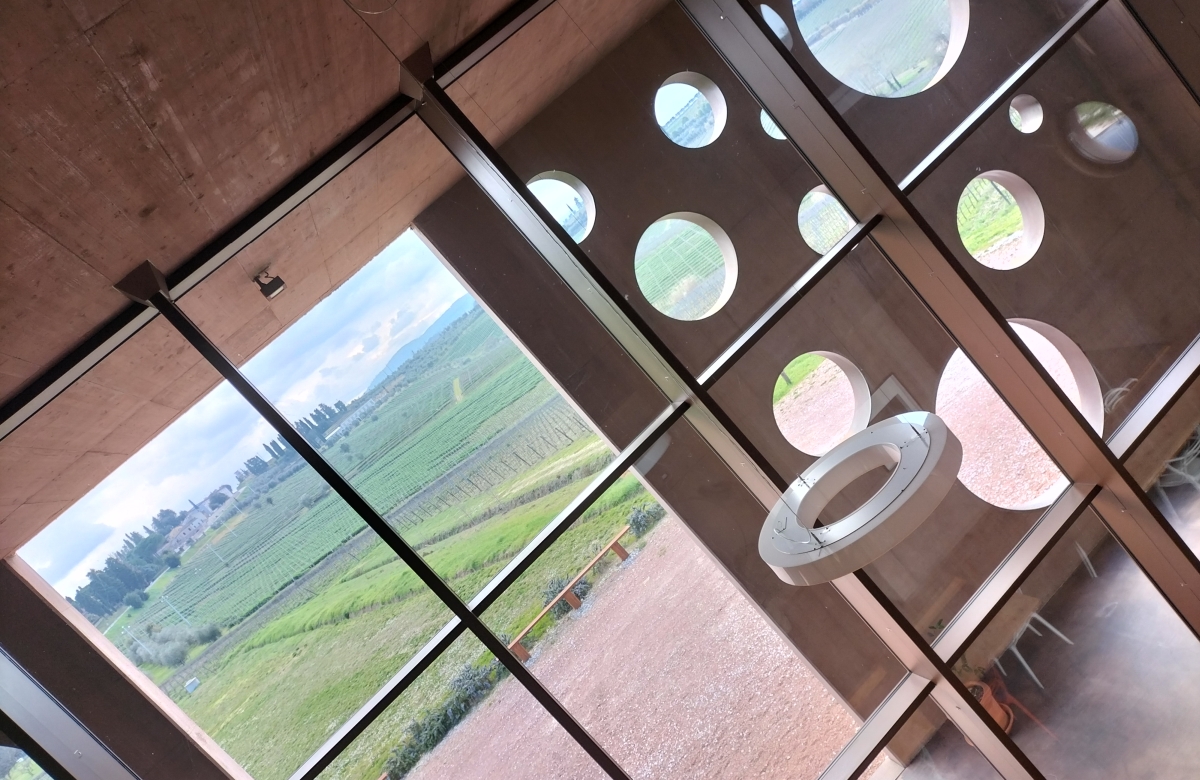
CASTELVECCHIO
Owned by the Pantani family, Castelvecchio was founded by four men, brothers and cousins who worked in construction, but today it’s essentially a female-run (vineyard included) and family business, with 30,000 bottles per year of which 15,000 with Terre di Pisa denomination. Let’s get straight to the point… Follow the company on Instagram and keep an eye on the highlight appointment: dinner among the rows, which takes place three times a year. In the kitchen there’s Giulia’s mother (the hospitality manager) who knows her stuff, in the vineyard a violinist and everyone enjoys the experience from their personal table. But there’s more. Every evening, at sunset, the large open space in front of the winery transforms into a space to admire the golden hour while tasting Castelvecchio wines paired with local products prepared in an old wooden box. The winery is very lived-in: open every day, from March to December, with Giulia always very active in studying new formulas to attract visitors. There’s also the wine shop and a space for tastings with views of the hills. “We work with open doors and our visitors are practically catapulted into the winery’s life, harvest included” says Giulia. For sleeping? There’s La Fienaia, the apartment created from an old barn located exactly next to the family house, with six/seven beds depending on needs. You who live in the city along busy avenues, know that here someone has complained about excessive silence… The other solution, also by Castelvecchio, is the mini apartment il Trinciatoio, ideal for a couple. Both are available on request via email.