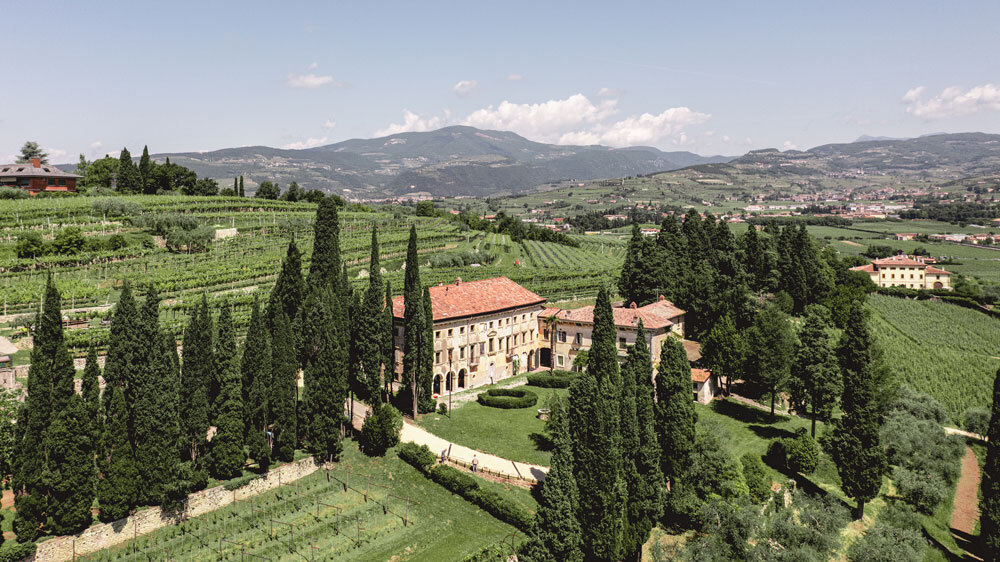
It was 2015. Cecilia Trucchi, then owner of Villa Bellini a Castelrotto di Negarine (Verona), decided to sell the winery and historic property to the Riello family. With a formal commitment: that the organic method for vineyard cultivation, started well ahead of its time – it all began in the early Nineties – by Trucchi, would be continued. A commitment that has been respected, because the original six hectares are still cultivated organically and now there are another ten hectares of land in conversion. Meanwhile, the Riello family has invested in restoring the building, which consists of a 15th-century section and one dating back to the 18th century. Within a year everything will be completed and the work will result in six suites available for wine lovers who wish to stay overnight in Valpolicella classica.
EXPANDING ESTATE
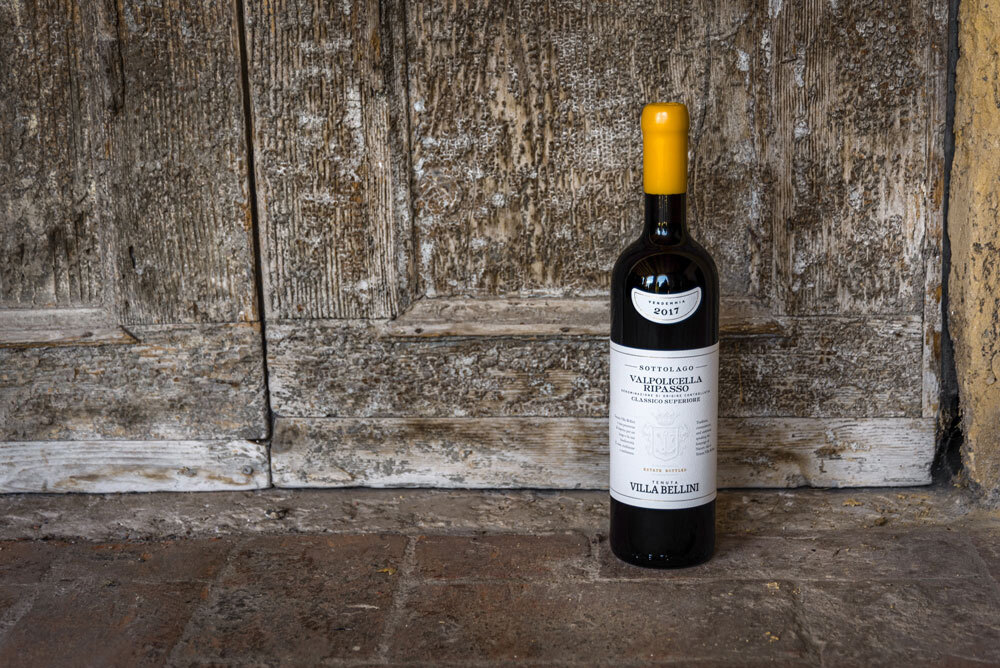
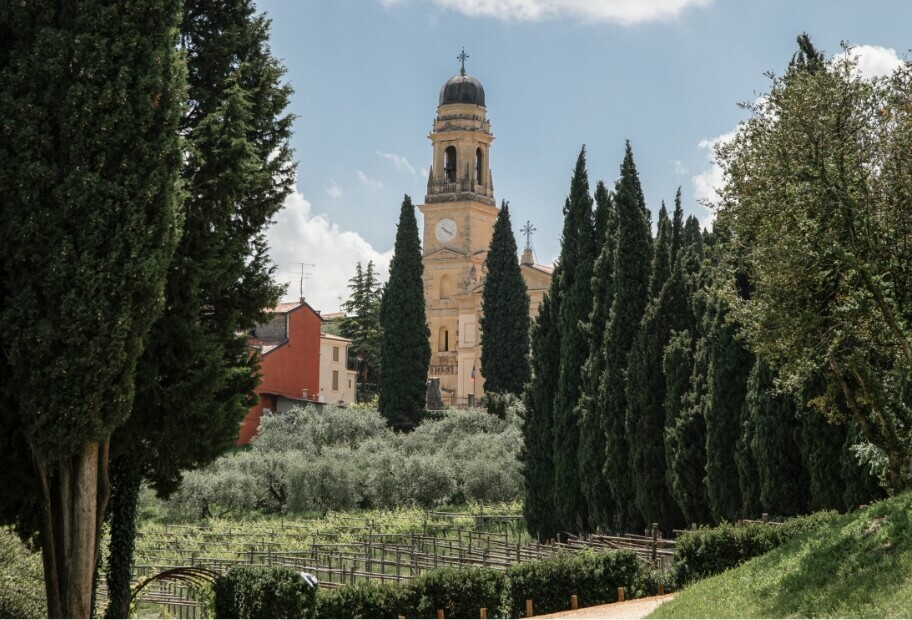
Behind the “brolo” – the name for the boundary wall that protects the property from prying eyes – lie not only the Venetian villa, but also various 17th-century rustic buildings, a pond in the woods and a grotto complete with spring, ending with a neo-Gothic tower that constitutes a distinctive and unique element. Currently at the Villa Bellini estate they produce about 15,000 bottles per year of typical Valpolicella wines, but much depends on weather conditions. In 2020, for example, a heavy hailstorm compromised the harvest and they gave up on the reds to use the grapes for traditional method sparkling wine production. With the arrival of the ten hectares of vineyard in organic conversion, production should rise to reach 40,000 bottles.
THE DRYING ROOM IN A FRESCOED THEATER
Opening Villa Bellini to the public is a work in progress project. Everything will be fully operational when work on the villa is completed, so we’ll need to wait about a year. Today we’re in the slow opening phase, which consists of a vineyard tour to admire the three training systems that characterize the estate. We then move to the cellar, among the Valpolicella Classico and Superiore that are aged in steel and the Ripasso and Amarone that undergo their passage in wood. Finally, a visit to the fruttaio, the grape drying room, is a must – created in a frescoed space where the villa’s theater once stood. Everything concludes, still inside the villa, with a wine tasting.