In Isera, Trentino, there’s a winery that has created a restaurant which has become a destination for those wanting to discover the flavors of Vallagarina. This winery is De Tarczal, whose origins date back to the Austro-Hungarian Empire era, and its name is primarily linked to marzemino, the most important and historic wine of Vallagarina – the one that was “de rigueur” at the Viennese court tables. And today, at De Tarczal, it’s also used as an ingredient for the signature dish of their restaurant, called La Vineria.
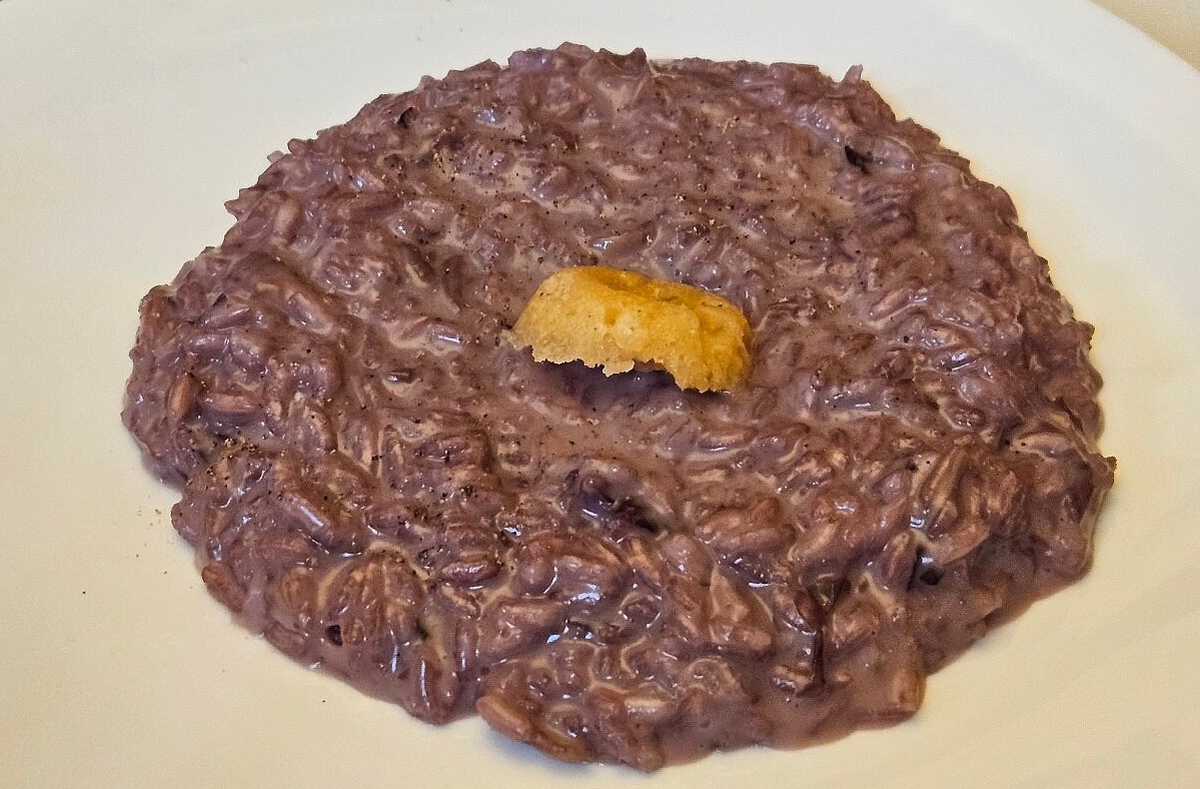
La Vineria’s quality-to-price ratio is very high, not only because the prices are fair and the estate wines are offered with moderate markups, but also because the quality is truly exceptional. During my personal forays to Isera, I’ve never missed a visit to La Vineria and I’ve never skipped the top dish: risotto with radicchio, marzemino (from Isera, naturally) and smoked scamorza cheese. Of course, it’s not the only choice from the kitchen, as the menu is decidedly enticing. As an appetizer, I’ve also tried the savoy cabbage flan with casolèt from val di Sole, while another unmissable dish from the restaurant – the marinated trout from the nearby Giudicarie valleys – isn’t quite my style. Among the first courses, a good alternative to the risotto is the garganelli with game sauce, but rather than an alternative, we should speak of “integration” since no law, not even in Habsburg times, prohibits enjoying a nice double course of pasta dishes. If you want to continue being adventurous, for the second course there’s braised beef, this time braised with merlot rather than marzemino, or pork jowl flavored with dark chocolate. For those with a sweet tooth who aren’t satisfied with the food of the gods in the jowl recipe, there’s apple strudel with vanilla sauce, or grappa semifreddo (we’re in Trentino!) with caramelized orange.
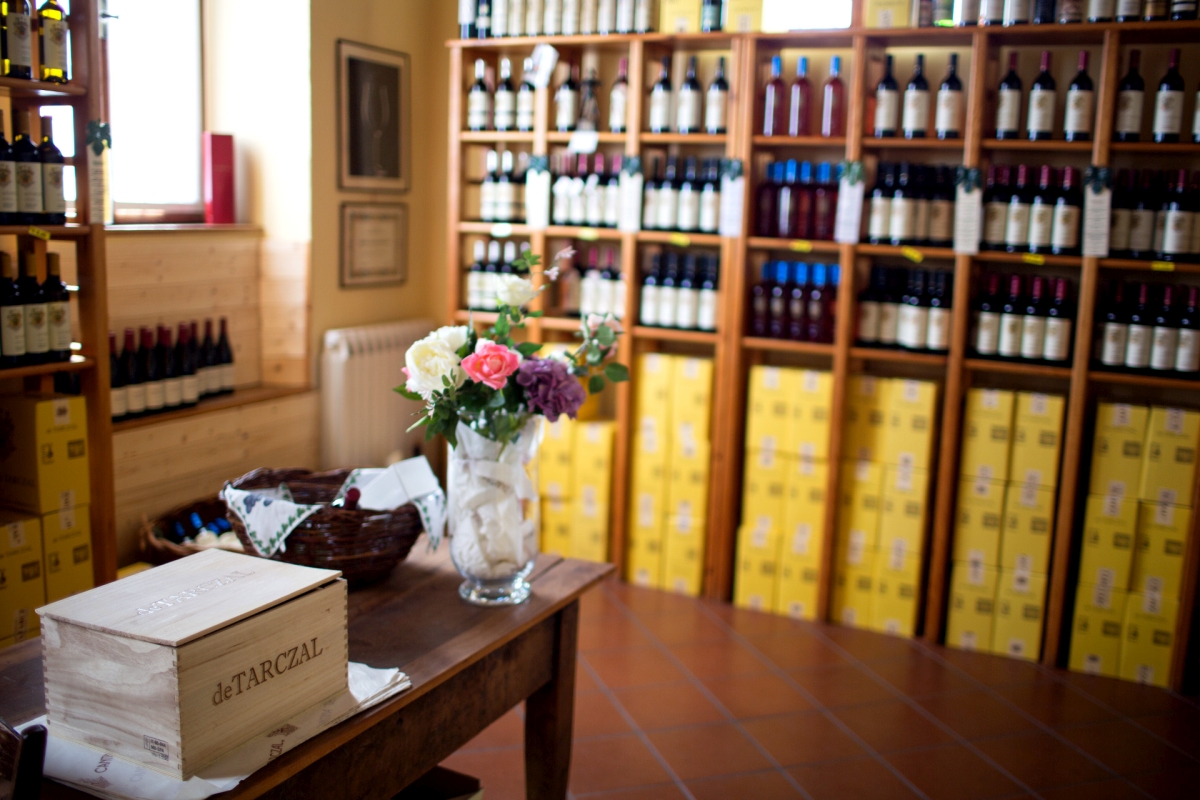
La Vineria is now a well-established project. “Operating for more than 25 years, it was initially conceived as a relief valve, to free up space in the central courtyard, which is used for visits and tastings,” winemaker Matteo Marzari told us during Hospitality, the hospitality trade fair held in Riva del Garda from February 2-5. The idea had the success it deserved, and today the restaurant operates year-round (closed Sunday evenings and Mondays). In the wine cellar, naturally, are the winery’s wines, plus there’s always a wine produced by another “guest” winery, provided it’s a producer-vintner. But those who travel up to Isera to visit De Tarczal don’t just have the restaurant at their disposal. “The estate’s structure – explains Marzari – is designed for hospitality, being a U-shaped farmhouse, more typical of Veneto than Trentino, where it’s difficult to find something similar. We offer our guests a 360-degree experience, starting from the vineyards to show our visitors the cultivation techniques.” In particular, there’s a vineyard that offers the opportunity to admire all the different training systems present in the Isera territory. Then you move to the winery, following the path that grapes take from reception to pressing, to vinification, until aging in barrels and bottles.
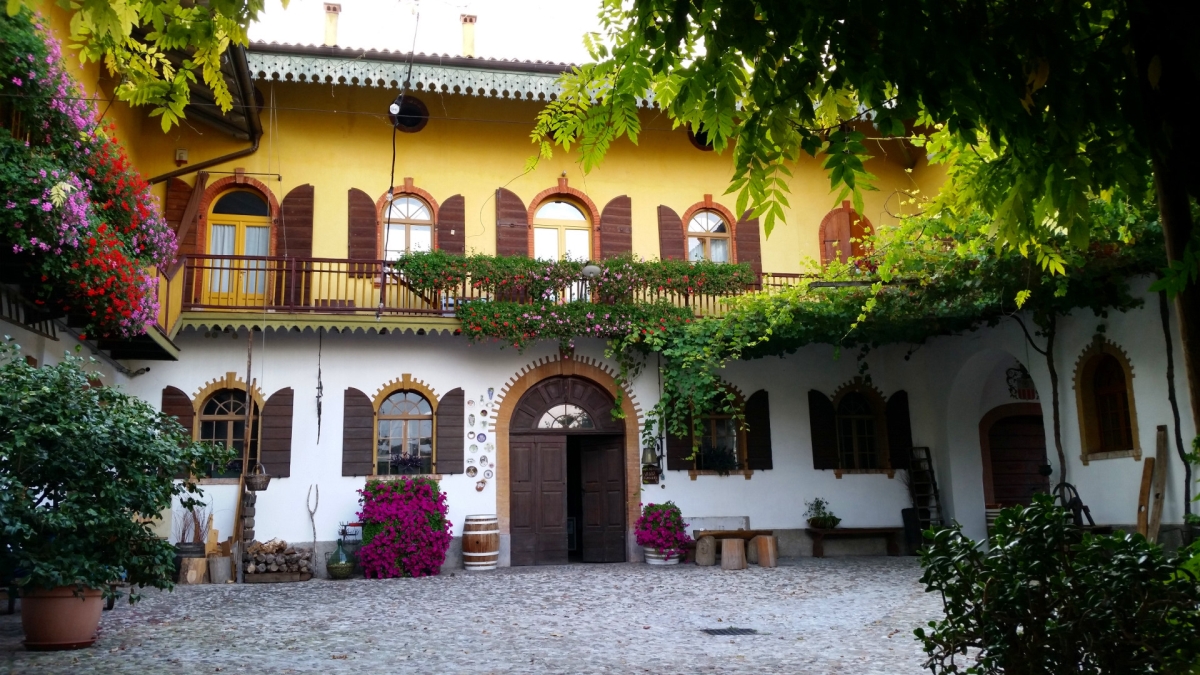
Within the courtyard there are spaces structured for small and large groups, up to a maximum of 50-60 people, and then you move to the stube, which is the old stable renovated to handle tastings, ranging from a simple tasting (10 euros, by reservation) up to pairings with dishes featuring local products. And then you move on to La Vineria.
And what will happen in the future? First, there’s a novelty at De Tarczal from just a few weeks ago: vermouth produced from a marzemino base, the result of years of trials and experimentation to achieve the balance and elegance the winery wanted to reach. Then there’s a century-old park, owned by the De Tarczal family, which last summer was opened to host an event by the Associazione Vignaioli del Trentino, the Vintners’ Picnic, and it was quite successful, encouraging the owners to consider using it as an outdoor space for events. At the head of De Tarczal, a family of Hungarian origin, for more than half a century has been Ruggero Dell’Adami de Tarczal, with his daughters Elena and Felicia. The land once belonged to the Alberti Counts, an illustrious Trentino family known among other things for having given birth to a Prince Bishop of the city of Trento, until Countess Alberti brought it as dowry to Gèza Dell’Adami de Tarczal, admiral of the Imperial Royal Austro-Hungarian Fleet and direct ancestor of Ruggero and his daughters.
Opening photo: from Tripadvisor