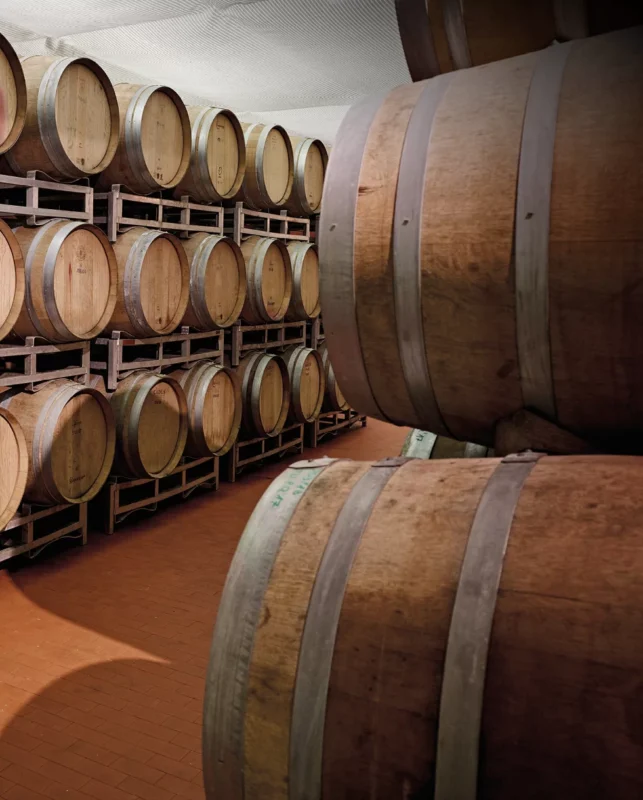
Val di Cembra, Trentino. A paradise of nature, cycling and fine wine. In this territory there’s a winery that embodies mountain wine production, so much so that it includes it in its brand name: it’s called Cembra Cantina di Montagna and can boast the title of one of Italy’s highest wineries, at 700 meters altitude, in a valley famous for porphyry and its extreme slopes, which can exceed 40%. We’re looking at an example of heroic viticulture and this alone is one of the good reasons to visit Cembra, but it’s certainly not the only one. Let’s discover ten of them, ideally accompanied by Stefano Rossi, the winemaker of this high-altitude cooperative.
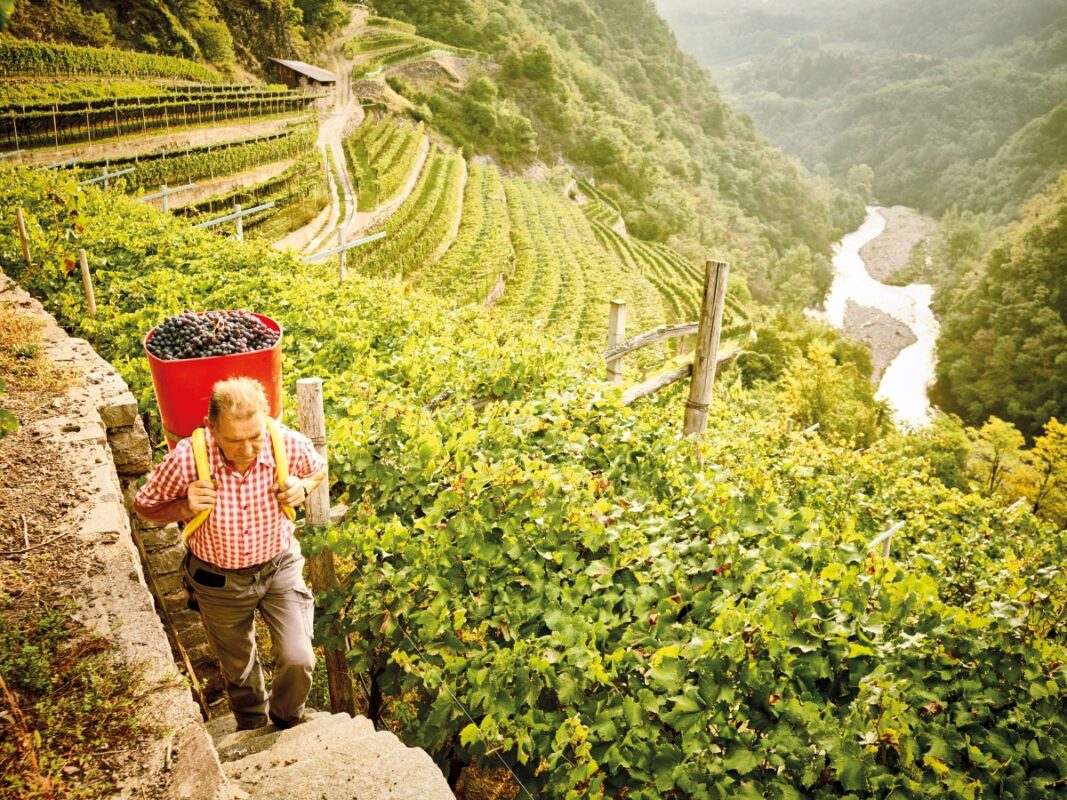
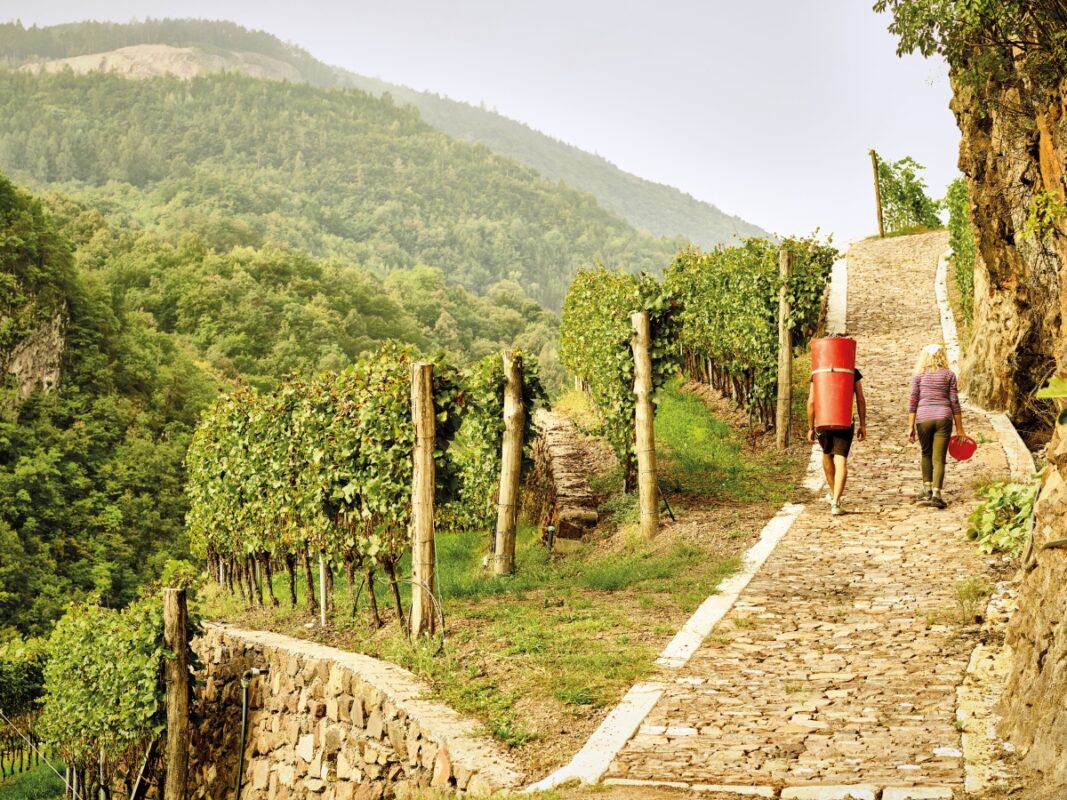
1. The vineyards. Because they are family gardens, since Cembra is a cooperative composed of three hundred members, meaning winegrowers who have very small plots available, averaging half a hectare each. And they pass them down from generation to generation, with no intention of selling them to large companies. Nobody considers selling, because grape cultivation is a form of attachment to the territory and family histories. People believe in it, they load the gerla (the characteristic wicker basket) on their shoulders to transport the grapes and inevitably remain connected to it.
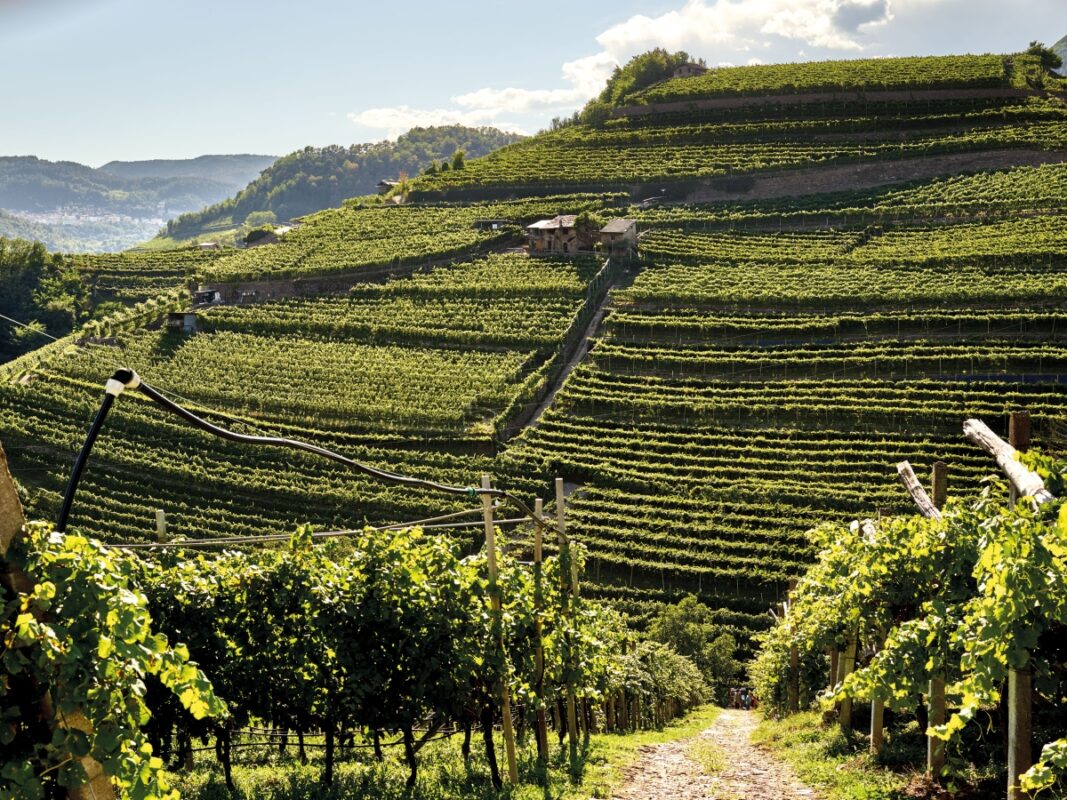
2. The dry stone walls. Because they are a UNESCO intangible heritage, certainly, but also because they are part of this valley’s DNA. It’s a tangible sign of how humans have managed, through their work, to domesticate nature, improving it and building, through hard work, spectacular terraces. If we lined up all the dry stone walls of Val di Cembra, we could have a spectacular “great wall” capable of connecting Trentino to Naples: they’re more than 700 km long. Moreover, they represent a biodiversity laboratory, because insects and many animals nest in the walls. For the farmer, maintaining these walls represents a diversion: when the work in the cellar ends, the “maintenance” work on the dry stone wall begins.
3. Lago Santo. This is the name of the small lake located 1200 meters high, above the headquarters of Cembra Cantina di Montagna, and it’s an enchanted place. “Our next step – says the winemaker – will be to identify routes to go up with wine tourists to do tastings with a lake view. Because this, for us, is the strength of wine tourism. And we like to constantly propose new activities”.
4. The Castle of Segonzano. Among the ruins of this ancient castle, time seems to have stopped. In the Middle Ages, Val di Cembra was of fundamental importance, as it provided the Venetian fleet with the red spruce wood necessary for building ship masts. The timber was transported to Venice by river. For this reason, the nearby Val di Fiemme enjoyed strong independence from the Serenissima and one of the symbols of wealth and prosperity could have been precisely the castle of Segonzano, of which today these ruins remain surrounded by vineyards and apple orchards that can be reached through the Corvaia trail. Here, Cembra Cantina di Montagna organizes tastings and lunches, in a panoramic and elevated spot.
5. The Pyramids of Segonzano. Not far from the castle ruins, here are the pyramids carved into the rock, but not by humans! These are towers, ridges and pinnacles arranged like organ pipes, a geological phenomenon unique in Trentino and rare in the world. At the top of these pyramids are the “omeni”, rocks that resemble human heads. The site can be visited year-round through a specially equipped and well-marked trail.
6 The Aviso stream. Ok, every valley has a stream, but Aviso stands out from the “competition” not only for its rushing waters, but also because it cuts the valley in half separating the porphyry zone, which lies beyond the northern bank, from that of the vine gardens, which are naturally to the south because grapes, especially high-mountain ones, appreciate sunlight.
7. The slopes, naturally. As already mentioned, they exceed 40% and the vertical photo of the heroic viticulture vineyards is a must of every visit to Val di Cembra.
8. The Ora del Garda, which is the typical wind of the Adige valley. A wind blessed by God for the vineyards, because it reduces the need for treatments and takes away humidity. In the morning it descends, in the afternoon it rises. Remember this wind direction, because it could prove valuable in case of a cycling excursion: in the evening, if you return from Trento towards Bolzano, it’s like having a form of assisted pedaling, while in the morning it’s as if someone is pulling you by the jersey.
9. The village of pink jerseys. Palù di Giovo, in Trentino, boasts 550 inhabitants and 85 pink jerseys. Who won them? Well, the main holder, for 57 days, is called Francesco Moser, who here as a boy worked as a winegrower, but the first to have won it was his brother Aldo (1958, at Superga) and then came the other brother Enzo (1964, Passo San Pellegrino). The fourth and last to have worn it, for 24 days, was Gilberto Simoni. After all, in a land with such slopes, the passion for cycling is almost inevitable, even though the great Moser was stronger on descents than climbs.
10. And finally, Cembra Cantina di Montagna. Its labels are able to tell the authentic soul of the valley: Müller Thurgau, Riesling, Chardonnay, Pinot Nero, the white cuvée Zymbra and the Trento Doc Pas Dosé Riserva Oro Rosso 2019, red like the porphyry of Val di Cembra that is probably the same one used to make the pavement of the city where we live. Winery visits start from the vineyards, to contemplate the nature and peace that reigns in this valley, and end in the cellar, to taste the wines. But it’s even better to have them end in inns like the Vecchia Sorni, in the homonymous village, where you can pair Cembra’s labels with their tomato water risotto. Or at the winery, where lunches are organized with local cured meats and cheeses or with typical sweets like the Treccia Mochena, originating from Val dei Mocheni.