The protagonists of extra virgin olive oil tourism launch, on the occasion of the 2024 edition of the Concorso nazionale Ercole Olivario dedicated to the valorization of extra virgin olive oil, a system operation that establishes the birth of a genuine think tank for Italian oleotourism.
The collaboration is the result of work carried out by the associations Città dell’Olio, Unaprol-Coldiretti with Roberta Garibaldi, university professor and author of the annual Report on food and wine tourism.
The result of this agreement, implemented for the valorization of a sector composed of about one million olive-growing businesses with a production value approaching two billion euros per year based on extraordinary biodiversity (over 250 million plants, with over 550 different varieties, for 43 recognized DOP), is twofold. First of all, during the national competition, the first Report on olive oil tourism was presented, which includes data on the sector’s attractive capacity and best practices identified among Italian companies that have already launched a tourist hospitality project, which will become the basis for joining the second major innovation: the first national portal dedicated to olive oil tourism.
The portal dedicated exclusively to Olive Oil Tourism (www.turismodellolio.com) is already online and in perspective will not only be a showcase website dedicated to the companies involved and the national competition Ercole Olivario, but will offer the possibility to purchase tourist packages from companies identified by the think tank as cases of tourist and experiential excellence. There are over three hundred experiences selected and present within turismodellolio.com and the number is destined to increase. At the same time, the think tank will control compliance by extra virgin olive oil producing companies with fundamental criteria for good hospitality at the farm – a necessary condition for inclusion on the platform – also promoting the commercialization of oleotourism experiences at national and international levels.
DATA FROM THE OLIVE OIL TOURISM REPORT
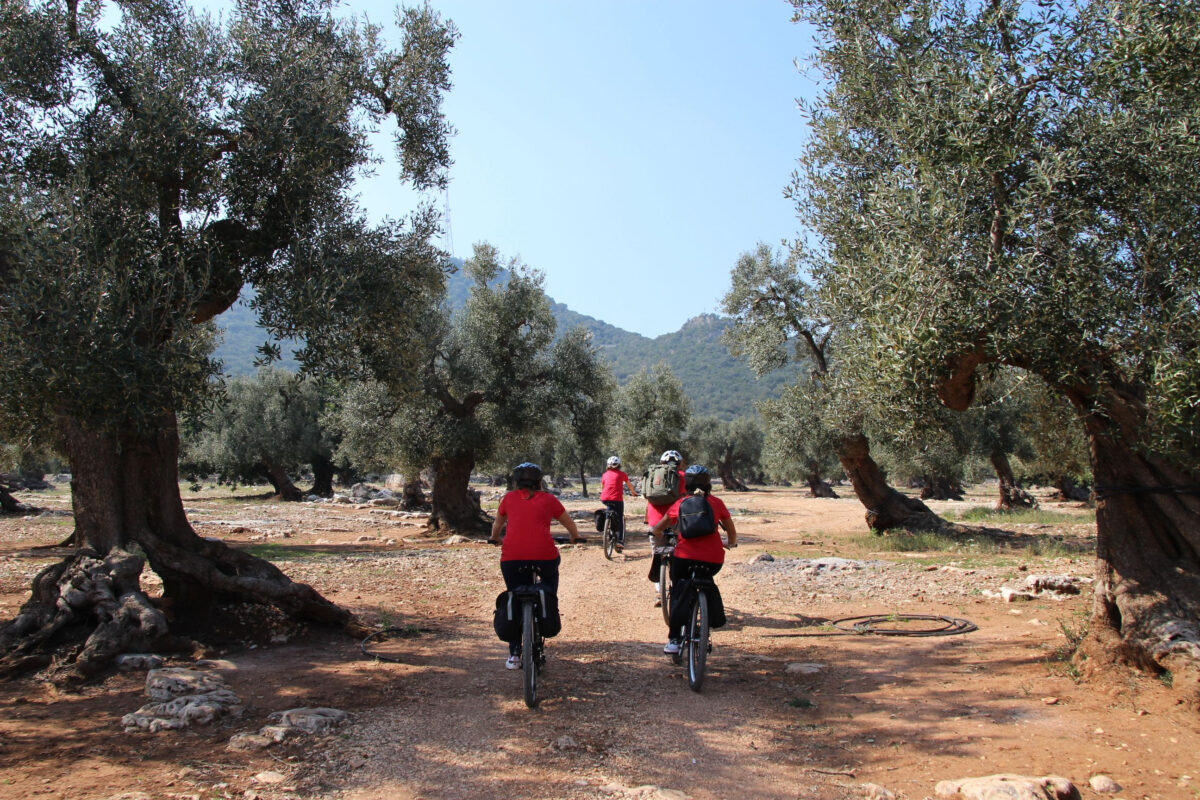
Visiting an oil mill is still an uncommon experience among tourists, with wide growth margins also linked to the healthy content of the experience and the inclusion of extra virgin olive oil as a beauty and personal care product, from the table to spas and wellness centers. According to the first edition of the Olive Oil Tourism Report presented on the occasion of the Ercole Olivario award, 15% of Italian tourists have already participated, in the last three years, in visiting an olive oil company, a percentage that rises to 19% for tourists oriented towards food and wine experiences. In particular, only 11% of the 18-24 age group and only 10% of the 25-34 age group have participated, while among those over 65 the percentage rises to 23%. Against this “minority realization,” the Report data reveal the strong appeal of extra virgin olive oil and its production places, but also of olive oil culture, among tourists. And this is a heritage to be capitalized on in the coming years.
“These data are striking when compared with the interest data we have mapped, which demonstrate truly very high development potential, with the offer being able to think about diversifying based on the interests of Italians – explains Roberta Garibaldi, author of the Report – The main lever that pushes tourists to consider a visit to an oil mill or olive-growing company is the shopping/tasting experience: 72% of respondents would like to purchase the product at attractive prices (74% among food and wine tourists) and 70% would love to taste the oil and different types produced by the company in combination with local products and foods (72% among food and wine tourists). Very substantial are also the responses related to active tourism experiences: 70% would like to see how oil is produced, 64% want to participate in olive harvesting and 65% dream of a candlelit dinner among the olive groves. Furthermore, 57% would love to try wellness centers that offer treatments related to oil and 70% would like to try, at restaurants, different types of oil paired with various dishes tasted during dinner. Finally, to highlight the strong connection between oil and Italian historical heritage: 73% of food and wine tourists would like to visit a historic oil mill, 72% would aspire to stay in a historic residence with an olive grove and oil jar storage within it, and 59% would like to be able to visit a national museum dedicated to extra virgin olive oil.”

“Olive oil tourism is a great opportunity to give ‘value’ to the finished product extra virgin olive oil. We must tell the story of oil and make people perceive the added value that extra virgin olive oil has, not only as a nutraceutical food, but also and above all for the values it interprets and represents: landscape, environment, history, culture, biodiversity with over 550 cultivars representing over 40% of global biodiversity, a heritage of inestimable value that we must valorize and safeguard. Olive oil tourism is also an opportunity for relaunching places and communities, such as the Italian Città dell’Olio – comments Michele Sonnessa, President of Città dell’Olio – For us, the olive tree is the symbol of defending a lifestyle and a battle for the survival of our towns. The over 480 Italian Città dell’Olio are mostly small municipalities, under 5,000 inhabitants, 90% located in inland areas, experiencing a paradoxical situation of olive-growing abandonment, but also urban abandonment, because the local economy cannot sustain people’s survival in these territories. Defending the olive tree in these territories means preserving human presence. Phenomena of olive grove abandonment (30% in Toscana, 60% in Liguria are the only certain data we have, but they are nevertheless significant) translate into landscapes that lose their value. To do this we have established an interdisciplinary working group with academic experts and the production world to work together for a national law to combat olive-growing abandonment. Because olive oil tourism cannot be separated from the landscape.”
“The presentation of the 2023 Report confirms that Oleotourism is an important growth tool for supply chain businesses – comments Nicola Di Noia, Director of Unaprol and Sole Administrator of the Evooschool Foundation. Tourist flows increasingly attentive to environmental sustainability, landscape protection, and healthy nutrition, can find precisely in olive-growing businesses experiences that recall these values, linked to quality extra virgin olive oil. To seize these opportunities, continues Di Noia, a cultural change is needed. We need to train new sector professionals, capable of working on customer hospitality, developing new services and using new technologies. Training, concludes Di Noia, is one of the main levers for those who want to approach Oleotourism development”.