The appointment came on January 9, during the first Council meeting of the Association’s new course. Along with the president, two vice-presidents were also appointed to support her in this journey: Andrea Francini, mayor of Trequanda, and Marco Bartoli, mayor of San Quirico d’Orcia.
“For me it is a great honor to lead this association which represents something unique of its kind and which above all works to promote a territory that is a UNESCO World Heritage site and among the most famous and attractive in the world – commented Elena Salviucci on her appointment – now we must work on consolidating an integrated and aggregated tourism system for a vast area that includes Val d’Orcia, Amiata and Valdichiana senese with the objective of giving a unified image to territorial promotion and marketing with a specific focus on agri-food and integrating the various tourist offerings of the area”.
Beyond this, among the objectives is also that of increasing the capacity of local business networks to attract and welcome visitors by promoting knowledge of the territory, favoring longer stay rates and improving the customer retention rate. To promote within the local tourist destination an integrated and widespread tourist offer that is quality and sustainable from an economic, environmental and social point of view.
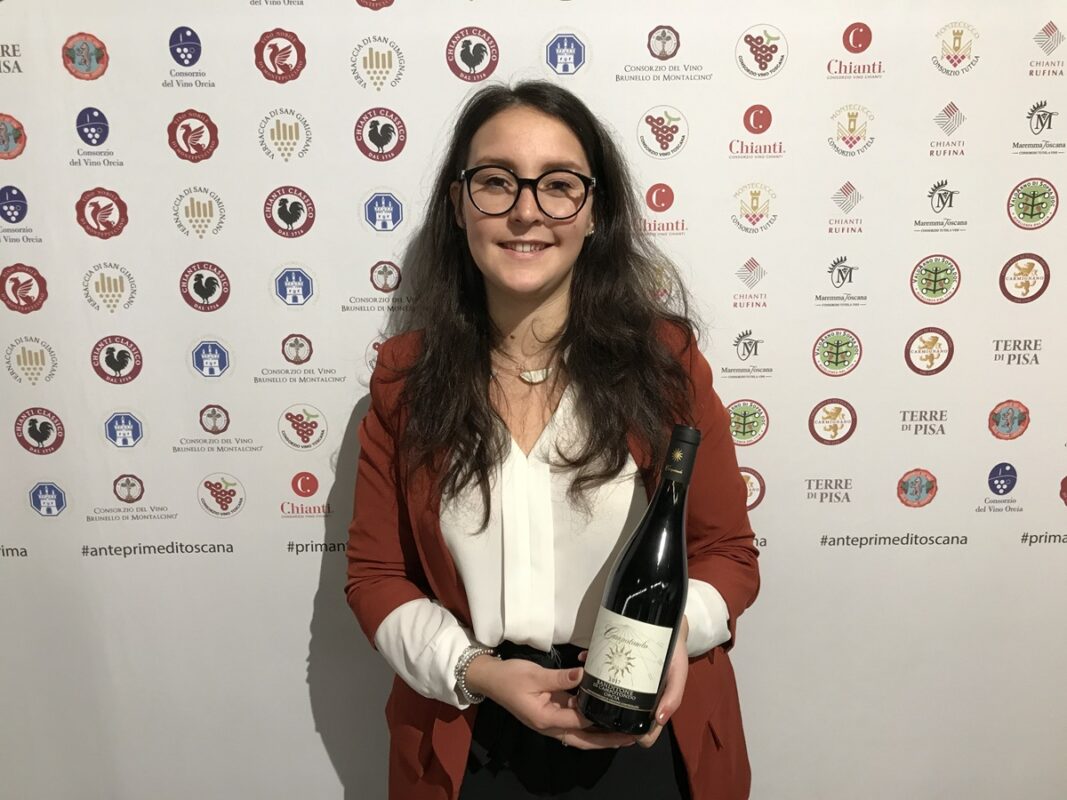
Elena Salviucci, 29 years old, born and raised in Campiglia d’Orcia, a small village straddling Amiata and Val d’Orcia. After attending Classical High School and graduating in linguistic mediation, the new president decided to carry on the family’s agricultural business, Campotondo, where in addition to the winery she also takes care of the wine tourism and administrative aspects. In parallel with work, in 2019, Elena Salviucci obtained the sommelier title and a master’s degree in marketing and management for wine companies at the University of Florence. Active as a member of the Board of Directors of Consorzio del Vino Orcia, in addition to carrying out volunteer activities in various projects for the enhancement and protection of the artistic, cultural, landscape, human and agri-food heritage of the territory.
“Regenerative” tourism among the mandate’s objectives. Regenerative tourism is based on the idea that tourism should serve the territory, rather than vice versa: in this way it can generate
benefits for territories, the communities that inhabit them and visitors. One of the main benefits of regenerative tourism is the creation of value that is not only economic but also cultural and social, lasting over time. This approach indeed encourages the participation of local communities, operators, businesses and visitors. This is one of the objectives of this new mandate.
Along with the presidency, the renewed Board of Directors of Strada del Vino Orcia also includes Giulitta Zamperini (president of Consorzio del Vino Orcia), Ada Anna Becheri, Donatella Cinelli Colombini, Francesco Pifferi, Luchino Grappi, Marco Capitoni and Gabriella Giannetti.