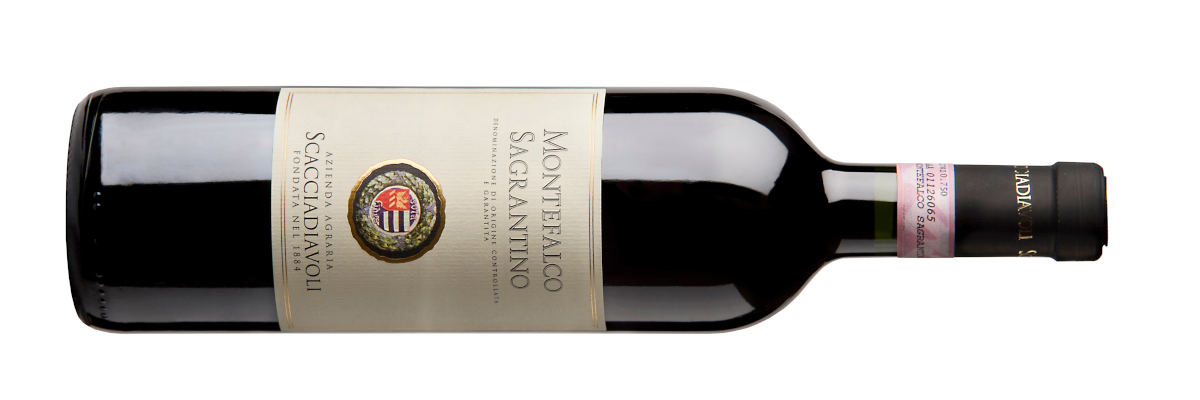
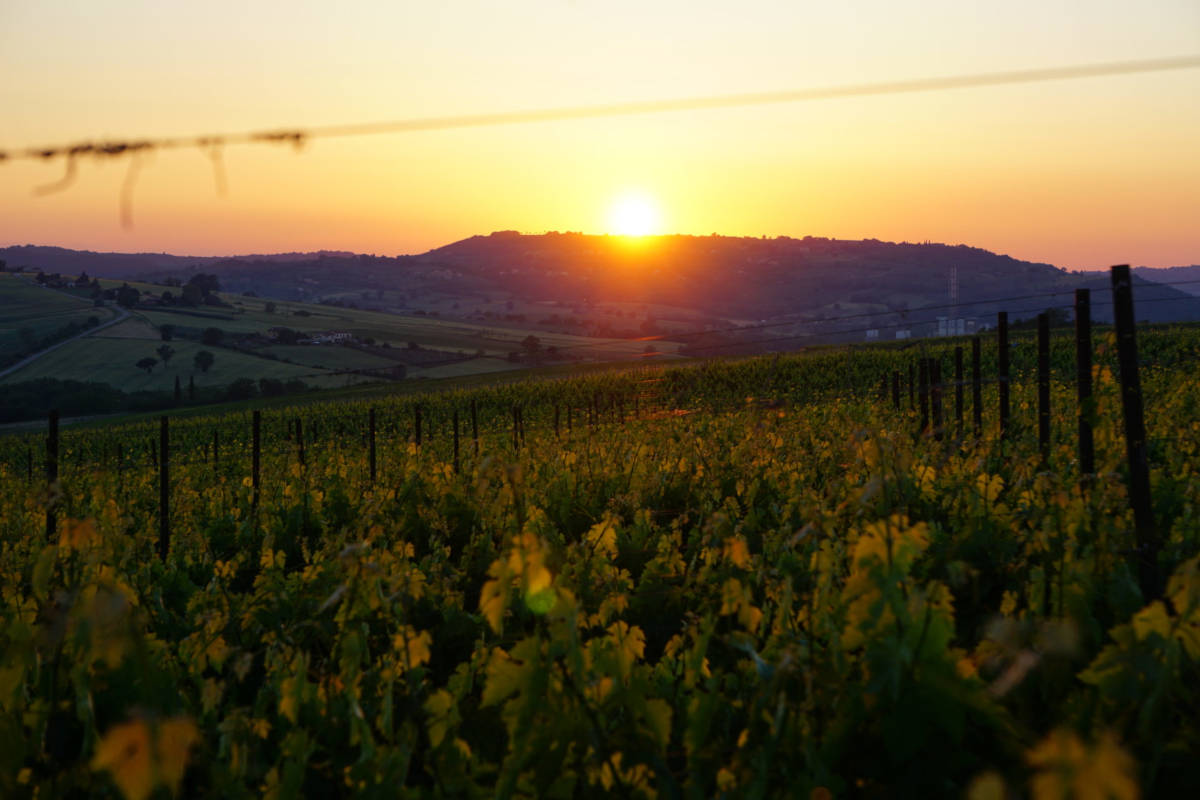
One of the oldest wineries in the Montefalco (PG) territory owes its name to that of an exorcist who lived near the property and to a 14th-century episode in which, to cast out the devil from one of his victims, the exorcist allegedly administered local wine. Between truth and legend, the Scacciadiavoli winery has been active since 1884, when it was built by Prince Ugo Boncompagni Ludovisi, and has never stopped producing since then. Today (and since 1954) the property is managed by the fourth generation of the Pambuffetti family and extends over 130 hectares of land, of which 35 are dedicated to vineyards with schist-clay soils at an average altitude of 400 meters.
In 2000, an impressive renovation project made it possible to preserve and conserve all the original ancient structural and architectural elements, while introducing cutting-edge equipment and technologies. The winery building, located on a hill and built on four levels, one of which is underground, manages all phases of the production process by gravity. The grapes arrive from the vineyards directly to the highest level of the winery, from where they are then transferred to the lower level, used for fermentation. On the second floor are the stainless steel and wooden tanks for vinification, while on the lower floor (corresponding to the ground floor) there are tonneaux and large barrels for aging Montefalco Rosso. The underground level is finally dedicated to the barrique cellar for aging Montefalco Sagrantino, both dry and passito.
Scacciadiavoli currently produces about 250,000 bottles per year, with specific attention to sagrantino, the quintessential Umbrian native grape that is cultivated in Montefalco, Bevagna, Gualdo Cattaneo, Giano dell’Umbria and Castel Ritaldi. Among the company’s references that enhance it are Montefalco Sagrantino Docg (both dry and passito), Montefalco Rosso Doc and classic method sparkling wines, two in white versions (brut and pas dosé), with 15% chardonnay and one in rosé 100% sagrantino. The portfolio is completed by white wines, such as Montefalco Grechetto Doc and Montefalco Bianco Doc, always with a focus on the territory and the grape varieties that characterize it.
TASTING
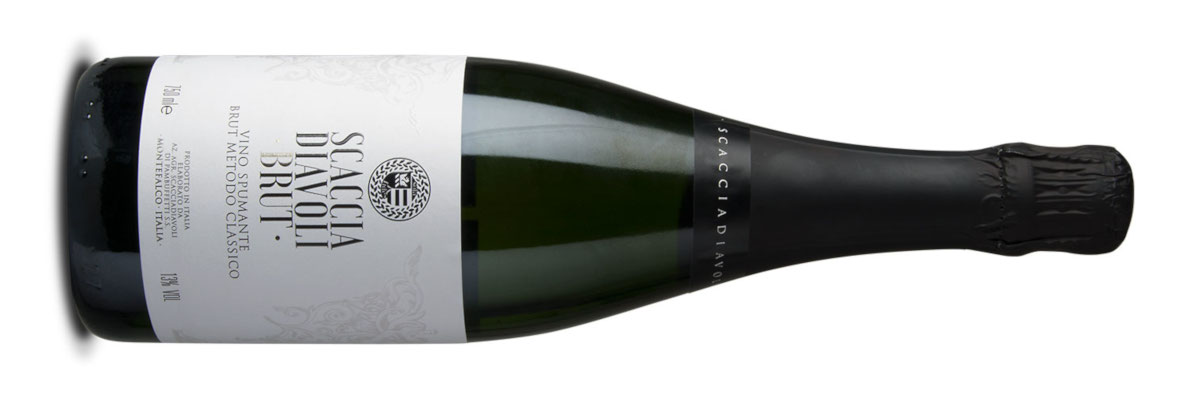
Scacciadiavoli Brut, Classic Method Sparkling Wine
Blend: 85% sagrantino, 15% chardonnay.
Winemaking: first fermentation in steel containers at controlled temperature, second fermentation in bottle with lees aging for 36 months.
Straw yellow with golden reflections and a luminous bubble, which releases citrus and ripe apple aromas on the nose, but also bread crust and chalky notes. On the palate it is fresh and enveloping, with a beautiful sensation of ripe fruit and a sapidity that dries the sip on the finish, leaving pleasant memories of flowers and dried herbs.
Scacciadiavoli Brut Pas Dosé, Classic Method Sparkling Wine (10 years on lees)
Blend: 85% sagrantino, 15% chardonnay.
Winemaking: first fermentation in steel containers at controlled temperature, second fermentation in bottle with lees aging for 10 years.
In the glass it is a brilliant golden yellow and the bubbles bring smoky notes of ash and candied orange peel to the nose, which gradually open the way to aromas of bread crust and petit four pastries, honeyed and dried fruit scents. On the palate it is fresh and of good softness. The fine perlage envelops the palate and pushes a sapidity that pleasantly stimulates salivation, closing in a long finish with memories of dry pastry crust and minerals.
Scacciadiavoli Rosé, Classic Method Sparkling Wine Brut
Blend: 100% sagrantino.
Winemaking: first fermentation in steel containers at controlled temperature, second fermentation in bottle with lees aging for at least 24 months.
Of a beautiful orange-pink color, with almost amber reflections, with fine and persistent perlage that illuminates the entire glass. On the nose the aromas are sweet, of toffee and jujubes, notes of creamy pastry and spices. A bouquet that gradually also opens the way to dried flowers and orange peel. But if the nose invites with sinuous aromas, the wine on the palate reveals itself to be dry, with a fine and persistent bubble also in the mouth and a beautiful freshness that persists throughout the sip together with a pleasant saline sensation, for a citrusy finish that recalls orange peel. An intriguing and not at all obvious wine that enhances sagrantino in a fresh and less conventional way, definitely worth continuing to explore.

Montefalco Rosso Doc 2018
Blend: 60% sangiovese, 25% merlot, 15% sagrantino.
Winemaking: fermentation in steel.
Aging: in second-passage barriques and large truncated-conical French oak vats for 12 months. Followed by bottle aging for at least 6 months.
In the glass it is a beautiful ruby red, intense and bright. The nose is inviting, with aromas of strawberry, raspberry and rhubarb, hints of medicinal herbs, tarragon, and a slight blood-like hint. On the palate it is fresh and of good sapidity. The tannin is not excessive, but still reveals a certain youth, for a wine that can certainly express itself even with a little more waiting. The drink is pleasant and the sip does not weigh down, leaving the mouth clean and inviting another sip. A wine to drink throughout the meal, from first courses to meat main dishes.

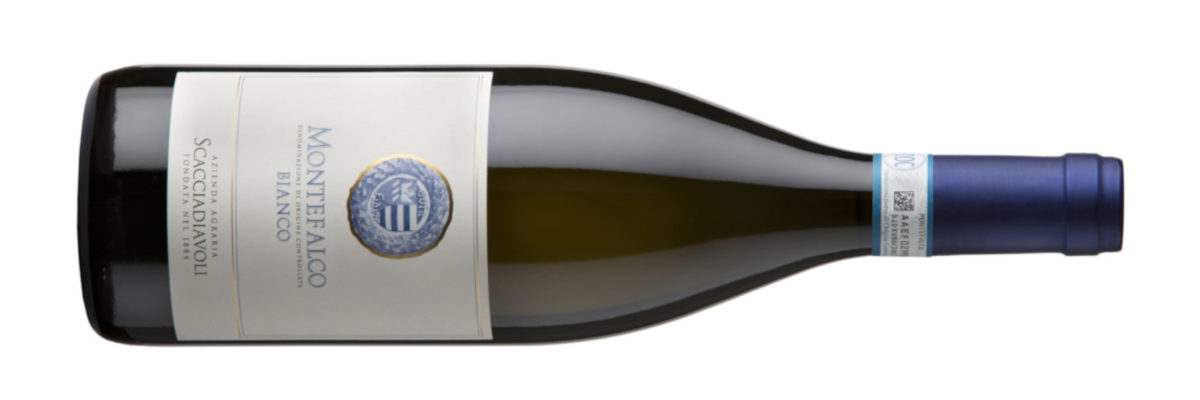
Montefalco Bianco Doc 2019
Blend: 50% trebbiano spoletino, 30% grechetto, 20% chardonnay
Winemaking: separate for each grape variety. Grechetto and trebbiano spoletino ferment in steel tanks, while chardonnay in wooden barrels.
Aging: sur lies aging in steel and wooden barrels for 9 months, with subsequent bottle aging for at least 9 months
Intense and bright straw yellow, of good consistency. Delicate on the nose, with light aromas of yellow peach, scents of hay and dried herbs, honeyed hints of linden and chalky notes. On the palate it is soft, saline and fruity. A citrusy and bitter almond sensation pleasantly accompanies the entire sip, closing with a persistent finish with citrus memories.
Montefalco Sagrantino Docg 2016
Blend: 100% sagrantino.
Winemaking: 3-4 weeks in 100 hl French oak vats, with controlled temperature below 30°C.
Aging: 50% in barriques, of which 15% new and the rest second and third passage; 50% in 30 hl French oak barrels for at least 24 months. Followed by bottle aging for at least 12 months before commercialization.
Intense ruby red with shades tending toward garnet and beautiful slow tears descending along the glass. On the nose it opens timidly, letting small red and black berry fruits emerge, herbaceous and earthy scents, humus, notes of star anise and cardamom. On the palate it enters soft, but balanced by a scratchy freshness and still young tannins, which dry the sip in a finish with long persistence and spicy memories. One immediately senses that time will smooth them out, refining a roundness and harmony that for this wine are just waiting to emerge.