The “Polycultural Hillside Landscape of Pienza and Montepulciano” has been recognized as a Historic Rural Landscape, opening further opportunities for enhancement of the hills surrounding the historic centers of Pienza, Monticchiello and Montepulciano, characterized by historic crops such as Nobile wine, which have created a landscape mosaic of recognized beauty. To support this development, according to Minister Stefano Patuanelli, specific funding that the next CAP will dedicate to the conservation and enhancement of traditional landscape arrangements.
Motivating the recognition is the fact that the hilly areas on which the three historic villages stand are characterized by an alternation of vineyards and olive groves, remnants of the ancient mixed cultivation of past centuries. While the vineyards, especially in the case of Montepulciano, have maintained primary economic importance thanks to the growing popularity of Vino Nobile di Montepulciano, traditional olive cultivation of great historical, cultural and landscape importance also characterizes the landscape. Over the centuries, the prevailing economic activities have remained agriculture and the processing of agricultural products, while rural tourism has assumed growing value thanks to maintaining landscape quality.
This result came at the end of work carried out by scientific coordinators Stefano Biagiotti – Università Telematica Pegaso, Andrea Iacomoni – Università La Sapienza and Filippo Masina – Università di Siena. Promoted independently by the municipalities of Montepulciano and Pienza, the application then merged into a single document, finding praise from the Ministry itself, which commended the ability to join forces on such an important project.
“A recognition that makes us proud and honors our farmers and administrators – said Vice President and Agriculture Councillor Stefania Saccardi – who over the years have been able to maintain the integrity and enhance the identity characteristics typical of these territories that show only sporadic abandonment phenomena and instead demonstrate the maintenance of the distinctive features of a polycultural landscape that also serves as irreproducible added value from competition for rural territory development. Good work, therefore, has been done by the guardians of this heritage of ours which with this recognition confirms, indeed strengthens, its value”.
“Historic rural landscapes contain the complex history of a place or region – these were the words of Mauro Agnoletti, coordinator of the scientific secretariat of the National Observatory of Rural Landscape – which can still be read from its composition and structure, they are distinguished by a long history and their recognizable structure in which biotic, abiotic and cultural elements are in harmony with each other. The inscribed landscape highlights for example the high value of sharecropping polyculture that has been maintained and protected, characterizing the uniqueness of the territory”.
“Besides being a source of pride, for us it is also the signal that everything we are doing as a Consortium is going in the right direction, that is to highlight how fundamental our territory is not only for the success of excellent wines and food products in general, but also an added value for tourism – commented the president of the Consorzio del Vino Nobile di Montepulciano, Andrea Rossi – not by chance we decided to create a third type of Vino Nobile di Montepulciano, “Pievi”, precisely following the same historical and agronomic values that allowed us to be inscribed in this prestigious register”.
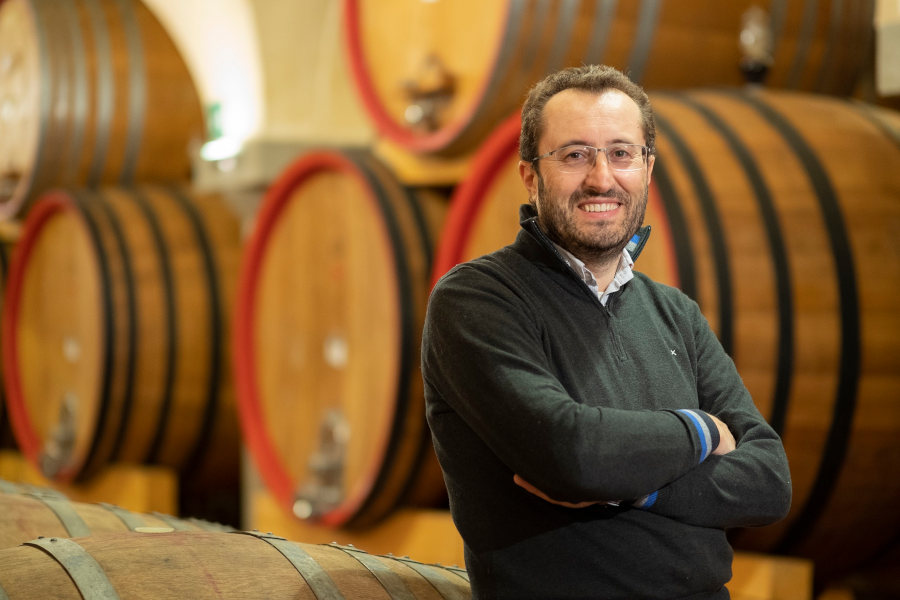
“The project – agree Michele Angiolini and Manolo Garosi, respectively mayor of Montepulciano and Pienza – reaches its conclusion after a long process begun during the previous mandate, which saw full collaboration between the municipal administrations of Montepulciano and Pienza. We are fully satisfied with this result, which adds value to a landscape that characterizes our territory in a very particular way, making it famous throughout the world“.
The “National Register of rural landscapes of historical interest, agricultural practices and traditional knowledge” was established with Decree no. 17070 of November 19, 2012 relating to the establishment of ONPR – National Observatory of Rural Landscape, agricultural practices and traditional knowledge. Its task is to collect applications from interested bodies throughout the national territory, which satisfy the eligibility requirements approved by the permanent State-Regions Conference.
Each application dossier must be drafted according to the Observatory’s stringent guidelines and contain an extensive historical, economic, social and urban planning study, which highlights the link between landscape, culture, society and production, focusing particularly on landscape integrity, that is, maintaining its fundamental characteristics, according to scientific criteria. The dossier will also remain a tool for territorial knowledge, useful both for technical analysis and educational purposes.
The Ministry’s task is to identify and catalog in the Register “traditional rural landscapes or those of historical interest, related traditional practices and knowledge”, defining their significance, integrity and vulnerability, taking into account both scientific evaluations and the values attributed to them by communities, subjects and interested populations. Following the verification process of eligibility requirements carried out by ONPR, with a decree signed by the Minister, containing the mention that explains the reasons for recognition, rural landscapes, agricultural practices and traditional knowledge are inscribed in the Register.
Inscription in the Register will allow the two proposing municipalities, as well as local businesses, to display a special Historic Rural Landscape mark currently being prepared, an attractive tool for visitors and additional commercial leverage for local products.