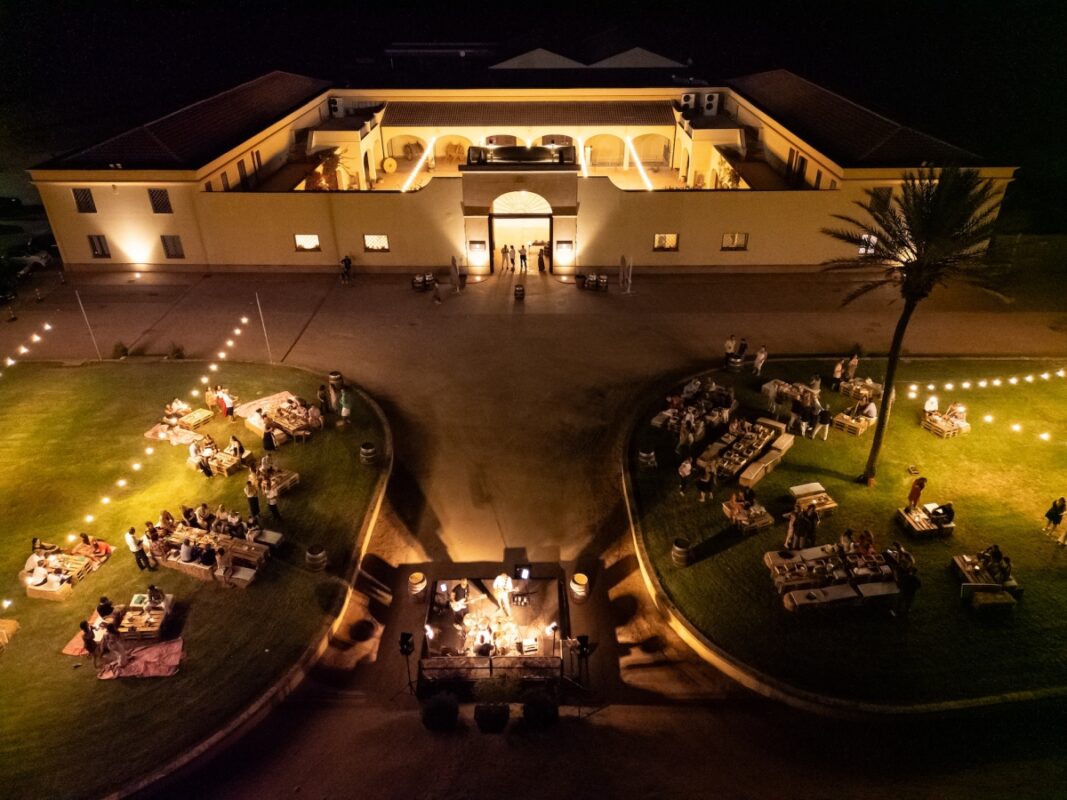
“Reaching Tenuta Gorghi Tondi literally means immersing yourself in nature. From whichever direction you approach the winery, the surrounding environment reminds you that we are between land and sea, between an integral nature reserve and the Mediterranean Sea, and this is even more evident on windy days, when the scent of the sea breeze envelops the entire area”. Annamaria and Clara Sala, daughters of founder Michele Sala and now running Gorghi Tondi, describe the unique experience at their winery in Mazara del Vallo, operating since 2000 and now one of the reference points for wine lovers who venture to the westernmost part of Sicily. In this interview, Annamaria and Clara tell italianwinetour about the birth, evolution and new initiatives launched to be increasingly attractive to wine lovers, with particular attention to young people for whom “old practices” must be replaced by increasingly emotional approaches.

When did you start opening Gorghi Tondi to the public and how did you develop your wine tourism activities?
Wine tourism activities began with the 2017 season, to attract an audience of enthusiasts who had very few options in the surrounding area. Mazara del Vallo, then as now, is an area with enormous tourist and food and wine potential, but with few wineries in the territory. Among these, the number of those with dedicated hospitality activities is even smaller. The very first activities implemented therefore aimed to attract the public to the winery, primarily to increase the company’s reputation among local audiences, also through events that have now become great classics in the wine world, such as Cantine Aperte, in addition to normal guided cellar tours with tastings, aimed at Italian and foreign visitors. Over time, the relationship with wine tourists has certainly evolved, while maintaining a constant: contact with natural spaces and the possibility of experiencing them even during full activity, especially during harvest.
What do your hospitality packages include?
All our wine tourism packages include an introduction to the surrounding protected area and a close-up view of the “gorghi tondi”, the small lakes of karst origin that inspired the company name, and which are an integral part of the homonymous oasis “Lago Preola e Gorghi Tondi”, in the territory of Mazara del Vallo. Furthermore, for those who want to deepen their knowledge of the flora and fauna of the nature reserve, it is possible to organize real walks along the WWF trails, guided by expert staff from the organization, to be contacted directly or through our wine tourism staff, to combine a nature excursion with wine discovery.

Among the experiences you offer, which is the most requested by the public?
Our “Sicilia in bottiglia” proposal is certainly the most requested. It is a tour and tasting package that includes a visit to the winery and inside the oasis, to give voice to the most naturalist and green soul of Tenuta Gorghi Tondi which rises, in part, within this area protected since 1998. The package includes 4 wines from native grapes ranging from Palmarès Brut or Rosé Extra Dry (from Grillo or Nero d’Avola), our Martinotti method sparkling wines, through Midor Catarratto and Dumè Frappato, concluding with the only dessert wine produced at the winery, a botrytized wine from Grillo grapes produced in Sicily, the Grillodoro. The package includes pairing with an equal number of finger foods. The dishes chosen for pairings reflect the territorial specialties of the Trapani area, with rich, varied gastronomy, also suitable for vegetarians and vegans, and characterized by various Slow Food presidia products, such as black bread from Castelvetrano. The ingredients we choose follow seasonality and proximity, consistent with the company’s sustainability idea.
How did the last season go for wine tourism at your winery? Have you observed, like all of Sicily, an increase in international visits and particularly American tourists?
The wine tourism season in Sicily has not yet completely ended. Generally, on the island tourism extends until the end of October, with the presence of many foreign tourists, who avoid the hottest summer months to concentrate on September and October, considered milder and less crowded. Visitors to Tenuta Gorghi Tondi are almost half foreign, often passing through, and this year we certainly saw some additional presence, but nothing exceptional compared to percentages from previous years. We certainly pay the price of being “peripheral” compared to the historic Grand Tour itineraries of Sicily and the major cities, such as Palermo or Catania. The location and, above all, the infrastructure, are not on our side, excluding the A29 highway that connects the capital to Mazara del Vallo. Trapani airport, the closest to us, no longer moves the numbers of travelers from a few years ago and the slots assigned to the few airlines fly rather to national destinations. This area remains somewhat “mysterious” to the general tourism public, and wine and gastronomy can only serve as a megaphone for such beauty. The area is historically suited to viticulture, and hosts archaeological sites of world renown such as Selinunte. In any case, only in recent years has the extreme west of Sicily had growing tourist relevance, with activities that focus on food and wine (couscous and red prawns from Mazara first and foremost), the taste for the ethnic (the mixture of cultures and communities in Mazara del Vallo itself) or water sports (beaches and kite surfing and wind surfing areas). There is enormous potential, and we try to be ambassadors of all this with our wines.

What are your upcoming projects? Do you particularly intend to strengthen dining or invest in accommodation possibilities?
From the beginning, we wanted to offer our guests more personal, warm and informal hospitality. A bit like being at friends’ or relatives’ house, who accompany you around to visit local attractions, or advise you on the best places to go eat. That’s why our gastronomic proposals draw on recipes from mothers, grandmothers and aunts, and remain closely tied to family memories. This allows us to network with local suppliers of excellence (from cheeses to fish, through pastries) and with our restaurant clients, to offer wine tourists an immersive territorial experience.
Finally, let’s talk about GenZ: from your perspective, is there a real loss of interest among young people regarding wine?
We don’t believe that Generation Z has lost interest in the wine world, they are simply “bombarded” by communication in the beverage world that is increasingly diversified, and in some ways very creative, often focusing on the concept of experience. And social media only amplify, in the most varied forms, this continuous solicitation to try this product, rather than that one.
How can you “attract” today’s twenty/thirty-somethings to the winery, in a more “emotional” way?
Wine perhaps suffers a bit from its heritage, from being atavistic and traditional, linked to logics that should be modernized and simplified. And it often proves complex from a production point of view, implying practices that are not always sustainable, in the vineyard and in the cellar. Characteristics that distance it from today’s generation of twenty and thirty-somethings. We tried to respond to this “distrust” with an experiential approach to wine, creating a summer event titled “Appuntamento al tramonto”, where the appointment at the winery at sunset and aperitif time were the pretext for immersion in nature, for being in the company of a group of friends or family, and for discovering how wine manages to act as a binding agent for socialization and conviviality, during an outdoor live music concert, deliberately excluding the traditional “liturgy” of the visit with tasting. Product communication is also important in this sense, especially speaking of sustainability, a theme very dear to Gen Z.
And how has Gorghi Tondi responded? Has there been any particular initiative related to “green” communication?
Starting this year we have entrusted our most transversal white wine, Babbìo, a sparkling wine from native grapes, with the task of talking about environmental sustainability through packaging restyling. The bottle, entirely screen-printed and entirely disposable in glass, has sensitized our public to abandoning plastic in the environment and has served as spokesperson for Plastic free, one of the nonprofits that fight most on this issue.