The analysis of the wine tourism phenomenon is enriched with a new chapter, made possible by the publication of a set of data extracted from the 2021 Italian food and wine tourism report, signed by Roberta Garibaldi, according to which there has been constant growth in this tourism sector since 2016: 71% of Italians now consider a destination’s food and wine offerings decisive in choosing their travel destination, driven by interest in deepening the cultural aspect of a territory’s food and wine heritage. “Beyond holidays and outdoor activities – comments Roberta Garibaldi –, the new needs of today’s taste traveler are active participation in experiences and holistic wellbeing. In the decision-making process, the before and after of a vacation become part of the experience itself, especially thanks to digitalization, which has become essential for companies and territories to effectively respond to more demanding demand”.
From reading the data, it emerges that consumption-based food and wine tourism belongs to the past. This is demonstrated by the fact that the motivations that drive tourists to travel are mainly linked to landscape and cultural identity for destinations and to values for companies, their connection with the territory where they operate, their adoption of sustainable development practices. 66% of respondents are more inclined to visit a production company when they have the opportunity to receive information during the visit about the ethical choices adopted, from staff to breeding and cultivation methods; 51% would like to have the possibility to “adopt from a distance” a vineyard, olive grove, orchard, or vinegar cellar and receive their final product at home. Sustainability, in its environmental, social and economic dimensions, has in turn become an essential value and the agri-food company will increasingly present itself as an ambassador of an evolved territorial society. Companies that educate consumers and make them participants in an improvement process will be appreciated. The taste for value also spreads in new relationships between territorial stakeholders, new levels of aggregation and sharing, with the development of exchange. Among the case histories cited we find the Grosjean family with “Adotta un cru” in Valle d’Aosta, Caviro with its push on circular economy and Farmer with the marketplace launched to enhance the excellence of the DOP economy.
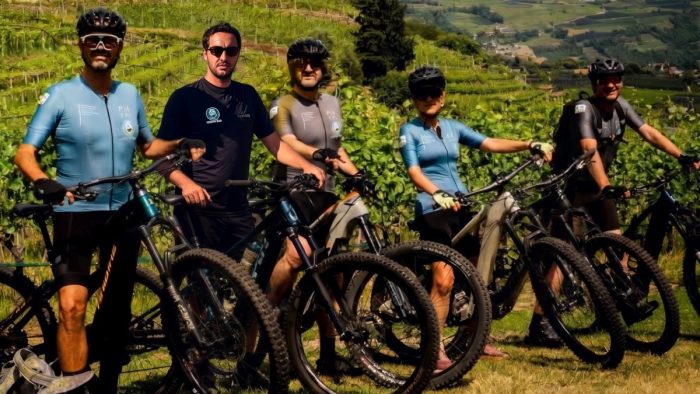
The active approach to wine tourism is also growing: trekking among vineyards, cycling along white roads and increasingly well-equipped bike paths, interconnections with rail transport, stopping traffic and moving in complete freedom are, in fact, among the most sought-after trends. Beyond green mobility, there will be increasing involvement of taste tourists in companies’ daily activities, such as collective harvest, sowing, pruning, milking and vacations in contact with animals as pet therapy, for medium-duration stays and also for daily occasions in places of proximity tourism. 61% of Italian tourists define themselves as “innovative”, and seek quality and proposals that are continuously renewed. The challenge becomes the new balance between innovation and authenticity. Among the examples mentioned: Masi Agricola with active harvesting of grapes destined for Amarone della Valpolicella, trekking itineraries among vineyards in Langhe, the bicycle route in Abruzzo between the Costa dei Trabocchi and the inland wine companies.
The study also reveals that “the journey doesn’t end with the journey”, but there is a before and after, which become elements of preparation, accompaniment and indelible memory of the experience. New technologies, which became familiar and accessible during the pandemic, will increasingly offer food and wine tourists access to a plurality of sources to find stimuli, learn and decide in the phase before travel, then share experiences upon return and increase loyalty towards the visited company, maintaining and strengthening the relationship over time. Neverending food tourism is a trend destined to grow and territories and companies that want to intercept it will have to invest in digitalization: apps, augmented reality, e-commerce platforms, digital tastings, discounts linked to home tastings. Virtuous examples are the Museo Lavazza in Torino with immersive audio guide on Instagram, the Galleria Campari with virtual meetings and 3D tours and guided paths on the theme “Art and Mixology”, conducted by an art historian and a bartender, and Arigato Food Tours in Japan and tour operators offering digital experiences to discover the tea ceremony and Japanese food and wine culture before travel.
For its part, smart working will encourage the revival of rural tourism in a bleisure key. Small villages, which will have to build network projects to communicate their uniqueness, will develop as ideal places not only to live and work in close contact with nature, but also for networking activities. 47% of Italians consider wineries as places where they can hold work meetings and business meetings, thanks to the pleasantness and relaxing atmosphere of the environment.
Another significant growth perspective will be in day trips, thanks to the rediscovery of proximity territories, triggered during the pandemic. Here, for example, wine bars and restaurant dining in wineries or small events for mid-week after-work are growing. The creation of gastronomic hubs in territories, understood as information centers on possible activities, will give further impetus to incoming tourism. The return of in-person tourism will see a more aware and mature food and wine tourist, seeking authenticity of places and flavors, with significant growth potential for historic venues in cities as mandatory stops during visits, similar to easily accessible monuments, as well as for quality markets in urban centers, which will increasingly become “treasure chests” of locally produced food and wine treasures. Themed hotels, country relais and glamping have growing appeal. Among others intercepting this trend, Monferrato with its Wine Glamping proposal, the Ceretto company in San Cassiano in Cuneese with the wine trekking path, which starts from the garden of chef Enrico Crippa of the three Michelin star restaurant “Piazza Duomo”; La Collina dei Ciliegi in Valpantena, which offers its guests the possibility of staying in glamping tents on the barrel room terrace and various horseback and bicycle excursions.
65% of respondents finally state that they pay close attention to nutrition, because it’s a way to take care of themselves and feel good. Closed at home, with family or alone, we no longer had excuses not to take care of ourselves. And the desire to embrace correct and healthy nutrition has grown, with food thus becoming a sort of “comfort good” to regain both psychological and physical balance. The effect of this transformation will continue in the coming years, when consumers will become increasingly demanding and attentive, placing their wellbeing as one of the determining factors for choosing an itinerary or destination. Paths and spas in rural settings will multiply, along with the concept of drinking responsibly. Restaurants will weave increasingly close relationships with local suppliers, transforming themselves into their ambassadors by communicating product traceability, a strategic choice to reassure customers about the quality of dishes prepared. Travel will become an opportunity to regenerate and reprogram one’s habits; consequently, unspoiled places will be rewarded because, as stated in the principles underlying Japanese Forest Bathing, connection with the natural world alleviates physical and psychological stress. Examples of this type of approach are: forest bathing at Borgotufi in the forests of Molise and along health paths in Valle Aurina; the gym among the hills of Prosecco at Villa Sandi; olfactory journeys in Liguria among the fragrances of aromatic herbs; the Olio&Benessere path discovering the beneficial effects of oil in Valdichiana.