a Raia is the ideal place to regenerate, just over an hour’s drive from Milano, among vineyards, artworks installed throughout the property (as we told you in this feature from last year) and a hospitality system of the highest level that, starting this year, is enriched with a new offering.
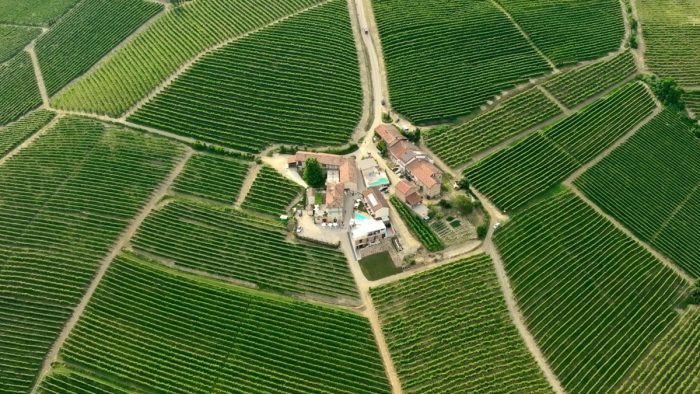
In addition to the doors of the Locanda, two buildings of the Borgo are also opening their doors, the ancient farming village recently renovated in one of the most evocative areas of the estate. The Locanda, the 12-room relais with Michelin Green Star, is thus joined by a new opportunity to spend relaxing days in this corner of Gavi, to discover the estate and its Itineraries, and to taste the wines and cuisine of a land that has embraced the finest Ligurian and Piemontese traditions.
The borgo is an ancient farming village within La Raia. It is located in one of the most beautiful positions in Gavi, overlooking an unspoiled valley, surrounded by ancient woods and a small secret lake reachable on foot. The ancient farmhouse, the barn and the patio overlook a large circular courtyard. Around it, the Cortese vineyard rows unfold. A place of unique and original charm, where you can forget the noise of the city and completely immerse yourself in the beauty of nature and surprising architecture.
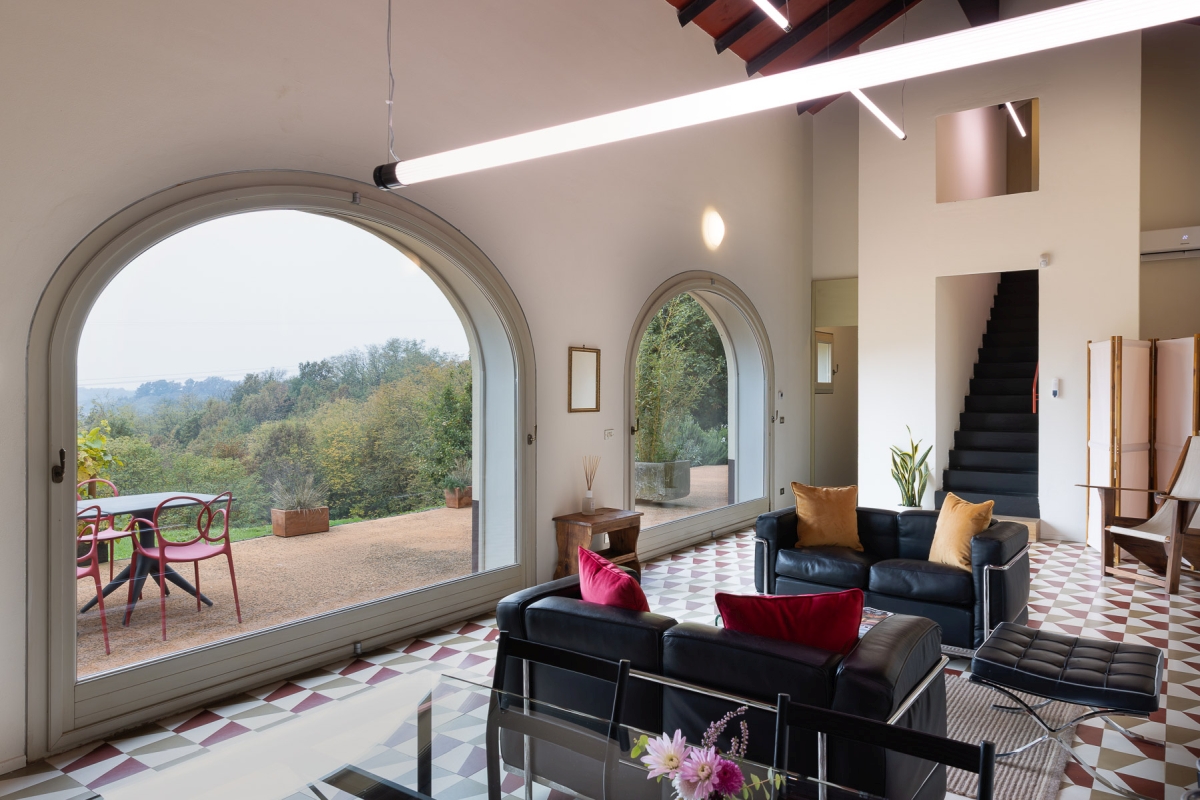
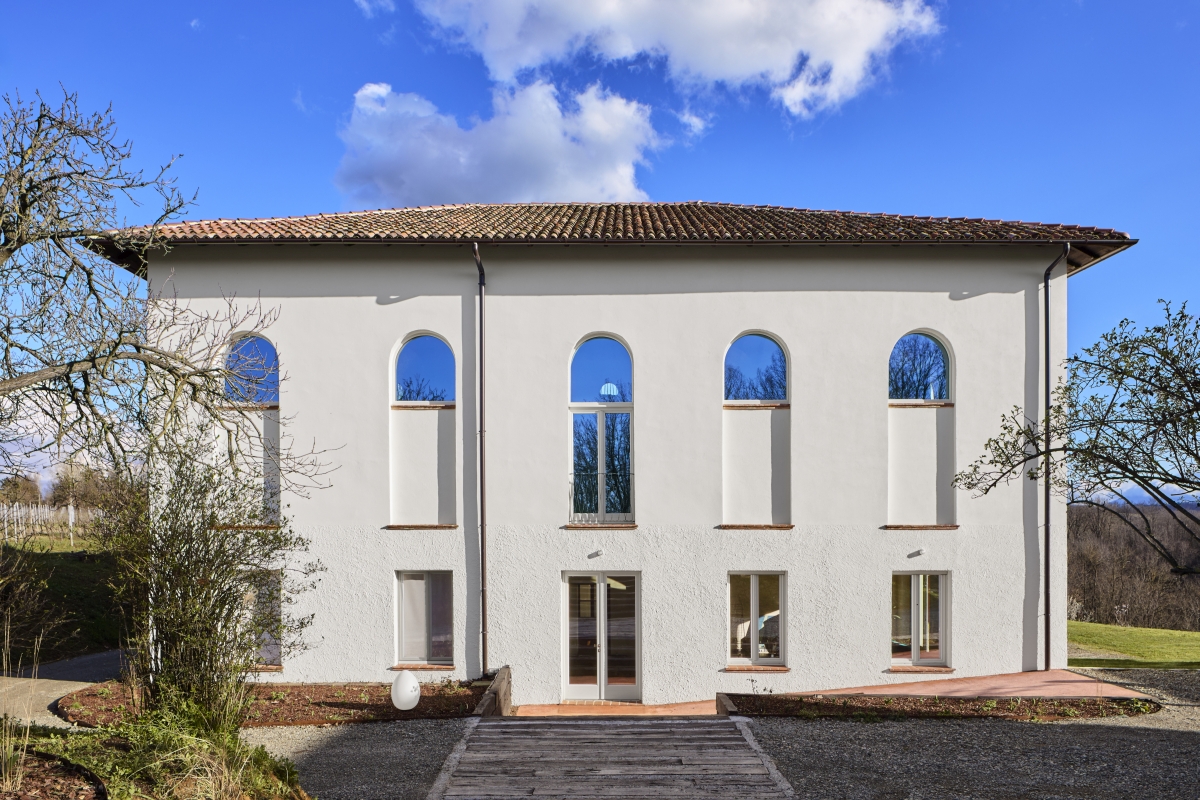
At the Borgo, you’ll also find one of the eleven site-specific works by Fondazione La Raia, OUSSSER by artist Koo Jeong A.: an enamel mural painting on the walls of the Villa, which gains brilliance from sunlight and is only visible at night. The Ape Regina apartment and La Villa, with its characteristic tower, are furnished by combining, as in the Locanda, antique pieces from Piemontese tradition, design objects, and contemporary artworks. Equipped with a fully equipped kitchen, they are ideal for families, groups of friends, sports and outdoor life enthusiasts, and for those seeking relaxation and privacy.
The borgo has been recently renovated following the same principles of philological restoration as the other buildings on the estate. The work has brought to light portions of pisé walls, the same ancient raw earth construction technique that architect Martin Rauch used for the construction of the winery in 2003.