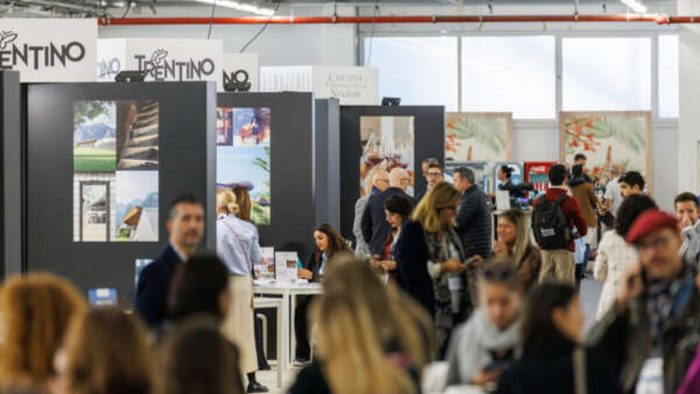
At TTG Travel Experience, Italy’s leading trade show for global tourism promotion, a globally unprecedented project of primary importance for sustainable tourism themes was presented, resulting from the collaboration of eight national and international organizations. This is CarTES, the Charter for Sustainable Food and Wine Tourism. This document is destined to become a pilot project for large-scale implementation at the European level.
The organizations that joined the project and created the Charter for Sustainable Food and Wine Tourism are: Associazione Italiana Turismo Enogastronomico, Associazione Nazionale Città del Vino, Associazione Nazionale Città dell’Olio, Federazione Italiana delle Strade del Vino, dell’Olio e dei Sapori, Terranostra-Coldiretti, Iter Vitis, Unpli – Unione delle pro loco italiane, Associazione Consulta Nazionale dei Distretti del Cibo, along with technical partners PG&W and Acta – Sensi Contemporanei. The platforms Divinea, Foody and Winedering will communicate the Charter to those booking experiences through their apps. All parties involved worked free of charge, embracing the cause and value of the initiative.
Iter Vitis will take the project to the international level. CarTES will be distributed across the 24 countries participating in the Council of Europe Cultural Route, and translated into local languages to ensure maximum accessibility. It will be presented to the entire network on October 18 in Moldova, during the 15th anniversary assembly. Pilot areas will be Greece, Herzegovina and Moldova. Close collaboration will be initiated with other Council of Europe Cultural Routes to further expand the project’s scope.
“The Charter for Sustainable Food and Wine Tourism is a handbook for experiencing a territory’s food and wine culture sustainably, respecting the environment, culture and local community. This is a necessary step because, on average, tourists’ environmental impact is estimated to be three times higher than that generated by residents, a gap that tends to widen especially in emerging country destinations. The need becomes even more urgent regarding food and wine tourism, where sustainability is an increasingly important driver in choosing experiences capable of generating attention and stimulating participation,” states Roberta Garibaldi, president of Aite. “According to data from our Food and Wine Tourism Report, 50% of respondents would like to find green proposals. Corporate behaviors and socially-oriented initiatives are also taken into consideration, partly dispelling the widespread opinion that sustainability only concerns the environment.”
“The charter for sustainable food and wine tourism is an important and much-needed initiative; sustainability is the theme that unites us, not coincidentally this initiative is the result of a partnership between multiple actors, all united by the same cause. The codification of good practices and awareness-raising for responsible tourist behaviors and habits is the strong message we want to address to travelers and food and wine enthusiasts worldwide, it’s the conscious message of all farmers and agritourism operators in our network,” declares Dominga Cotarella, president of Terranostra. “Our municipalities – emphasizes the president of Città del Vino, Angelo Radica – are a concrete and virtuous example of sustainable tourism linked to wine and gastronomy. We collaborate convincingly with CarTES because it’s a concrete tool that allows travelers to experience food and wine culture while respecting the environment, culture and local community.” “The over 500 Città dell’Olio that are part of the association are committed to preserving and safeguarding the immense olive heritage, both material and immaterial – declares the president of Città dell’Olio, Michele Sonnessa – Therefore, on their behalf, we decided to fully join the ‘CarTES’ project, a guide addressed to all of us, whether we are travelers, enthusiasts, producers or operators. We firmly believe in these values, linked to environmental sustainability and knowing how to do tourism responsibly.” “The Federation of Wine, Oil and Flavors Routes strongly believes in shared projects, especially on cross-cutting themes like those contained in the Charter. Capturing ongoing trends, studying them, sharing them and disseminating good practices is like caring for vines or olive trees, so they produce good fruits over time,” affirms Paolo Morbidoni, president of the Federation of Wine, Oil and Flavors Routes.
The communication strategy centers on the dedicated website www.turistaenogastronomicosostenibile.it and on major social media pages (Facebook, Instagram and LinkedIn), and plans to develop through a national multimedia communication campaign curated by PG&W. However, the real strength is the participatory approach, leveraging all channels of the involved actors who will primarily offer the stage of their social media pages, visibility on their institutional websites and physical and virtual spaces through which they oversee territories, directly and through associated companies. Considering all this as a single media circuit working in a coordinated manner, the impact and visibility opportunities are truly remarkable. The initiative’s success, and in a sense its novelty, comes precisely from the demonstrated great ability to network in the name of a common interest: providing a concrete response to the increasingly unavoidable demands for tourism sustainability!
In parallel, a communication campaign is planned to promote different types of food and wine experiences to be enjoyed sustainably. Living food and wine experiences in rural areas is inherently a sustainable attitude, bringing flows from urban to rural areas that come to life, a way to decongest areas experiencing overtourism.
The Charter for Sustainable Food and Wine Tourism aims to be a first tool to transform this interest into concrete behaviors capable of generating lasting and widespread benefits, enabling travelers to experience food and wine culture while respecting the environment, culture and local communities. It provides practical guidance and suggestions and answers to questions increasingly felt as unavoidable, such as how to orient oneself in choosing between green-certified destinations? How is it possible to calculate one’s individual ecological footprint? Why adopt a healthier diet like the Mediterranean Diet? All while showing the underlying rationale. It’s not just a simple list of good practices that should be adopted before, during and after travel, but a real tool that educates, promotes and stimulates sustainable behaviors by explaining the reasons.
This initiative represents a first step in a broader path aimed at creating a network of awareness and collaboration that stimulates the entire Italian agri-food and wine sector, from being an excellence in productive and sustainable terms, to becoming a reference in the tourism field through the dissemination of good practices and virtuous behavioral models. There will be a second step in spring with the launch of a competition aimed at rewarding tourists who adopt sustainable behaviors in food and wine tourism. Implementation of a tool for cities and companies is planned to assess their sustainability level and choose the best certification based on their needs among those existing at the European level, curated by Acta –Sensi Contemporanei.