Three out of four declare themselves satisfied especially with the quality of service during winery visits and other initiatives, with relationships with the local community and with the booking methods for the experiences offered. Young people’s judgment is more lukewarm. In the under-24 cluster, margins for improvement were indicated especially regarding service quality, ease of booking and finding information, in a perception by digital natives evidently influenced by more intensive use of the Internet and social networks. These are some of the data that appear in the first survey on wine tourism, presented at Vinitaly and the result of the memorandum of understanding between Ismea and Aite, the Italian Association for Food and Wine Tourism.
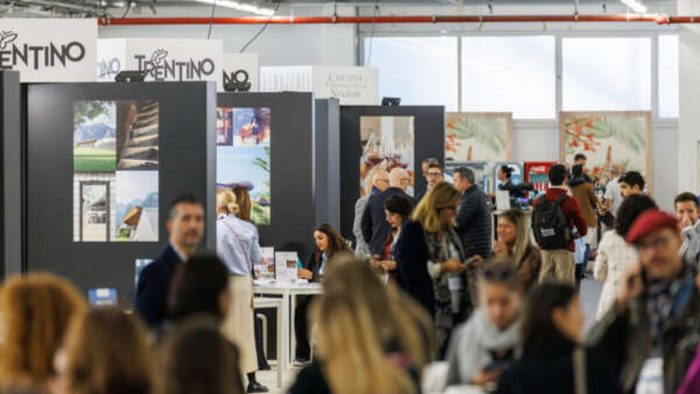
The presentation, which marked the beginning of collaboration between the two research centers to give an increasingly accredited scientific dimension to the wine tourism phenomenon, involved all the main protagonists of the Italian wine tourism sector, thus telling the story of a reality in continuous evolution in Italy, with a network of over 500 municipalities with a winemaking vocation associated with Città del vino, almost 90 wine and flavor routes that wind along the entire national territory. A sector also driven by women, as recalled by Donatella Cinelli Colombini, Past President of Associazione Donne del vino, who conceived the successful Cantine aperte initiative, with women who “book more than men and are the protagonists of winery hospitality”. The round table, moderated by Fabio del Bravo – Ismea, also included Martina Centa (Unione Italiana Vini, Agivi-Cantina Roeno), Nicola D’Auria (President Movimento turismo del vino), Walter Massa (President of Federazione delle Strade del Vino e dei Sapori del Piemonte), Marco Montanaro (General Director Federvini) and Angelo Radica (President of Città del vino).
For Livio Proietti, president of Ismea: “The objective of the agreement is to put under the magnifying glass the main qualitative and quantitative variables of Italian wine tourism, a relevant segment of the national wine system that links products and territories, also contributing to the success of made in Italy. Wine tourism, like agritourism, a sector that the Institute has been monitoring for several years now, represents an important marketing lever, preserving the attractiveness of rural areas increasingly subject to depopulation phenomena“.
“The wine tourism sector – added Roberta Garibaldi, president of Aite – now represents a relevant phenomenon in economic terms and is further growing for the revenues of Italian wine companies. The level reached by wine tourism is such as to require a real structured scientific analysis, to be able to outline incoming flows and bridge the gap between tourist desire and actual fruition and to realize system projects, accompanying rural tourism and the public and private investments necessary to relaunch employment and create wealth. We are moving towards a standardized definition of wine tourist based on work between Unwto and Oiv that will accompany this research“.
On the other hand, if there are wineries, the vacation is extended. The data shows that most tourists (about 50% among generic ones, almost 55% among those linked to the wine world) stay in vacation destinations for 2/3 days, going beyond the “hit and run”: 31% indicate a duration of 4 days or more, a value that rises for wine tourists to 38%. Among wine lovers, half have visited one or two wineries, 36% at least three facilities, but even higher values are observed in the 25-34 age group.