

You can unplug even just a short distance from the highway when you’re in Trentino. “A cluster of peace among the vine rows”: this is the claim chosen by Vallarom to define the strength of this business that is not the “classic” winery with hospitality, but rather a true agritur located in one of the most scenic spots in the Adige valley: it’s situated in the Masi hamlet of the municipality of Avio, famous for its castle of the same name, and which shares a convenient exit from the Brenner Highway with nearby Ala, just 5 km from Vallarom.
ORGANIC SINCE THE NINETIES
This structure is managed by Barbara Mottini and Filippo Scienza, husband and wife, who have transformed the company founded in 1982 by Filippo’s grandparents into their realm. “We moved here right after our son was born. We wanted him to grow up in a healthy environment, and since 1999 the renovated old farmhouse has been surrounded by organic vineyards” Barbara explains. The organic certification came in 2008, three years after starting the process: they could have begun even earlier, because no “non-organic” treatments were ever used in the vineyard, but there was some hesitation from Barbara and Filippo because, they explain, “at the time certification was considered more of a disadvantage than a strength“. Today their wines are even bio vegan, because substances like casein or other animal-derived products are not used in winemaking.
ROOMS NAMED AFTER THE WINES
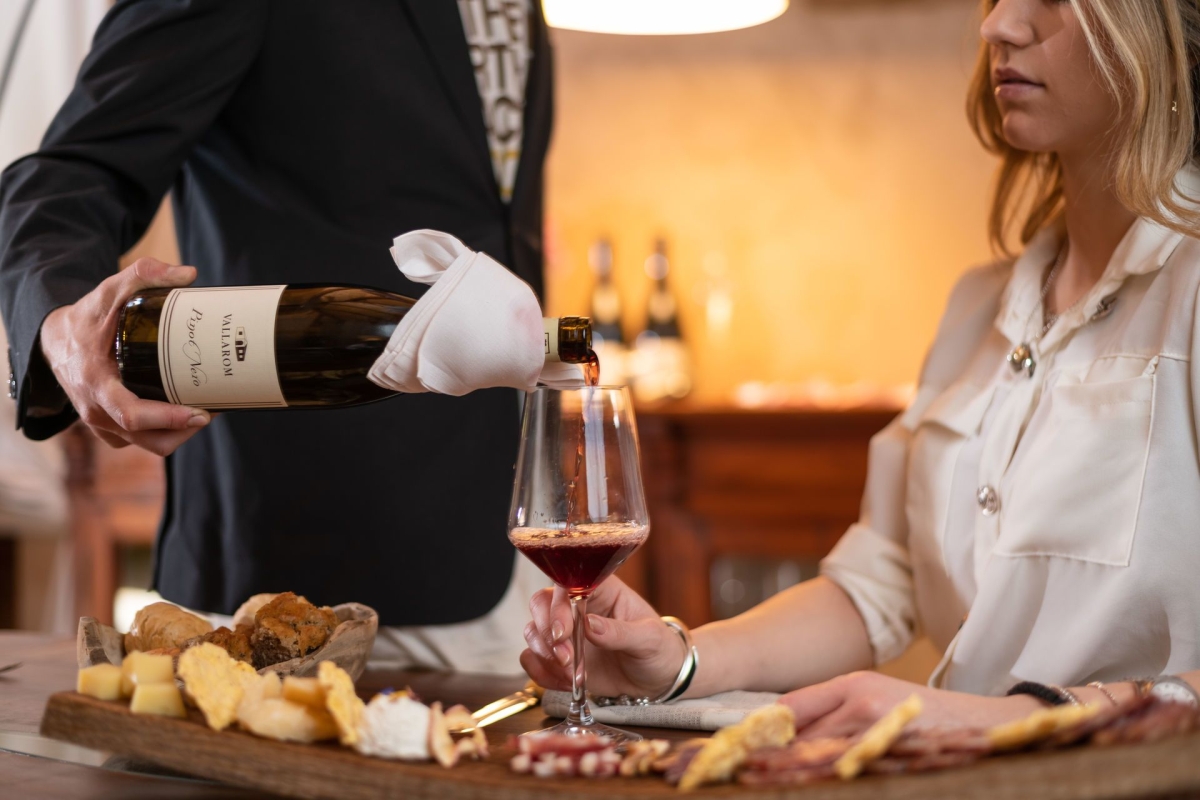
The quality leap in hospitality dates back to 2015, when Vallaron recovered the barn, turning it into an agriturismo with three rooms available for guests that take their names from their wines. There’s the Fuflus – their Bordeaux blend, whose name derives from the onomatopoeic nickname of the Adige river that flows and crosses the Vallagarina – which is defined as “romantic and fairytale-like”. The second room is the Marzemino, “lively and welcoming”. The third is the Pinot nero which, naturally, could only be “elegant” but with the plus of ample space. And then there are the company’s products, which are not limited to wine: at Vallaron they produce honey, fruit, and vegetables, which are offered to guests along with the house specialties that are the carne salada tartare and braised guanciale to be paired strictly with Fuflus, an important wine that’s the result of 18 months spent in barrique and another 18 months of bottle aging.
PAMPERING FOR TWO
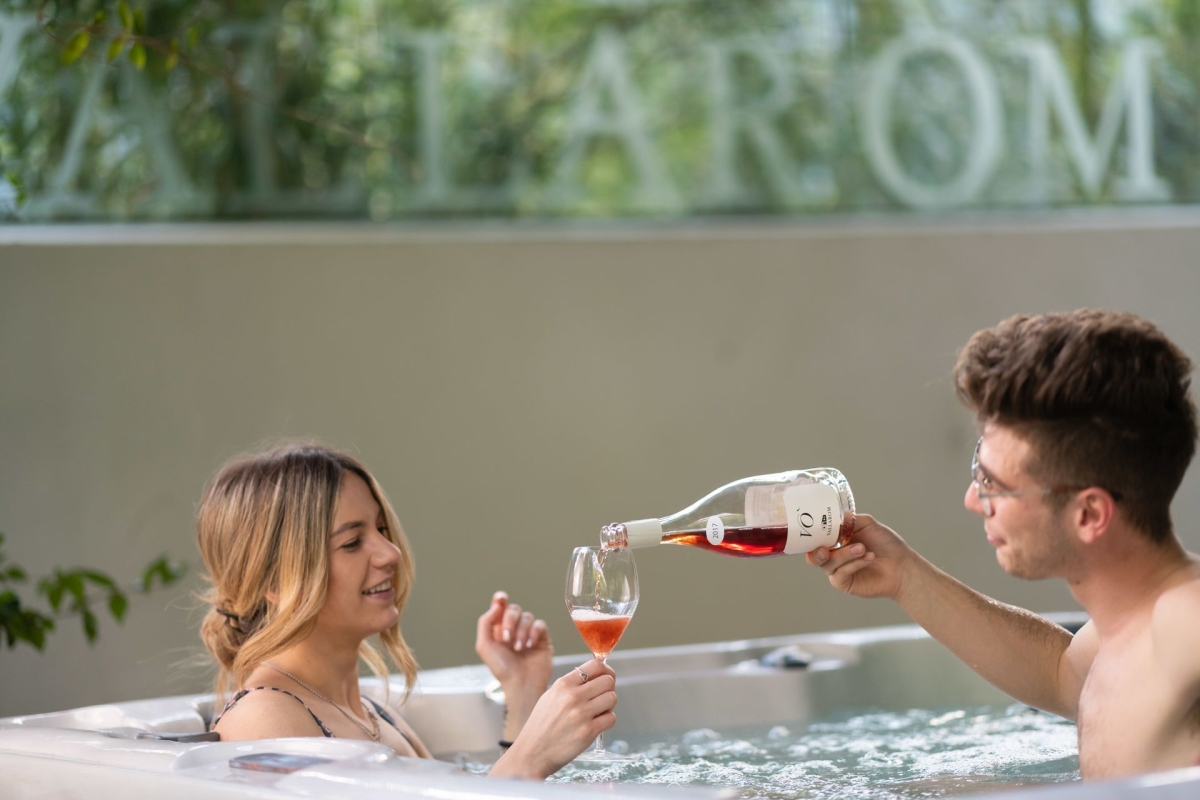
Guided cellar tours and tastings are the almost “obvious” program for an agriturismo like this, which however holds surprises. Barbara and Filippo have created a wellness area reserved for Vallarom guests and available for a fee but with the possibility of exclusive use for a couple. The packages include sauna, hamman and a Jacuzzi that induces the temptation of toasting with hydromassage in progress. These are ideal “treats” after a day of sun, pool or bike excursions, whose rental is included in the price for guests of the structure.

FROM GARDA TO THE CASTLE
“Our agriturismo is tiny, you feel like you’re at home” Barbara maintains. Dinner is reserved for guests, who can also taste freshwater fish in addition to the signature meat dishes and seasonal vegetables. Possible excursions? Many mountain trails start from here, including the legendary ascent of Baldo from whose summit you can observe one of the most beautiful panoramas of Garda. Equally beautiful is the visit to Lessinia, reachable on foot from the eastern side of the Adige valley. For those who prefer car excursions, Rovereto is within reach, but Verona and Trento are also reachable in half an hour or a little more. However, you can’t leave Avio without visiting its castle owned by Fai to which it was donated in 1977 by Emanuela di Castelbarco Pindemonte Rezzonico, to whose family it belonged almost uninterruptedly for over ten centuries. In the Middle Ages, this fortress was a small feudal court, destination for artists and intellectuals, and the grandeur of its history is testified by the extraordinary frescoes that decorate the interiors of the Camera dell’Amore and the Mastio from the mid-fourteenth century.


