

“How beautiful it is to go around the Colli bolognesi…”. And it’s beautiful even without a Vespa Special that takes away your troubles. The Lunapop song, featuring a very young Cesare Cremonini, has made at least two generations of young people dance, for whom the name “Colli bolognesi” now sounds familiar. But have those young people, perhaps older today, ever actually been to the Colli bolognesi? And do they know that it’s not just a place for day trips, but also a wine appellation?
THE WINES OF THE HILLS
Let’s start with the appellation. The protection consortium has existed for half a century and works to protect and promote a docg, Colli Bolognesi Pignoletto, and a doc, Colli Bolognesi. The first is a white wine from Grechetto gentile grapes, available in sparkling and frizzante, superiore and classico superiore varieties. The doc instead includes a wider range of red wines, still whites and still sparkling wines. Nothing to do, in short, with Lambrusco, which is produced in the Modena and Reggio hills or in the plains facing the Po (and also in the Mantova area). There is also a red bubble in the Colli bolognesi, but it’s the Barbera frizzante. With the arrival of the Pignoletto docg, the Colli have bet more confidently on this wine which could, in its sparkling expression, constitute the real alternative – at least for Bologna restaurants – to the dominance of Prosecco doc. But we are in the hills, harvesting is mostly done by hand and costs are different… consequently, given also the appeal of Prosecco and its affordable price as doc, Pignoletto has not had an easy life even in its city of choice. However, as even detractors of wine from Grechetto grapes will acknowledge, there’s a good movement underway regarding quality and organic and biodynamic production, which could determine a turning point for this wine. The Grechetto gentile vineyards coexist with those of international varieties that now have an established presence among the hills southwest of Bologna: the so-called “Rosso Bologna” requires at least 50% Cabernet Sauvignon and the “Bianco Bologna” at least 50% Sauvignon. But let’s get to the point, namely the wine tourism aspect.

FROM HERE YOU CAN SEE THE TWO TOWERS
The Colli are truly just steps away from the city and the first vineyards are already found within Bologna’s municipal territory. The heart of the appellation, however, lies beyond the Reno river and includes various municipalities, including Sasso Marconi and Valsamoggia. The landscape changes completely compared to the city center, and so does the climate, especially in summer when the heat in Bologna becomes unbearable, while in the hills the evenings are cool and pleasant: this is when Bolognese residents, finding no peace under the porticos, migrate uphill to dine outdoors and it’s really worth booking in advance. In fact, every Bolognese can easily recommend at least 4-5 favorite places and some of these are trattorias or agriturismos with attached wineries. Entrepreneurs have long invested in hospitality, because tourists for pleasure or business have joined the Bolognese, who from the Colli can reach the city fairly quickly (traffic permitting) or the various industrial areas of the plain, staying overnight and residing in a completely different context, where the climb towards the Appennino begins and you can already breathe a bit of Tuscan air. In fact, you don’t see many 50 Specials, and unfortunately not many bicycles either, because bike paths are scarce, while in the valley roads SUVs abound from commuters who have chosen the Colli as their home. Meanwhile, the towns have grown rather chaotically and there would be much to improve, but where the wineries are located the panorama often becomes enchanting. In short, it’s worth starting to get to know these “mythical” Colli, with or without wings under your feet. Starting with five wineries that represent only a first and partial selection of what the territory offers. Here you’ll find drinks, food, and in some cases even accommodation.
1. TIZZANO
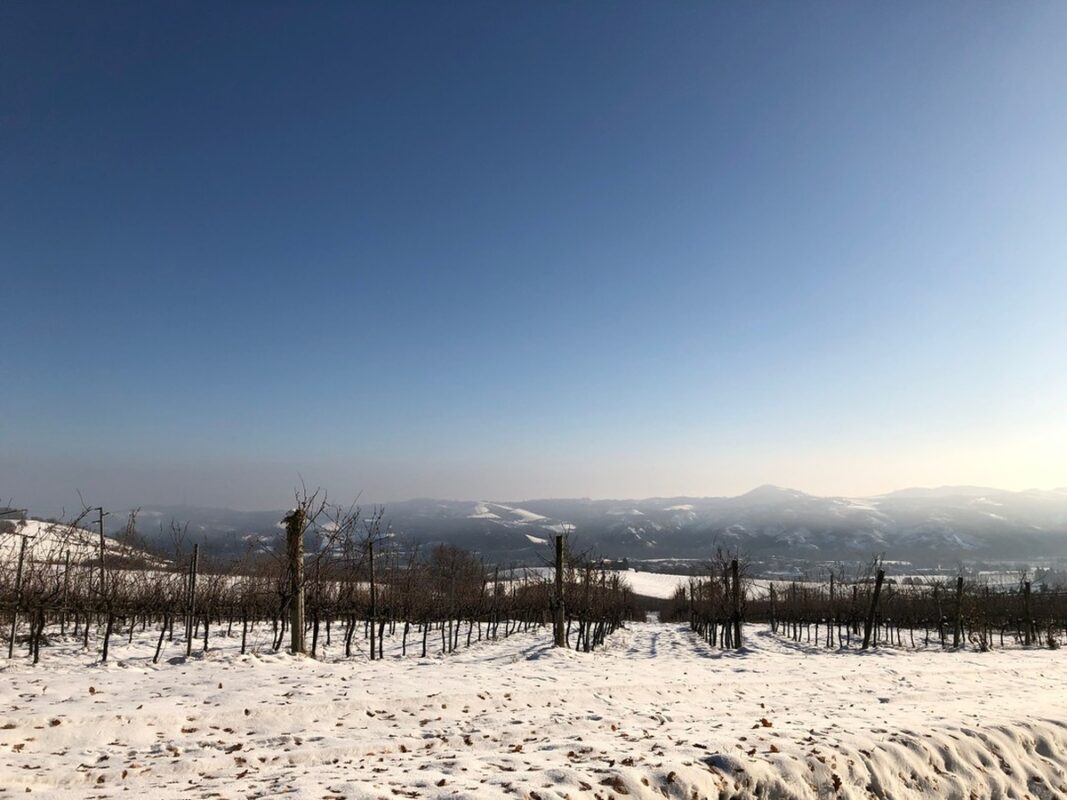
Owned by the Visconti di Modrone family, Tizzano is one of the most easily accessible estates from Bologna and is situated in a truly suggestive position. The road that climbs from Casalecchio di Reno towards the homonymous Hermitage offers a beautiful view of the San Luca sanctuary and the historic center. Not far from the Hermitage is the road that descends towards the estate, which Bolognese residents (or at least the fortunate ones invited by the owners for the occasion) know not only for the wines it produces, but also for organizing the annual pig festival held in January that recreates the ancient peasant tradition of preparing cured meats and other products from pig slaughter. Visiting hours: Monday to Friday morning and afternoon (8-12, 1:30-4:30 PM), Saturday and Sunday only in the morning (8-12). Does not offer dining.
2. CORTE D’AIBO
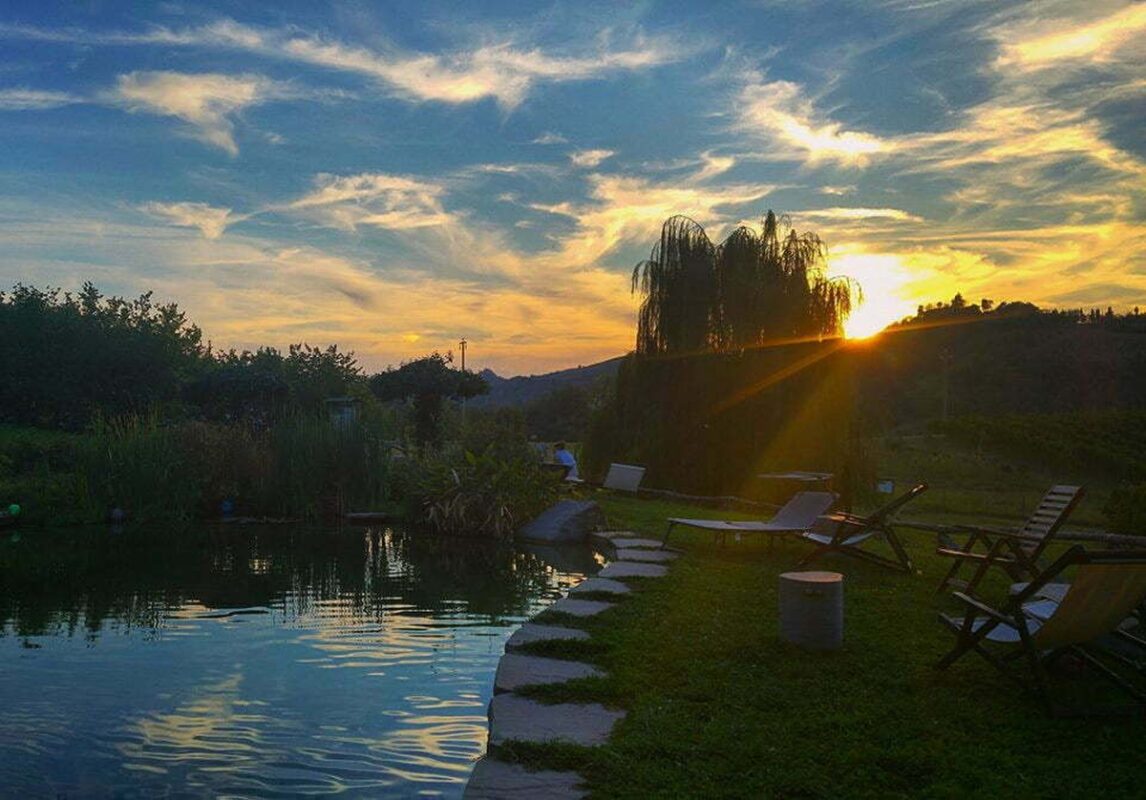
Winery and agriturismo very popular on weekends, Corte D’Aibo has been a historic name (since 1989) in organic cultivation in the Colli bolognesi. A suggestion? If you love trekking, park your car near the Monteveglio Abbey – a place of Dossetti memory and a small village to visit – and take a beautiful walk through the woods until you reach the Corte with its vineyards set in an enchanting landscape. The agriturismo offers 12 rooms and a restaurant with traditional dishes and other more elaborate proposals, naturally accompanied by the estate’s wines. Room reservations can also be made online.
3. TENUTA BONZARA
Their Bonzarone (100% Cabernet Sauvignon) was christened by the great Gino Veronelli and has become an example of how quality wine could be made in the hills of Bologna. You climb to Tenuta Bonzara from the Lavino valley and it’s worth it. The Lambertini family has an established history of hospitality, and besides, the founder, the late Angelo Lambertini, in addition to building the winery also dedicated himself to renovating the ancient tavern that became a restaurant, La Martinella del Poggio. Today that restaurant has become La Trattoria di San Chierlo and is also the ideal place to pair Bonzara wines with traditional Bolognese dishes. The estate has a wine shop and four rentable apartments inside a stone house. The winery can be visited and offers three different wine experience options.

4. MANARESI
It can be defined as a company “of art,” because Manaresi is also headquarters of the Paolo Manaresi Artistic Association, successor to Giorgio Morandi at the Bologna Academy of Fine Arts and great twentieth-century artist (he was a painter and engraver). His granddaughter, Donatella Agostoni, heads Manaresi with her husband Fabio Bottonelli. The structure overlooks 11 hectares of vineyard and sits at the center of a hill whose name, Bella Vista, is most appropriate to describe the situation wine lovers will find there. During the warmer months, various events are organized – Covid permitting – and situations in ‘contamination’ between art-culture-wine-landscape on the panoramic terrace or in the park overlooking Bologna, in the old winery spaces or in the modern tasting area with direct sales point.

5. GAGGIOLI
A complete offering for this Zola Predosa estate, owned by the Gaggioli family since 1960. In addition to wine production, there’s the Borgo delle Vigne agriturismo, created from the renovation of the old barn and equipped with seven vineyard-view rooms just 13 km from the airport and 16 kilometers from piazza Maggiore. But Borgo delle Vigne is also a restaurant open Thursday to Sunday with Gaggioli wines and a menu entirely focused on the territory, from stuffed pasta to the inevitable tigelle and crescentine, using zero-kilometer products. There’s also a library, which also provides book lending service, with eight hundred volumes available: the ideal place to consult a text while tasting a glass of wine.


