Those who believe in the magic of numbers should mark down 19 when organizing this visit. Why? The story of Cantina Kurtatsch, located in Cortaccia on the wine road (Bolzano), begins in 1900, a perfectly round year. The vineyard hectares cultivated with vines are 190. Equally numerous are the families engaged in viticulture who then provide the winery, organized as a cooperative, with the product to process – namely the grapes from which the wines marketed under the Kurtatsch brand are produced.
FROM WINE TO JUICES
The labels, however, are well over 19: their number approaches forty and they are divided among different lines. There’s the Tres line, which is born in the best vintages when the three oldest micro-parcels of the three most important red grape varieties (Merlot, Cabernet Sauvignon and Cabernet Franc) are harvested and vinified separately, to reach the market many years later (the latest vintage in distribution is 2018). There’s the Terroir line, the pinnacle of Cortaccia’s winemaking art, with low yields and strong character to create wines that reflect and reveal their zones of origin. There’s Selection, the first selection of Cortaccia’s vineyards, the result of reduced harvests, precise and environmentally respectful viticulture and careful vinifications. Then there’s Libell, a cuvée with a light profile, for which a CO2-saving 390-gram bottle was chosen in the name of sustainability. Finally, there’s Flein, Cantina Kurtatsch’s “no alcohol” project that nevertheless deviates from the dealcoholized wine trend, because it’s a monovarietal grape juice, processed with the same quality and care used for wine production: there’s Flein, which is a Sauvignon Blanc juice, and there’s Flein Fizz, which is sparkling juice.
DOLOMITE SLABS
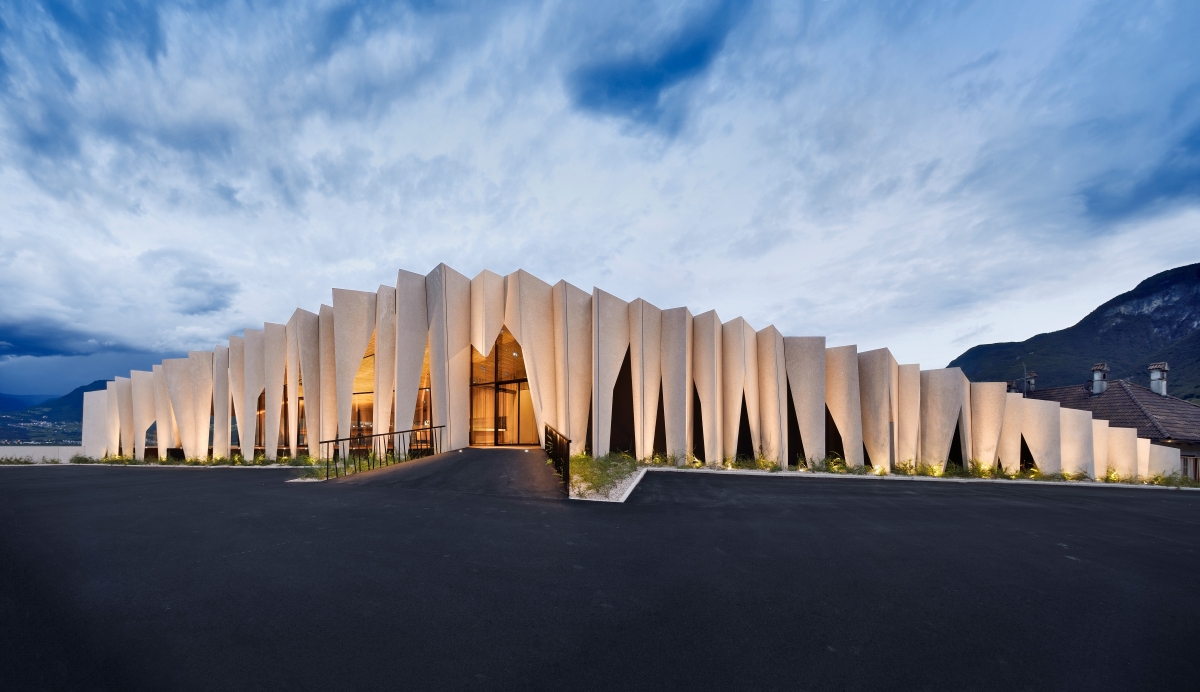
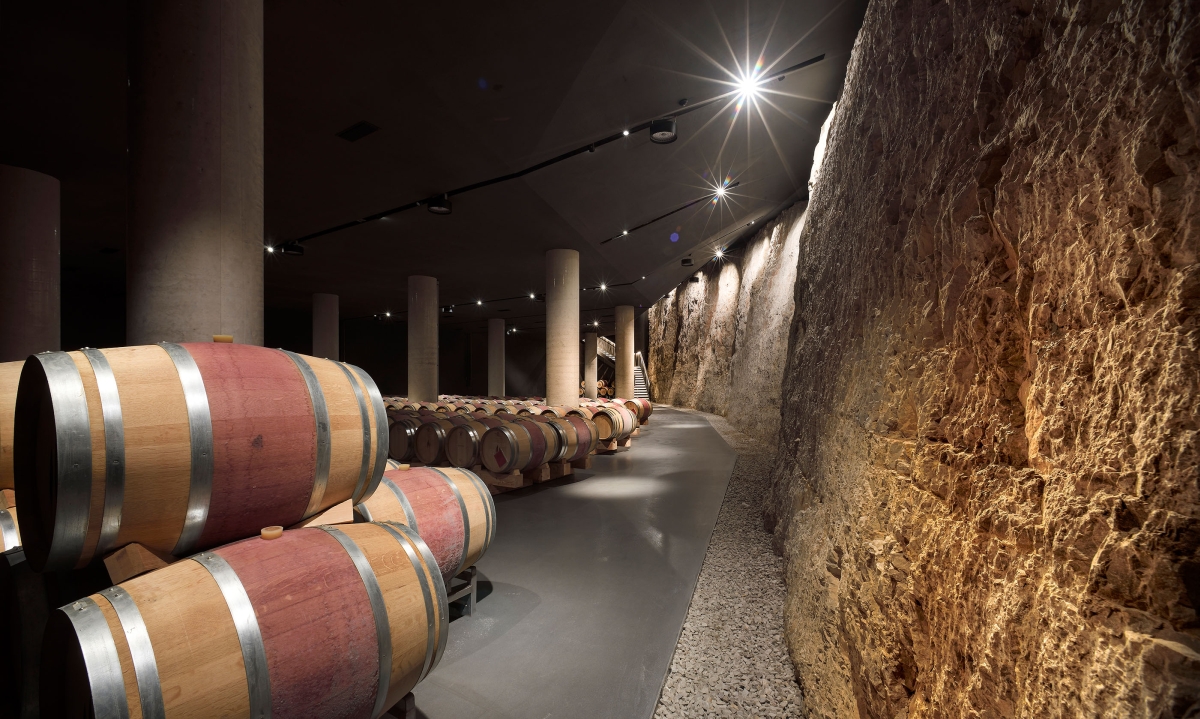
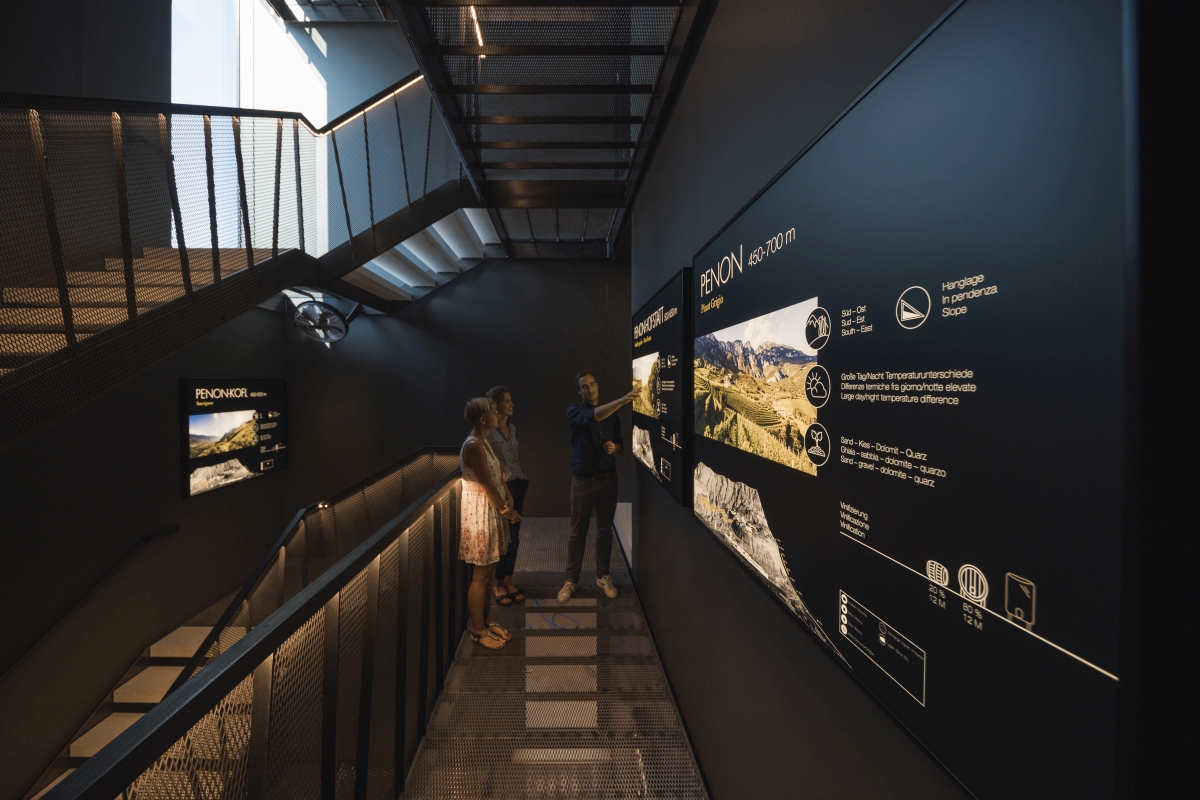
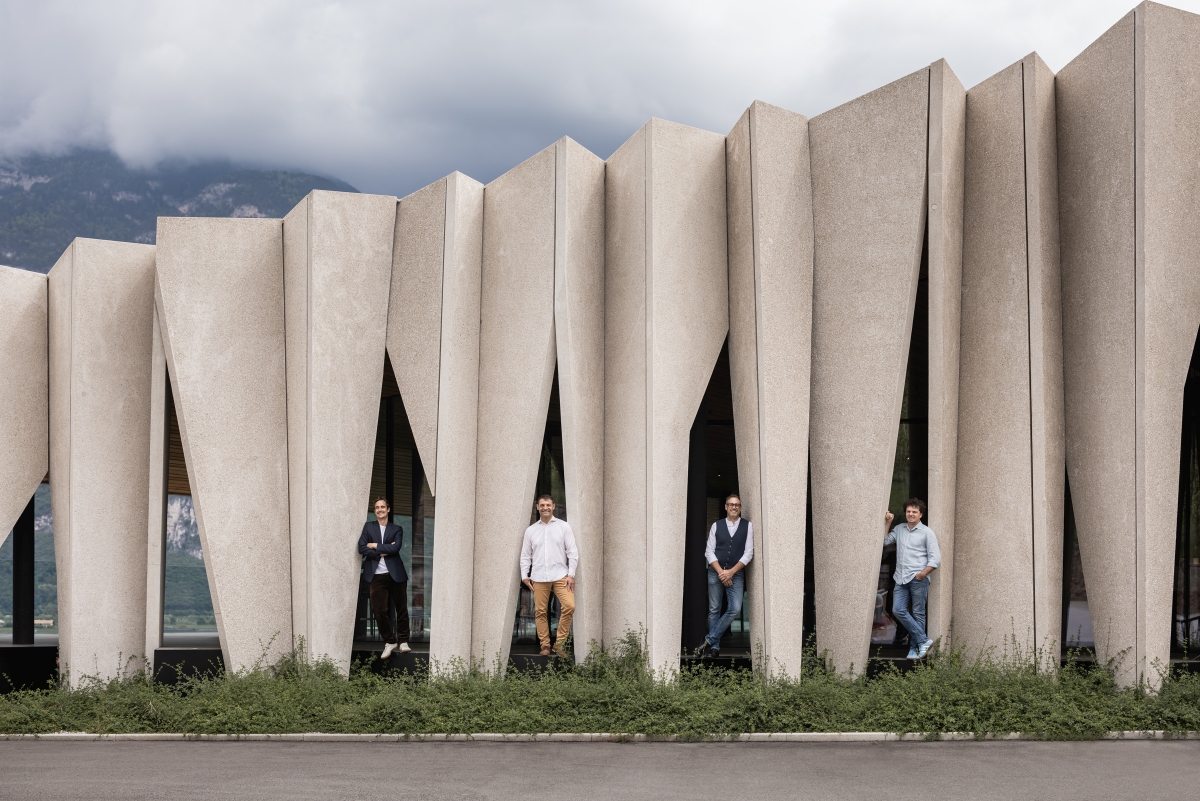
A visit to Cantina Kurtatsch doesn’t leave one indifferent because the impact is truly wow. The Cantina Kurtatsch 2020 project has made the cooperative winery’s headquarters an architectural jewel, with the facade created using Dolomite slabs resulting from a project by the Bolzano architectural studio Dell’Agnolo Kelderer. The structure overlooks the Wine Road and certainly induces a stop, a choice rewarded by the possibility of tasting and purchasing wines in the wine shop created inside. The barrel room is also new, inside which stands out a back wall in dolomite consisting of the Milla wall that ensures an ideal natural climate for barrique aging. Speaking of sustainability, inside the winery there’s a combined cooling and heating system with heat recovery which, together with energy sanitation and adaptation of the existing structure to CasaClima standards as well as its equipping with a new charging station for vehicles, underlines the company’s eco-sustainable footprint. Among the wines that impressed us most, a mention is mandatory for a metodo classico as surprising as it is rare. It’s the 600 Blanc de Blancs, produced in about two thousand bottles per year, naturally sold out: it’s a pure Chardonnay, as one can guess from the name, which also recalls the altitude of the vineyard of origin, located in the Penon hamlet. One of the best Italian sparkling wines, with a full 55 months of bottle aging on lees. If you find it, don’t let it slip away…
THE DIFFERENT PACKAGES
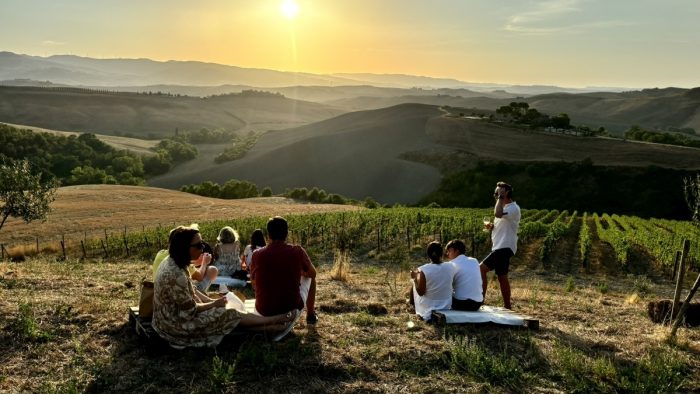
Stopping by the winery is the most immediate solution to get to know Cantina Kurtatsch, but those who want to delve deeper and organize their visit need only connect to the website and choose their preferred formula. Prices start from 20 euros and go up to over 100 euros, depending on the chosen package. The basic one is called Terroir and includes the tour inside the winery with tasting of four wines from the namesake line. By paying 120 euros you can secure the Wine Exploration package, a full day at the company: the price is more substantial but in return you get a tour among the vineyards, tasting of all the Terroir wines directly in the vineyard of origin, the South Tyrolean morning snack (Holbmittog), a 3-course lunch at one of Cortaccia’s restaurants, the walk through the vineyards of our red wines to return, eight hours later, to the winery. All this with 12 km of walking (700 meters downhill, 150 uphill), a stream to cross, a guide at your service. On request there’s the Back in time formula, dedicated to tasting old vintages, and the one called Top of Kurtatsch, which includes the guided visit, tasting of seven labels, barrel tasting and the surprise grand finale from the rarities archive.
Opening photo by OskarDaRiz