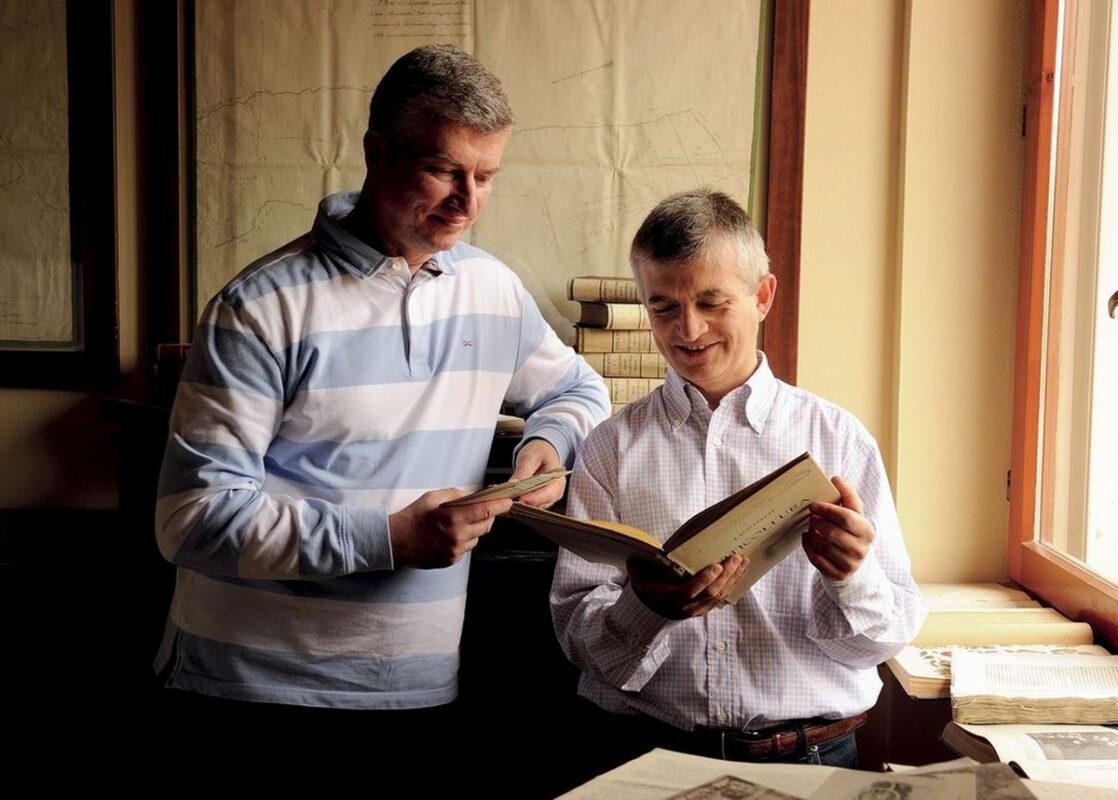
Less than an hour from Milan, not much more from Bologna. We’re in Piacenza, or rather in the province of Piacenza, in a wonderful valley that holds surprises not only from a landscape and environmental perspective but also – and this is what matters most to our readers – for the quality of wines it manages to express. Each winery has its own specialization and interpretation of the terroir. The three realities we visited during Bike & Wine Press edition Colli Piacentini – organized by Strada dei Vini e dei Sapori Colli Piacentini and held simultaneously with Aromatica, viaggio nei profumi del vino, a widespread event with 14 wineries open to the public for the occasion – represent an excellent synthesis of the potential and results already achieved in the territory across different product types: wines from old vines in the case of Labrè, classic method sparkling wine for Romagnoli and Malvasia di Candia for La Tosa. But let’s take it step by step.
FROM RIVERGARO TO GRAZZANO VISCONTI
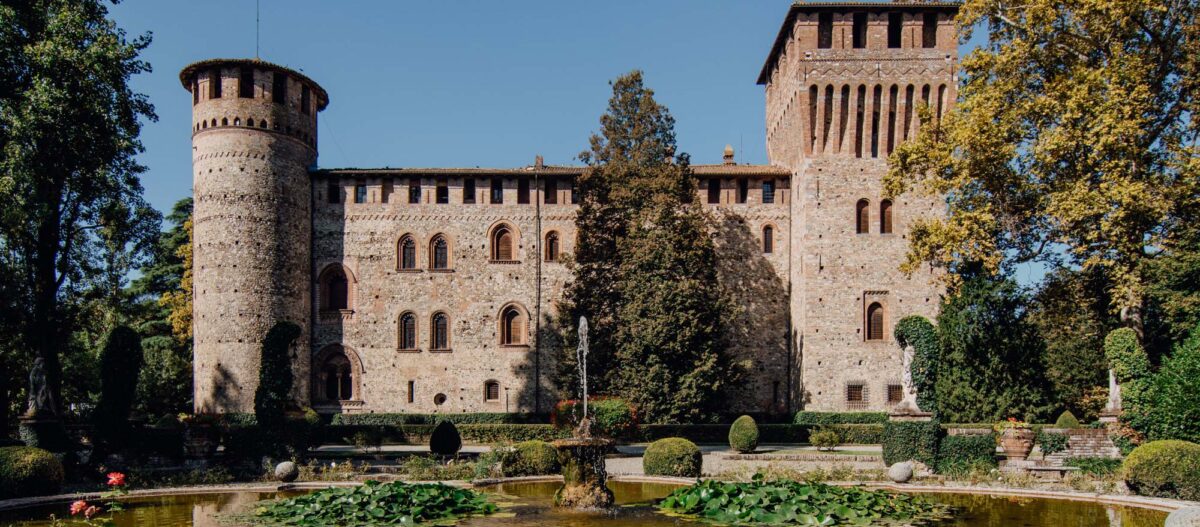
The journey along the roads of Val Nure begins in Rivergaro with the rental of our powerful vehicles, whether electrified or purely muscle-powered, from Gagàbike Caffè, a center specialized in bike rental but also a public establishment where you can enjoy excellent coffee or a glass of Trebbianino to accompany the potato and pancetta cake with which we properly fuel ourselves to face the “tough climbs” (it’s practically all flat!) of the Piacenza valley, starting from a location rightly famous among Milanese, also because the Visconti coat of arms is present in more or less every house of this village. This is Grazzano Visconti, a 19th-century village built around the castle owned by the noble Visconti di Modrone family and constructed (the castle) in 1395. The ancient manor is open to all visitors and we suggest doing so at the end of October when the entire village becomes a “thrilling” location for the celebration of All Saints’ Eve, alias Halloween. After the visit it’s already time for lunch, and the incessant rain of the day dedicated to our journey made the steaming plate of anolini in broth we tasted at Ristorante Biscione located in the heart of the village even more comfortable and tasty, complete with sparkling Gutturnio for the possible “sorbir” (this is what the half glass of red wine added to the broth is called, a great course finale typical of upper Emilia or lower Lombardy).
LABRÈ, ANCIENT VINES AND AROMATIC MALVASIA
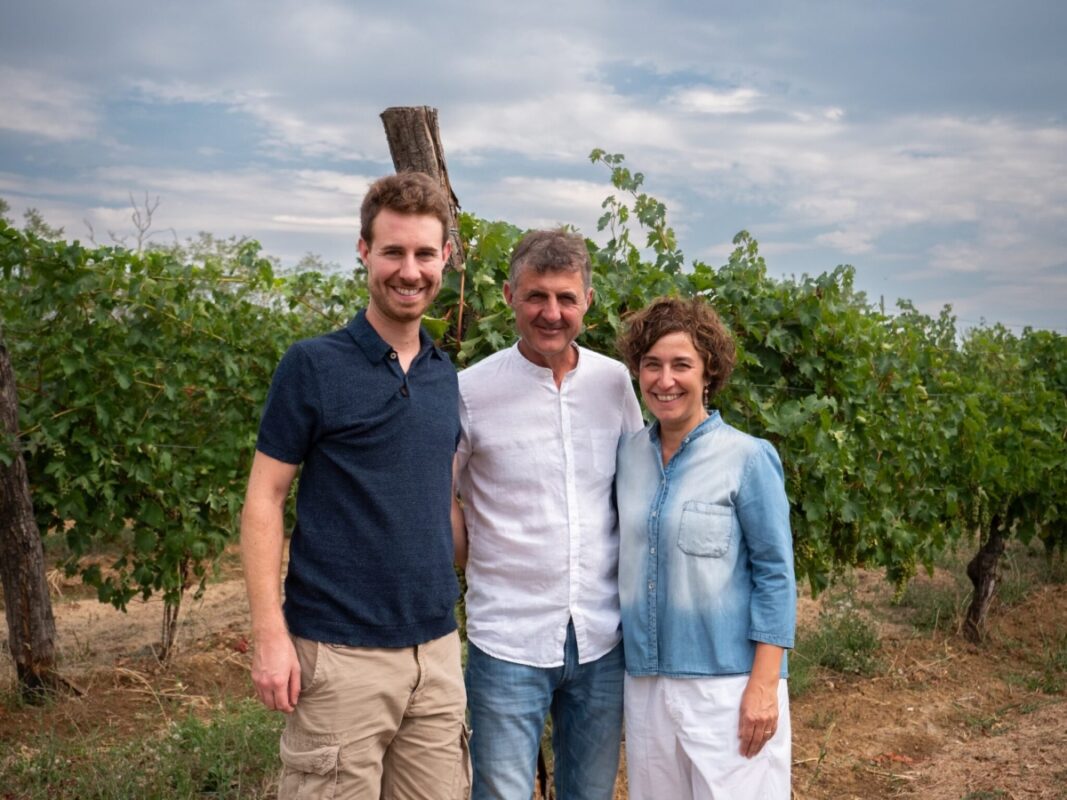
Samuele Paraboschi, with his father Leo and his mother who personally handles the shellac closures and hand labeling, opened this garage-winery dedicated to three still wines (Malvasia Aromatica di Candia, Barbera and a Bordeaux blend) for a total production of only 8,000 bottles. He divides his time between work as a winemaker for a company in Roero and his passion which is Labrè, a winery with a Lombard name that indicated the enclosed estate cultivated with fruit plants or vineyard. Labrè’s mission? To carry forward what Delmo and Cesco, the old owners of the vineyard later purchased by the Paraboschi family, had established. Here they work only with old vines and make wine precisely because there are old vines: the oldest date back to 1957. In total, the vineyard surface is 1.5 hectares and the Malvasia Aromatica is absolutely the winery’s benchmark, freely visitable on weekends and by appointment on other days. The formula? “Me giving people such a hard time, between many tastings and two slices of salami,” says Samuele. By the way: the salami is delicious, it’s soaked for an hour in Malvasia, then peeled and sliced. His wines are sold mostly in the province of Piacenza, something in the Florence area and something abroad, but by Christmas everything is already sold. In short, hurry before it’s too late. Coming in a couple of years, a Passito from Malvasia.
THE SURPRISING SPARKLING WINES OF ROMAGNOLI
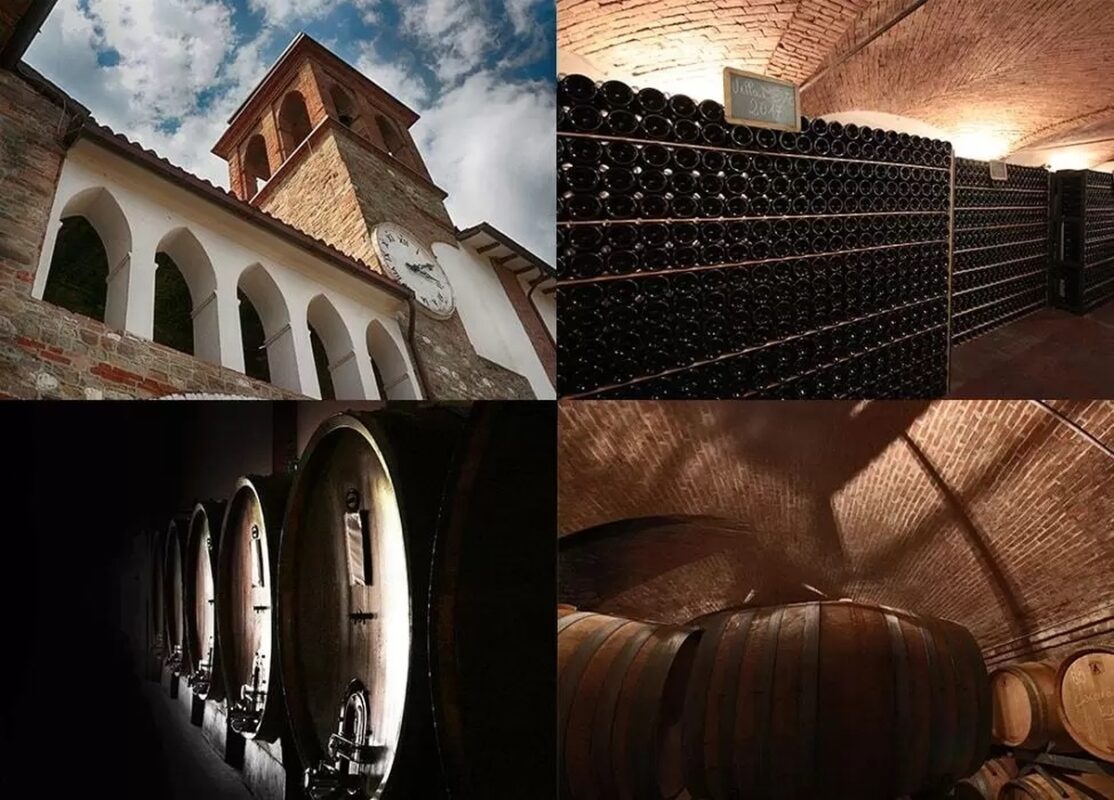
Here we are in a reality, Romagnoli in Villò di Vigolzone, specialized in classic method sparkling wine, the result of the former owner’s passion for Champagne, engineer Antonio Romagnoli, who adored Cristal and planted Pinot Nero and Chardonnay on the hills of Val Nure. The company was subsequently acquired by the Fbh holding, active in logistics, which entrusted management to Alessandro Perini, whose vision goes beyond territorial borders thanks to deep knowledge of the reality across the Alps. Many projects are underway to make the company, whose central building dates back to 1857, even more attractive from a hospitality perspective. To the wine bar and tasting area, already fully operational, the project will add a hotel section in the historic palace, to bring more and more people to discover the reality of the Colli Piacentini. They expect to inaugurate the 4 rooms that will be created from the works in 2026. The events area will instead be active from next year. Fun fact: since 1986, the sparkling wine of Villa D’Este in Cernobbio has been produced here, not in Franciacorta or Trentino… The tourist-instagrammable offering is completed by the giant red bench installed near the winery.
LA TOSA, WINES AND CUISINE
Agritourism since 1988, agritourism license number 13 of the Emilia Romagna Region, the first in the province of Piacenza. Today the women work in the food part, the men in the wine part, and so it has always been. The wines of La Tosa? Ask Massimo Bottura and Lara Gilmore… They are among their favorites, especially the old vintages, of which the company has an excellent supply. They are among the pioneers of still wines, which are not part of the Piacenza tradition. And this being pioneers depends on a simple fact: the brothers Ferruccio and Stefano Pizzamiglio are Milanese, from the Niguarda district, and fell in love with this territory. Instead of following their father’s activity, who was a doctor, they decided to move here because medicine was not their passion. For Stefano, in particular, the true passions have always been poetry and wine. So the choice of both brothers was wine, which from an initially confused idea became a concrete and successful project: leaving the city for the countryside and dedicating themselves to agriculture. The first wine was born in 1985, three years later came the agritourism. Today in the kitchen is Stefano’s daughter, Gloria, master of tortelli. Among the iconic dishes we also find the fig cake from Albarola, a municipal denomination since 2007. And above the company is the Museo della Vite e del Vino worth visiting.