

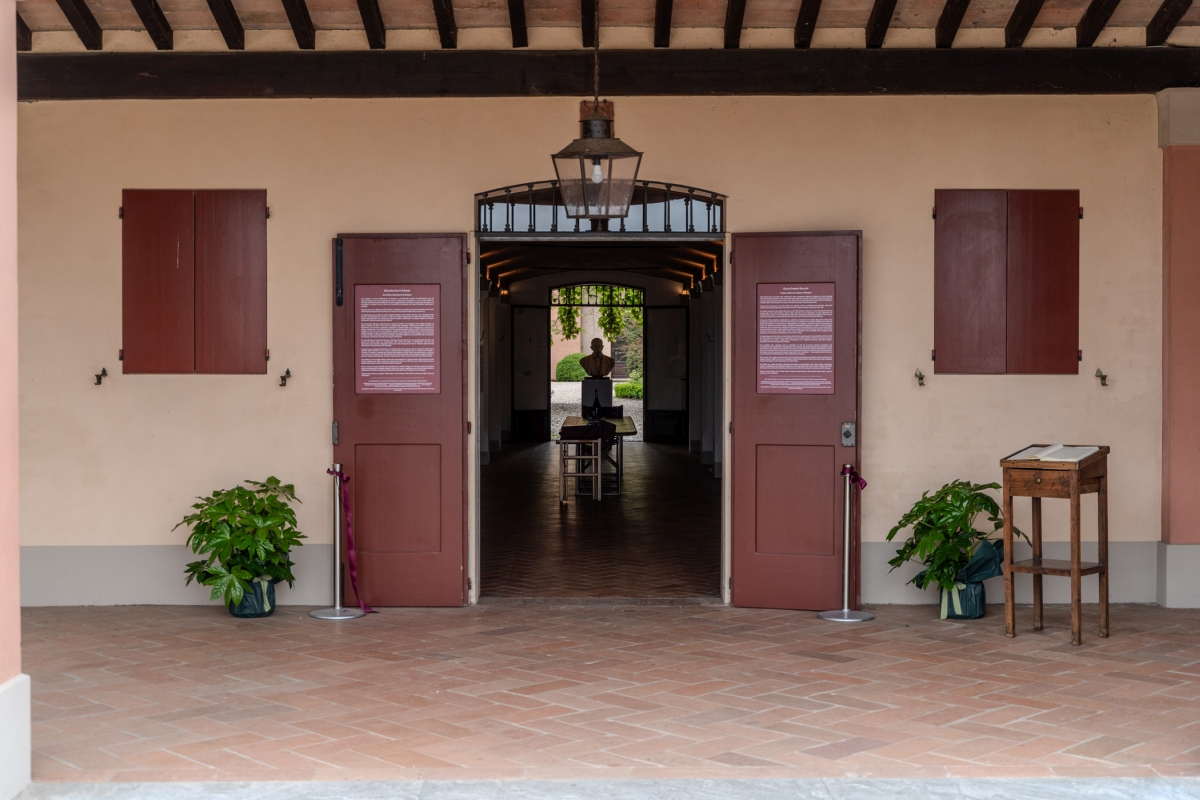
We had anticipated more than a year ago that Cleto Chiarli was about to enhance its wine experience with a new initiative: a museum created inside Tenuta Cialdini, in Castelvetro di Modena. Today that museum has become reality.
Tenuta Cialdini, with its villa, park, stables, vineyards and winery designed to best express the identity of the classic Lambrusco varieties, now hosts a small yet magnificent museum that encompasses years of commitment, memories, objects and testimonials. The best way to make tangible the first 165 years of challenges, the years since the founding of this Modena company that is the flagship of Lambrusco.
The exhibition unfolds by following step by step the Chiarli family’s activity, marked by their love for viticulture and deep attachment to their Modena roots. The oldest records of this family date back to the sixteenth century, but it’s the documents from the second half of the nineteenth century that give the measure of the entrepreneurial qualities that animated the founding ancestors: foresight, perseverance and dedication, essential to shape today’s great wine-making reality.
The Gallery collects testimonies of lived experience. Objects, diplomas, certificates, mentions, recognitions, medals, carefully preserved to be transmitted to future generations, precisely describe Chiarli’s activity from 1860 to the present day. In Chiarli’s Historical Archive, important documents have been found, now catalogued and divided, dating from 1883 to 1980, which allow for a deeper understanding of the economic and administrative context of that period.
The Chiarli Archive is recognized in the “Registry of Historic Companies”. The Ministry of Cultural Heritage and Activities and Tourism of the Archival and Bibliographic Superintendency of Emilia-Romagna has deemed the Archive “… significant heritage and in certain aspects a rare example of conservation of an entire productive activity from the Unification of Italy to today”.
In the displayed collection, beyond documentary evidence, ancient bottles with historic labels, awards and objects such as boxes, trays, glasses and other memorabilia linked to the Chiarli brand hold a prominent place. To deepen the history of wine, there are some rare and interesting publications from the 16th and 19th centuries that deal with its preparation, grape varieties and economics, as well as its importance as a beverage.
One section connects to the Trattoria dell’Artigliere of Cleto Chiarli, ancestor of this great family of entrepreneurs who in 1860 decided to transform his innkeeper activity into that of a winemaker. In a showcase, a rare document from the first half of the 19th century reminds us that, at that time, the center of Modena hosted eighty taverns, inns and lodges. These activities were regulated by numerous ordinances, especially regarding patrons, particularly regular customers who tempted fate with gambling, favored by innkeepers who hid betting boards behind wooden cutting boards hung on the walls.
An important section is reserved for a collection of ancient and rare blown glass objects made in the Duchy of Este from the 17th to 19th centuries by craftsmen who settled in Modena coming from Altare di Monferrato. Objects are displayed that connect us directly to the daily life of a distant past, fascinating for that characteristic blue/green color and for that thinness that enhances their extreme fragility. We also encounter the very rare “English Bottle” in dark glass created in 1652 which, due to its sturdiness, made it possible to definitively eliminate the millennial difficulties related to wine transport previously carried out in sturdy wooden barrels and more anciently in terracotta amphorae. Its evolution allowed, in subsequent centuries, the production of bottles resistant to the pressure of sparkling wines which, arriving in Modena in the early 1800s, would give Lambrusco the possibility to become sparkling as we know it today and be commercialized.


