We are in a magical territory, suspended between the Alpi Apuane and the Golfo dei Poeti, on the border between Liguria and Toscana, just a few kilometers from Lerici and Versilia, not far from Cinque Terre, Pisa and Lucca. In short, there’s a whole world to see using the colli di Luni as a starting point. And here, in the area where Liguria’s finest Vermentino is produced, there’s a reference point not only for wine production, but also for lovers of contemporary design. It’s the Lvnae winery.
LUNIGIANA CUISINE
Diego Bosoni, with his family, strongly wanted to invest in this project that now has ten years of history behind it, even though the actual construction was completed in 2019 and the inauguration was actually held last year. The design was entrusted to designer Andrea Del Sere and, for the technical aspects, At Studio from Roma intervened. All with the intention of creating a functional and non-impactful structure, almost “hidden” among the hills and vineyard rows. This alone could have been enough to attract wine lovers to the colli di Luni, but Diego didn’t stop there and created Ca’ Lvnae, renovating a late 18th-century real estate complex with a courtyard in the center and four buildings all around.

“At the time it was a farm, with various production activities,” he tells italianwinetour.info. “My parents took it over and then, from the ruin it was, it was renovated to become a family place, a space dedicated to those who come to visit us.” Generally, when you have similar spaces within properties immersed among vineyards, the first thought is to transform them into bed&breakfasts, boutique hotels or agriturismi, to welcome guests while simultaneously starting a hospitality model. This was not the choice of the Bosoni family. “After all – he adds – accommodation solutions are not lacking in this territory. We recommend those present in neighboring municipalities, whether in Liguria or already in Toscana. Here instead we wanted to start a whole series of daytime activities: the wine shop with our wines and typical territorial products, a museum section on the material culture of wine created inside the manor house and, since last year, there’s also a small tavern. It’s called Ostaia and carries forward the tradition of Lunigiana cuisine, with a fixed-price menu that changes every month based on the availability of seasonal products.” In winter you dine in a room with wooden trusses and a large fireplace always lit; in summer everything changes and the ideal place is the first-floor terrace overlooking the Apuane and the ancient courtyard inside Ca’ Lunae’s court. Completing the offer is a laboratory for producing artisanal liqueurs and jams. “Ca’ Lvnae – comments Bosoni – was conceived as a structure always open to the public and available for purchasing wines and local products, for stopping for lunch or for booking an experience.” The winery is just two minutes away by car.

PESTO SCHOOL
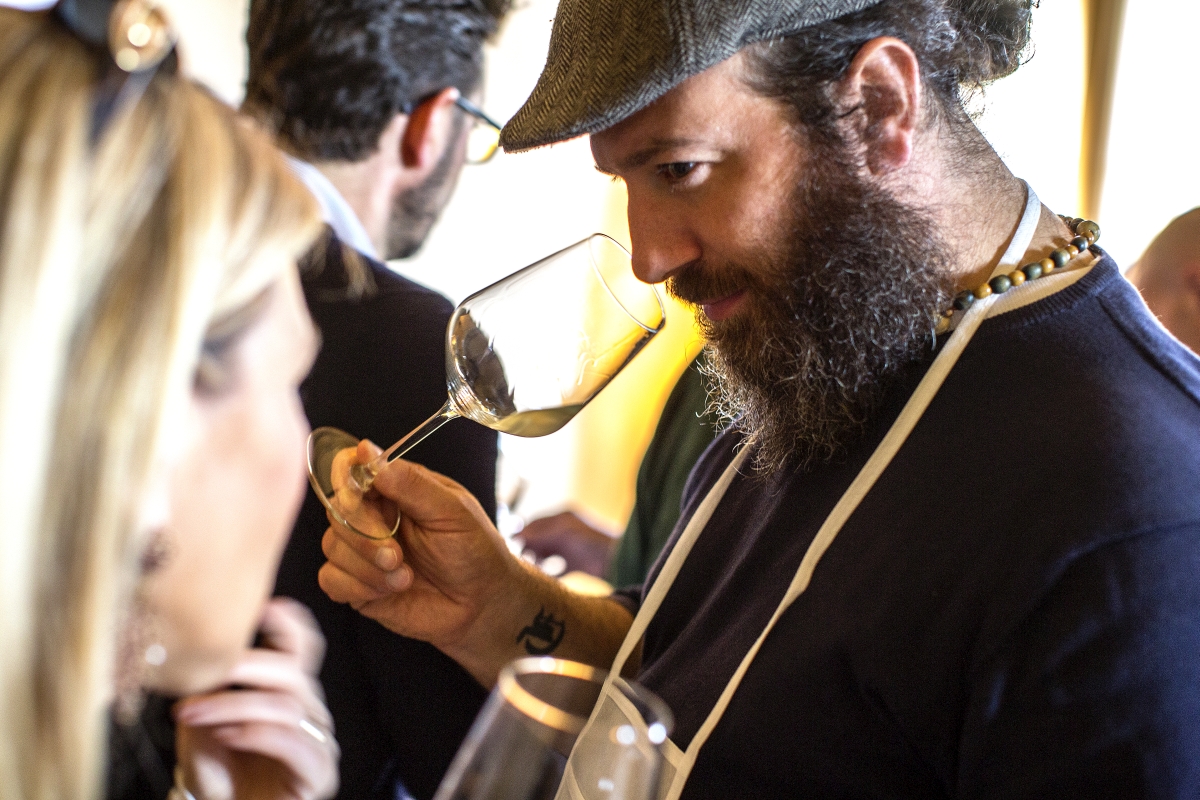
Speaking of experiences, Lvnae and Ca’ Lvnae’s offering is quite extensive. It starts with tastings organized inside Ca’ Lvnae that can require from a minimum of two hours for “paths” dedicated to Sea Wines, Vermentino or Journey through the colli di Luni, up to a maximum of 4 hours for the wine and lunch formula at Ostaia. There are then two formulas called “paths” that include the country snack in the vineyard or, alternatively, the mini course that allows wine lovers to learn all the secrets related to preparing Ligurian pesto, naturally accompanying this small cooking school with Lvnae wine tasting and sampling, “while making pesto,” artisanal cured meats, zero-kilometer cheeses and vegetable preserves.

WINERY EXPERIENCES
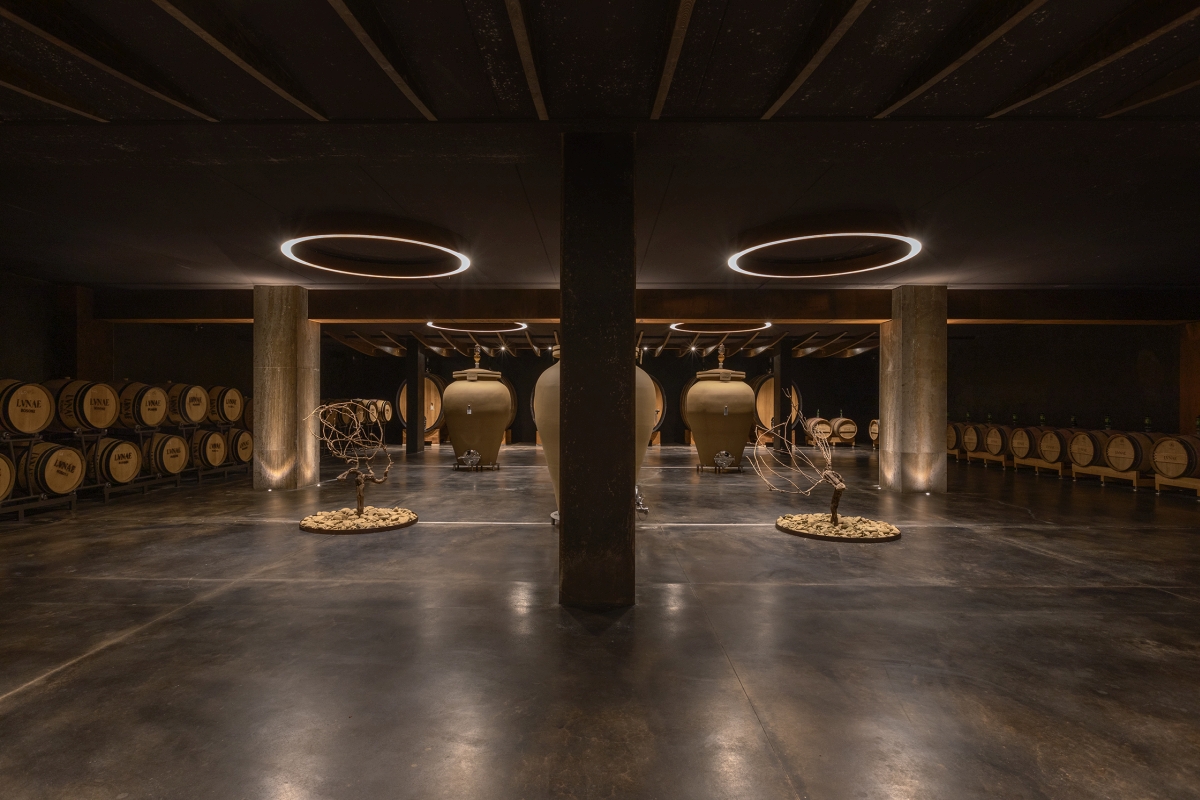
Then there are three paths proposed inside the winery, to explore the most contemporary Vermentino dei Colli di Luni. The Lvnae winery was born from the Bosoni family’s desire to give a new home to the company’s oenological vision and to pay homage to the Colli di Luni territory and Vermentino. It’s a multipurpose place, capable of encompassing ideas and matter, roots and experimentation, functionality and aesthetics. Outside, the semi-underground building has a totemic appearance and is symbolically surrounded by vineyards, one row for each variety present in the estate. The interior reveals Lvnae’s universe in a surprising succession of spaces: windows, sliding screens, bold volumes and unexpected materials accompany the visitor to discover how Lvnae wines are born, up to the final tasting. “Our new winery was born from passion for the territory, from dedication to the vineyards and from care for each individual wine. It was designed to celebrate the relationship between land and man and, through its architecture, wants to be a tribute to Vermentino and the Colli di Luni,” says Diego Bosoni, “it’s the concretization of our philosophy and to make it discoverable we created three possible experiences.”
The first, “Getting to know the winery,” is the journey to the heart of Colli di Luni, discovering the territory and the Bosoni family’s winemaking history with tasting of four representative wines and Lvnae extra virgin olive oil paired with Ligurian breads and focaccias. “The 5 senses in the winery” is the sensory and immersive experience in the new winery project with technical tasting of 5 wines mirroring as many different oenological peculiarities artfully paired with small local gastronomic excellences. “In the World of Lunae” is the most complete exploration that includes visiting the new winery, introduction to the territory and the Bosoni family’s winemaking history and, moreover, visiting the ancient 18th-century farmhouse of Ca’ Lunae, with the Museum dedicated to peasant civilization and local oenological tradition and a special tasting dedicated to Vermentino paired with some Ligurian delicacies.
TOP WINES
Lvnae counts on 65 hectares of owned vineyards and a network of over 100 small conferring producers who constitute the territory’s fabric. The vineyard park, beyond Vermentino which here expresses itself in peaks of rare excellence, also welcomes ancient and typical local varieties like Albarola, Vermentino Nero or Pollera. It offers various Vermentino expressions in its range: beyond Labianca, fruit of the rows closest to the sea, from foothill soils comes Etichetta Grigia while in the high hills, where Vermentino vines sink into subsoil rich in skeleton, Etichetta Nera takes shape, synonymous with Mediterranean elegance. Cavagino is instead the solo voice of an elegant and complex Vermentino and represents one of the first crus of its kind. The flagship wine, finally, is Numero Chiuso, produced in two historic vineyards and in a production of only 2,600 bottles. Fruit of experience, research and imagination, it ages in barrels for 18 months and challenges time on the terrain of complexity and patience.

BETWEEN ORGANIC AND CLASSIC METHOD
Projects in the pipeline? There’s no shortage… and Diego Bosoni himself anticipates some to our publication. “We’re restoring old vineyards in the highest and most suitable areas. There’s a progressive conversion to organic method: today we practice it on 65 hectares, of which 30 have been managed as organic vineyards for four years now. We’re very focused, in the winery, on production from native grape varieties. And then there’s the novelty of the classic method.” It’s called Cuvée Lunae Brut, it’s a vintage (first year 2018) from Vermentino and Albarola grapes, therefore native varieties, and it’s also light (12.5% alcohol).