Two years after the historic governance reorganization that reshaped the leadership of Banfi, the Montalcino company seems to have identified its course for navigating an increasingly complex and polarized wine market. And CEO Cristina Mariani-May has no doubts: a crucial driver of growth will be wine tourism.
Third generation of the Mariani family, at the helm of Banfi since January 2023, Cristina Mariani-May has brought decisive change. The new corporate structure wasn’t simply a reshuffle of positions, but a cultural evolution aimed at revising working mechanisms and positioning. The goal? “Preparing the company for the future,” to reposition the brand in the accessible luxury and high-quality segment.
In the interview with Vinonews24 – in dialogue with director Giambattista Marchetto which can be heard in full in the podcast curated by Federica Borasio – Mariani-May reveals that Banfi’s “true revolution” isn’t just played out in balance sheets or the cellar, but in the imagination. The portrait of a “Banfi 2.0” emerges, transforming the very concept of wine tourism, starting already from the post-Covid period. The CEO explains how wine, while remaining the beating heart of the business, has become a piece of a much broader experiential mosaic, necessary to intercept tomorrow’s consumers. And indeed, Banfi is recording more significant growth (including in profitability) in wine tourism compared to wine.
“The wine drinker is a niche in the world,” admits Mariani-May with pragmatism. The challenge, therefore, is to capture the attention of those who aren’t necessarily looking for the label, but for an experience. This is where the “land factor” comes into play: the modern visitor, especially GenZ and international students, arrives in Montalcino “to escape urban frenzy.” They’re not just seeking Sangiovese, but the peace of olive groves, the biodiversity of beehives, the history told by Etruscan vases and ancient glass that Banfi preserves and enhances (through annual publications).
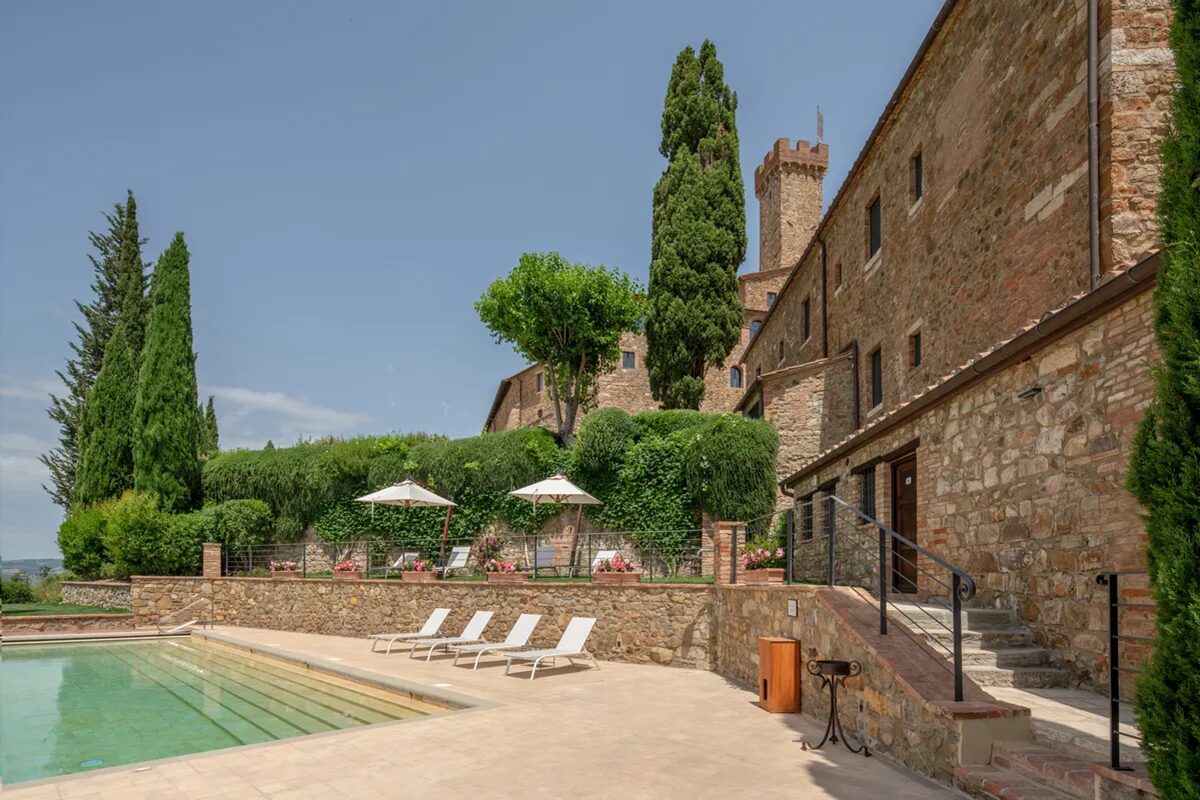
The CEO’s vision is “holistic”: Castello Banfi no longer just as a winery, but as a cultural and recreational hub. From sporting events (like Eroica and Brunello Crossing) to jazz festivals, to fine dining (Michelin-starred) that explains wine through pasta and local tradition, the strategy is to create an emotional bond with the territory. Wine thus becomes the natural consequence of falling in love with the intact medieval landscape, a UNESCO heritage site that the company preserves.
Banfi intends to reinvest and invest more in these assets, because wine tourism seems to be wine’s future horizon.