
Probably many of our readers knew that Giuseppe Garibaldi was passionate about Malvasia, so much so that he dedicated himself to cultivating this grape in his Caprera. But it seems that our hero of two worlds was also passionate about a marchesa, Teresa Arandi-Trecchi, from whose estate in Maiatico (Parma) he collected some vine varieties that he then grafted on the island of Sardinia. Giuseppe Verdi, on the other hand, was “fond” or rather thirsty for Fortana, who from Milan in his final years gave orders to his steward at the Sant’Agata estate on how to vinify the grape he loved so much. These, and many others, are the small “secrets” that can be learned by visiting the Wine Museum located in the Rocca di San Vitale in Sala Baganza, one of the most fascinating castles in the province of Parma, in one of the museums (related to food) of the network created starting in 2004 and which today counts nine locations, with a tenth arriving right in the capital city.
“In the Rocca Sanvitale, a small museum tells the story of wine in the territory of Parma, starting from its origins in Roman times, then addressing its development in the medieval period, in the Renaissance, up to our days”, states Giancarlo Gonizzi, coordinator of the Food Museums. “Here we encounter viticulture, cultivation techniques, processing and transformation, but also everything that revolves around wine: the history of the barrel, the bottle, the cork, the corkscrew. Above all, we find and discover a way of drinking wine that has made history”. What is it about? The transition from the way of drinking of the ancient Romans to that of the “barbarian world” which, contrary to the bad reputation inherited from the past, had some merit in this field. It was they, in fact, who removed the bad habit of watering down wine, a method used in ancient Rome to lighten the alcoholic beverage and which today makes all wine enthusiasts shudder. “It was in this territory – continues Gonizzi – that the modern way of drinking wine in a glass was born in the barbarian world, not diluted but “pure”, as we still know how to do today. It is in this place that history changes its lines, its stories and inside the museum it is possible to discover this also by visiting the underground ice house, where we are immersed in the myth and history of wine that from antiquity to today tells us about its aromas and emotions”.
The Food Museums Cellar is an exhibition and sensory journey entirely dedicated to the wine of Parma, its history and culture. Viticulture in the Parma area was well developed in Roman times, and has left important cultural testimonies. The museum installation testifies to this through six different sections.
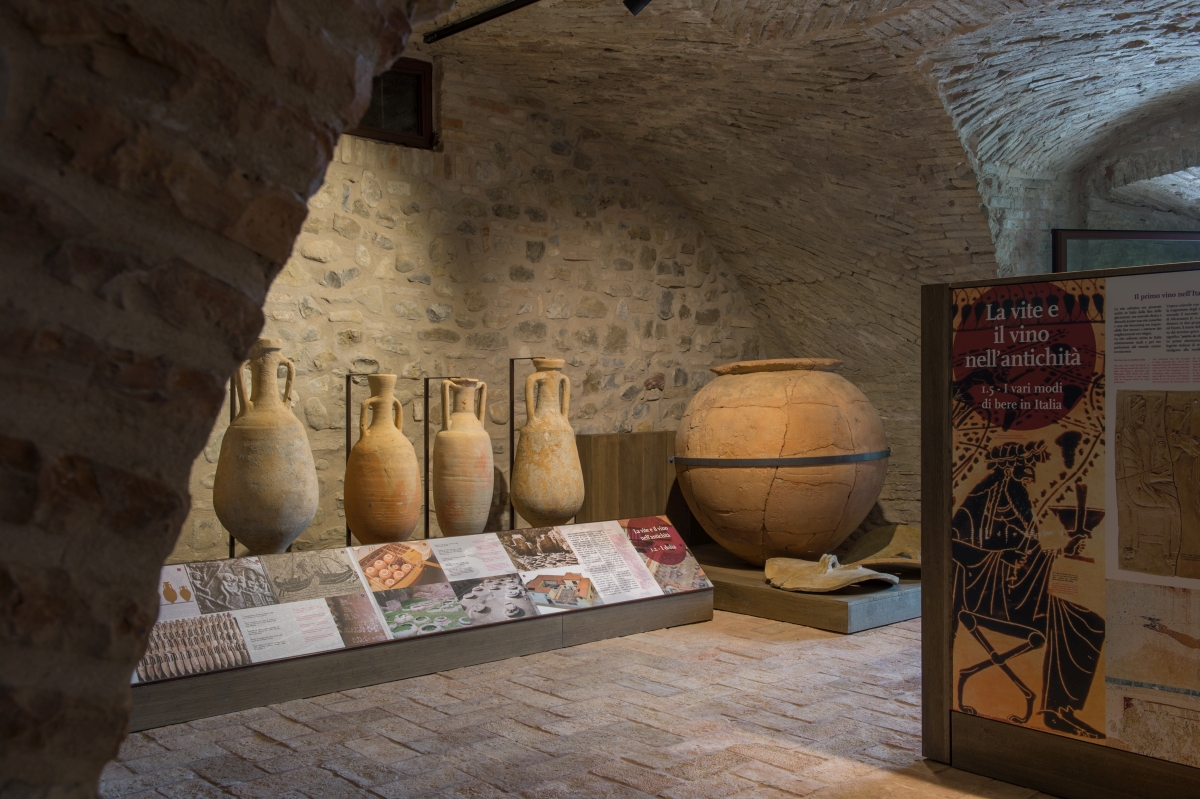
The first room, set up in collaboration with the National Archaeological Museum, is dedicated to the archaeology of wine in the Parma area, with objects and images from territorial excavations, which testify how the “modern” way of drinking wine was born right in this area, introduced by Celtic populations, pure and in glasses, abandoning the Greek and Latin use of watered-down and spiced wines.
The second room explores aspects related to the characteristics of the vine plant and viticulture, retracing the traces of this cultivation in the Parma area, also presenting tools and objects from the last century and a film about the technique of the vine “married” to trees in rows, typical of the area. Tools and ancient objects tell, inside the third room, about the harvest and wine preparation, while images and documents narrate the stories of territorial wine: from medieval Arts to French techniques introduced by the Bourbons, to Garibaldi’s love for Malvasia, to Giuseppe Verdi’s passion for viticulture.
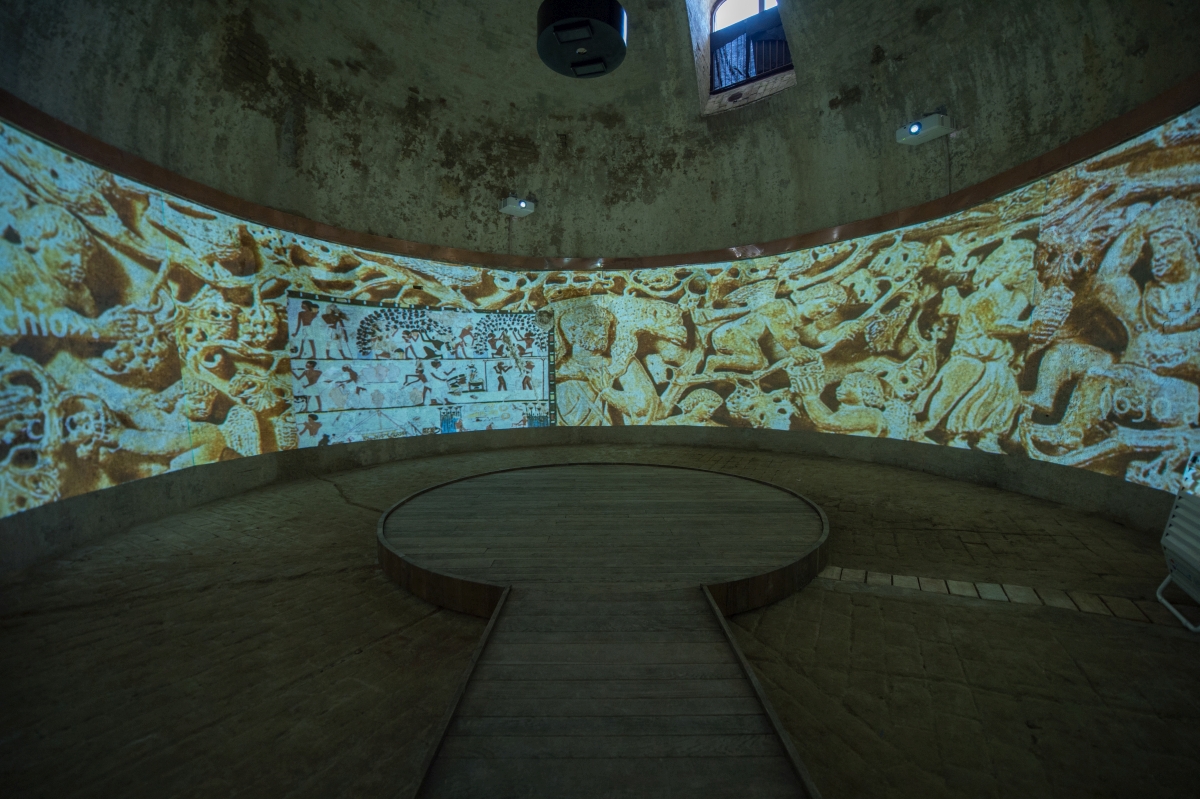
The descent into the fascinating Renaissance ice house transforms into an enveloping experience: 360° images tell, in the heart of the museum, the role of vine and wine in ritual, history and art, immersed in a millennial culture rich in traditions.
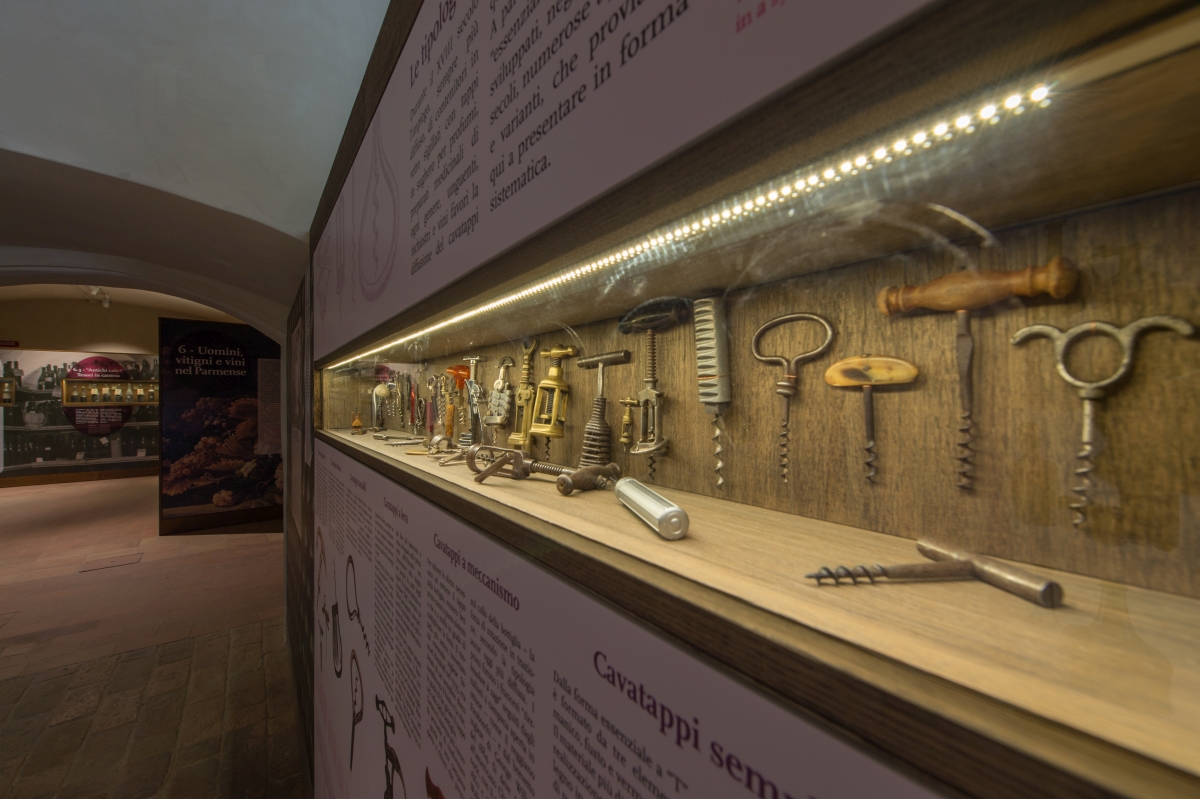
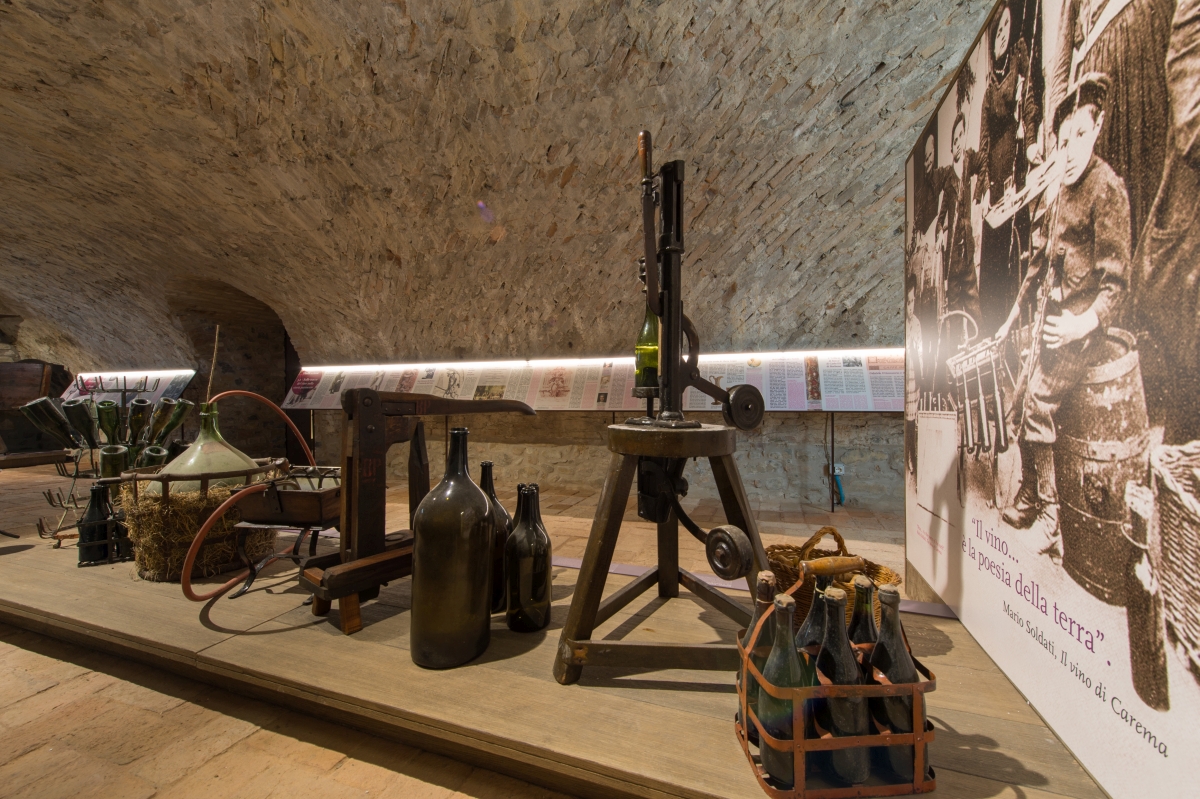
After crossing the castle’s moat, you arrive at the barrel room. Here you discover the history of wine containers and related crafts: the glassmaker and the cooper. But also the history of the cork, corkscrew and label.
The sixth room presents the fruits of Parma viticulture: the pioneers of the sector, the varieties cultivated, the wines produced, perfect for pairing with the territory’s excellent cheese and cured meats, the wineries to visit in the area, the role of the Consorzio dei Vini dei Colli di Parma in safeguarding the quality of a continuously growing product. And the journey concludes with tasting in the wine bar in the castle’s underground.
The Food Museums circuit of the province of Parma is composed, in addition to the Wine Museum of Rocca Sanvitale, of the Parmigiano Reggiano Museum in Fontevivo, the Culatello di Zibello and Masalén Museum in Polesine, the Pasta and Tomato Museums in Collecchio, the Salame Museum in Felino, the Prosciutto di Parma Museum in Langhirano, the Porcino Mushroom Museum in Borgotaro and the Fragno Truffle Museum in Calestano. The one arriving in Parma will instead be a distributed museum, but to discover it you need to wait a few more months…
Wine Museum c/o Rocca Sanvitale
piazza Gramsci, Sala Baganza (PR)
Opening hours: from March 1st to December 8th, Saturday, Sunday and holidays 10 – 18.


